Understanding CPR After a Collapse or Serious Accident
A sudden fall in a public place can lead to a life-threatening emergency, especially if the person becomes unresponsive or stops breathing normally. Knowing what to do if someone collapses in a mall or parking area and how to respond when a person needs CPR can help bystanders act quickly while emergency crews are on the way.
In Winnipeg, Manitoba, and across Canada, this matters in shopping centres, workplaces, schools, transit areas, and public gathering spaces. CPR training is useful for retail staff, security teams, teachers, parents, and anyone who may witness an emergency in the community.
First Aid & Workplace Relevance in Canada
For workplaces and public settings in Winnipeg, Manitoba, this type of incident is a reminder that emergencies can happen without warning. Malls, office buildings, warehouses, recreation facilities, and schools all benefit from staff who have CPR training Winnipeg, first aid certification Manitoba, and, where available, AED training Canada.
Based on standard first aid training practices in Canada, early recognition, calling 911, and beginning CPR when appropriate are commonly taught as the first steps while waiting for paramedics.
Real-Life Scenario: Tourist Dies After Accident at East Vancouver Mall
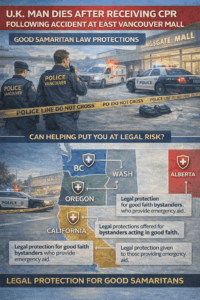 In East Vancouver, emergency crews were called to Kingsgate Mall on East Broadway near Kingsway after a 24-year-old man from the U.K. was found in medical distress.
According to the original reports, the man had been in Vancouver for less than 24 hours. CPR was provided at the scene, and he was transported to hospital, where he later died.
Police initially said the death was being investigated as suspicious, but later stated that investigators working with the BC Coroners Service believed it appeared to be an unfortunate accident involving a fall. Media reports from the scene described part of the parking lot being taped off while officers examined nearby items and the sloped roof area.
Constable Jason Doucette also said police were working with the consulate to contact the man’s family and help with arrangements.
This story is tragic, and it also shows an important public-safety reality: CPR does not always change the outcome, but immediate action still matters. In many emergencies, bystanders and first responders must begin care before the full nature of the injuries is known.
Symptoms / Warning Signs
After a collapse or serious fall, warning signs that require an immediate emergency response can include:
-
Unresponsiveness
-
No breathing or abnormal breathing
-
Sudden collapse after trauma
-
Severe confusion or loss of consciousness
-
Signs of major injury or shock
These signs mean emergency help should be called right away.
Causes / Risk Factors
A person may need CPR after a public collapse for many different reasons, including:
-
A sudden cardiac arrest
-
A serious fall or traumatic injury
-
A medical emergency that causes loss of consciousness
-
An underlying heart condition or other health issue
Because bystanders usually do not know the exact cause in the moment, the focus is on recognizing the emergency and activating help quickly.
Treatment / First Aid / Management
Based on standard first aid training practices in Canada, the general public response is to:
-
Call 911 immediately
-
Check responsiveness and normal breathing
-
Begin CPR if the person is unresponsive and not breathing normally
-
Send someone for an AED if one is available
-
Follow dispatcher instructions until paramedics arrive
These steps are commonly taught in certified CPR courses and workplace first aid programs across Canada.
Prevention / Workplace Considerations
In Winnipeg and across Manitoba, public-facing workplaces can improve readiness by:
-
Training staff in CPR and emergency response
-
Keeping AEDs accessible where appropriate
-
Reviewing emergency action plans for malls, offices, and schools
-
Teaching staff how to guide emergency crews to the scene quickly
-
Encouraging workers not to hesitate when someone collapses and needs help
Even when the outcome is not what anyone hopes for, a rapid response supports safer communities and better emergency preparedness.
Legal Awareness: Helping in British Columbia vs. Nearby Jurisdictions
For readers interested in the legal side, British Columbia’s Good Samaritan Act says a person who gives emergency aid at the immediate scene of an accident or emergency is generally not liable for damages unless they are grossly negligent.
That basic approach is similar in nearby places. Alberta’s Emergency Medical Aid Act provides liability protection for certain people who voluntarily render emergency medical aid without expecting compensation. Washington law also protects people who, without compensation, render emergency care at the scene, except for gross negligence or willful or wanton misconduct.
In Oregon, ORS 30.800 provides liability protection for voluntary emergency medical assistance given without expectation of compensation in emergency circumstances outside places where emergency care is regularly available. In California, Health and Safety Code section 1799.102 broadly protects people who, in good faith and without compensation, provide emergency medical or nonmedical care at the scene, and Civil Code section 1714.21 separately addresses AED use.
The practical takeaway for public education is that these places generally try to encourage bystanders to help in good faith, not punish reasonable efforts to assist. Exact legal duties and exceptions can vary by jurisdiction and by the rescuer’s role.
FAQ
What should you do if someone collapses in a mall or parking lot?
Call 911 immediately, check whether the person is responsive and breathing normally, and start CPR if they are unresponsive and not breathing normally. Ask someone nearby to look for an AED and follow dispatcher instructions until first responders arrive.
Can CPR still be appropriate if the collapse followed a fall?
Yes. If a person is unresponsive and not breathing normally, CPR may still be needed while emergency crews are on the way. Bystanders are not expected to diagnose the cause first; they are taught to respond to the emergency in front of them.
Does British Columbia protect people who try to help in an emergency?
Generally, yes. British Columbia’s Good Samaritan Act gives legal protection to people who provide emergency aid at the scene unless their conduct is grossly negligent. That is one reason CPR and first aid training are encouraged in public and workplace settings.
Is the law very different in Washington, Oregon, California, and Alberta?
The wording differs, but these jurisdictions also generally protect unpaid bystanders who act in good faith during emergencies. The details and exceptions are not identical, especially around AED programs, professional roles, and gross negligence standards.
Why is CPR training important even when the outcome may not change?
CPR does not guarantee survival, but it can preserve circulation and buy time until advanced care arrives. That is why it is commonly taught in certified CPR courses, workplace safety programs, and emergency response training across Canada.
Educational Note
This article is for general public awareness and reflects response principles commonly taught in certified first aid and CPR courses in Canada. Legal references are included for broad educational comparison only.
About The Author

Mark Kascha
Certified First Aid Instructor Trainer with 30+ years of real-world experience, including lifeguarding, workplace emergency response, and first aid program development across Canada. Has worked with WorkSafeBC, WSIB, and Manitoba Health.
👉 [View full credentials]🔗 View LinkedIn Profile
Last reviewed: March 2026