A 13-year-old hockey player is alive today thanks to fast action, immediate CPR, and the timely use of an automated external defibrillator (AED). The teen is recovering in hospital after suffering sudden cardiac arrest during a hockey game—an incident that underscores how critical AED access and training can be.
Life on the Line During a Hockey Game
Ali Khaleghi collapsed on the ice during a game at the Herbert H. Carnegie Centennial Centre in North York. Playing for the North York Rangers AAA team, Ali had only been on the ice for a few minutes and had just blocked a shot moments before his heart suddenly stopped.
What happened next became a powerful example of how preparation saves lives.
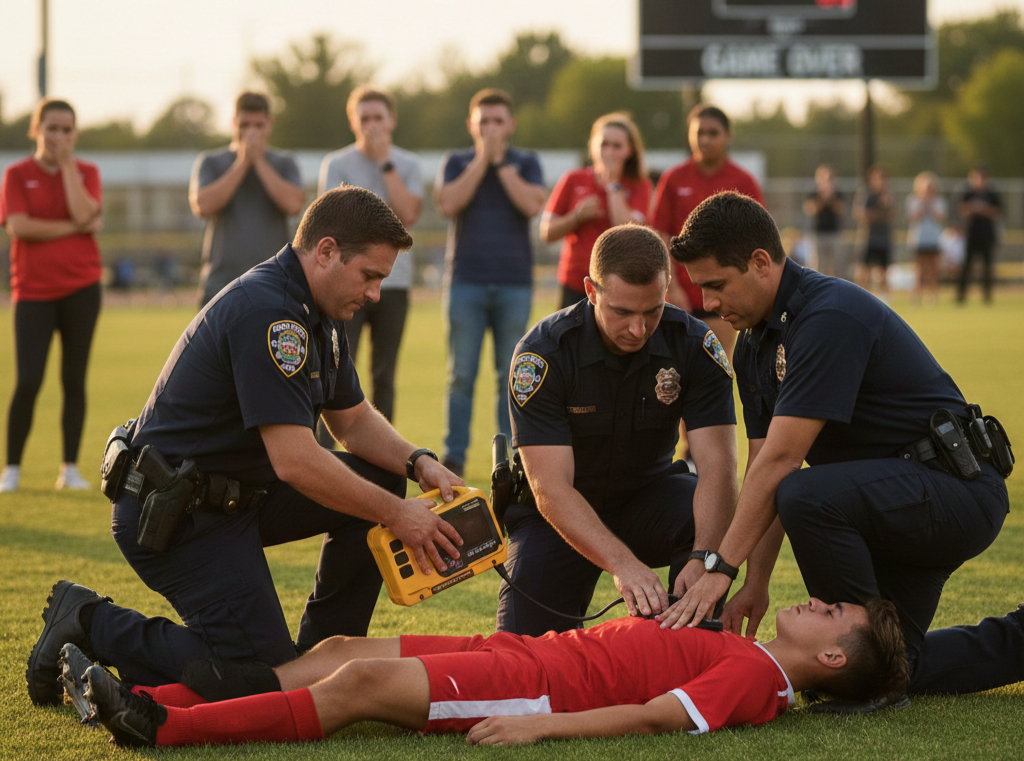
Arena operator Doug Jamieson immediately ran onto the ice to assist. He was joined by an off-duty firefighter and a nurse who were also in the arena. After checking for vital signs and finding none, they began CPR right away while another person rushed to retrieve the arena’s AED.
Once the automated external defibrillator arrived, the responders delivered a shock. Soon after, they detected a low pulse—an early but crucial sign that their efforts were working.
Jamieson later described the moment as a relief, knowing their actions had helped bring the young player back.
Ali was transported to hospital, where his family confirmed he resumed breathing on his own and continued recovering under medical care.
Why AED Access and CPR Training Matter
Cardiac arrest can happen without warning—especially during intense physical activity like sports. Medical professionals emphasize that the first five minutes after collapse are the most critical. When CPR is started immediately and an AED is used quickly, Survival rates increase significantly.
This incident also raised awareness among parents and spectators about the importance of knowing where AEDs are located in public facilities. Having an AED on site is essential, but it is just as important that people are trained and confident enough to use it when seconds matter.
Learning CPR and AED skills empowers everyday people to:
-
Recognize cardiac arrest early
-
Begin CPR immediately
-
Use an AED safely and effectively
-
Support the victim until paramedics arrive
Be Ready to Respond With Winnipeg First Aid
Emergencies like this can happen in arenas, schools, workplaces, and public spaces. Enrolling in a CPR and AED training course ensures you’re prepared to act when it matters most.
If you want to gain these lifesaving skills, explore CPR and AED training options through Winnipeg First Aid.For additional trusted information, visit:
Readers can also review the original news report published by CBC News, which details how the AED was used to save the teen hockey player’s life:
👉 Teen Saved With Timely Use of an AED
About The Author

Mark Kascha
Certified First Aid Instructor Trainer with 30+ years of real-world experience, including lifeguarding, workplace emergency response, and first aid program development across Canada. Has worked with WorkSafeBC, WSIB, and Manitoba Health.
👉 [View full credentials]🔗 View LinkedIn Profile
Last reviewed: March 2026