Understanding Avalanche Emergencies and CPR Response
Avalanches are fast-moving and unpredictable, often leaving little time to react. Knowing what to do if someone is buried in snow or how to respond when a person is unresponsive after an avalanche is critical in winter backcountry environments.
In Winnipeg, Manitoba, and across Canada, many outdoor enthusiasts travel to mountainous regions. Understanding avalanche safety, CPR, and cold exposure risks can help improve survival in these high-risk situations.
First Aid & Workplace Relevance in Canada
While avalanches do not occur in Manitoba, many residents of Winnipeg travel to ski and backcountry areas in western Canada.
Training is important for:
- Skiers and snowboarders
- Backcountry guides and workers
- Outdoor enthusiasts and travelers
- Search and rescue volunteers
Programs such as CPR training Winnipeg, first aid certification Manitoba, and wilderness first aid training Canada prepare individuals for remote emergencies.
Real-Life Scenario: Skier Caught in Avalanche on Meadow Mountain
 On Meadow Mountain, a skier was part of a guided group traveling through backcountry terrain when an avalanche occurred.
The group, consisting of five to six skiers led by hired guides, was caught in the slide. Fellow group members acted quickly, locating and digging out the buried skier.
Once freed, they began CPR immediately while awaiting emergency assistance. Despite their efforts, the skier could not be resuscitated. He was later airlifted to a hospital in Nelson.
Authorities, including the RCMP and the BC Coroners Service, investigated the incident. No other members of the group were reported injured.
This incident highlights how quickly avalanches can become life-threatening—even with experienced guides present.
Avalanche Burial and Suffocation Risk
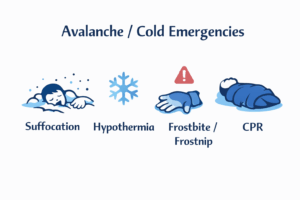
One of the greatest dangers in an avalanche is airway obstruction.
When a person is buried:
- Snow can pack tightly around the face
- Breathing space may be extremely limited
- Oxygen levels drop quickly
Suffocation can occur within minutes if the airway is not cleared. Rapid rescue is critical.
Cold Exposure: Hypothermia, Frostbite, and Frostnip
Avalanche victims and stranded individuals are also at risk of cold-related conditions:
Hypothermia
- Occurs when body temperature drops
- Signs include shivering, confusion, and fatigue
Frostbite
- Freezing of skin and underlying tissue
- Often affects fingers, toes, ears, and nose
Frostnip
- Early stage of cold injury
- Skin becomes cold and numb but not permanently damaged
Cold exposure can worsen quickly, especially when clothing is wet or movement is limited.
Symptoms and Warning Signs
After an avalanche or cold exposure, watch for:
- Unresponsiveness
- Difficulty or absence of breathing
- Cold, pale, or numb skin
- Confusion or unusual behaviour
- Weakness or lack of coordination
Immediate action is required in these situations.
First Aid Response: What to Do
Based on standard first aid training practices in Canada:
- Ensure scene safety before entering avalanche area
- Call for emergency assistance immediately
- Locate and carefully dig out the buried person
- Clear the airway as quickly as possible
- Check breathing and responsiveness
- Begin CPR if unresponsive and not breathing normally
- Protect from further cold exposure (insulate and keep warm)
These steps are commonly taught in wilderness and CPR training across Canada.
Avalanche Safety and Prevention
To reduce risk in backcountry areas:
- Check avalanche forecasts before heading out
- Travel with trained guides when possible
- Carry safety equipment (beacon, probe, shovel)
- Avoid high-risk slopes and unstable snow conditions
- Stay spaced out when traveling in avalanche terrain
Preparation and awareness are critical for safety.
Prevention and Workplace Safety Considerations
For those traveling from Winnipeg and across Manitoba:
- Take avalanche awareness and first aid courses
- Plan trips carefully and share itineraries
- Carry proper winter gear and emergency supplies
- Avoid traveling alone in remote areas
Prepared individuals are better equipped to respond effectively.
Frequently Asked Questions
What should you do if someone is buried in an avalanche?
Call for help immediately and begin searching. Once located, clear the airway quickly and check for breathing. Start CPR if necessary.
Why is suffocation a major risk in avalanches?
Snow can pack tightly around the face, limiting airflow. Without a clear airway, oxygen levels drop quickly, making rapid rescue critical.
What is the difference between frostnip and frostbite?
Frostnip is mild and reversible, while frostbite involves deeper tissue freezing and requires more advanced care. Both result from cold exposure.
Can CPR help after an avalanche rescue?
CPR may help if the person is not breathing normally. Early intervention is commonly taught in CPR training and can improve outcomes.
How can avalanche incidents be prevented?
Check conditions, use proper equipment, travel with others, and follow safe route planning. Awareness and preparation reduce risk.
Educational Note
This article is for general awareness and reflects techniques commonly taught in certified first aid and CPR training across Canada. Avalanche awareness and cold exposure management are key components of winter safety.
About The Author

Mark Kascha
Certified First Aid Instructor Trainer with 30+ years of real-world experience, including lifeguarding, workplace emergency response, and first aid program development across Canada. Has worked with WorkSafeBC, WSIB, and Manitoba Health.
👉 [View full credentials]🔗 View LinkedIn Profile
Last reviewed: March 2026