Understanding Car Crash Injuries and Emergency Response
Motor vehicle collisions can result in serious and life-threatening injuries within seconds. Knowing what to do if someone is injured in a car crash or how to respond when a person goes into cardiac arrest after a collision is critical for bystanders.
In Winnipeg, Manitoba, and across Canada, crashes can occur on highways, rural roads, and city streets. Quick action—calling 911, ensuring safety, and providing first aid or CPR—can help support survival until emergency crews arrive.
First Aid & Workplace Relevance in Canada
 Vehicle incidents are a common risk across Winnipeg neighbourhoods such as Downtown, Transcona, and St. Vital, as well as highways throughout Manitoba.
- Drivers and commuters
- Delivery and transportation workers
- Construction and roadside workers
- Community members and families
Programs such as CPR training Winnipeg, first aid certification Manitoba, and emergency response training Canada teach how to respond to crash-related emergencies.
Real-Life Scenario: CPR Performed After Head-On Collision in Lake Country
In Lake Country, emergency crews responded to a serious head-on collision along Highway 97 near Oceola Road in the Central Okanagan.
According to reports, a grey Chevrolet Impala crossed the center line and collided with a northbound Chrysler 300 from Alberta.
An 87-year-old driver was found in cardiac arrest at the scene. First responders from the Lake Country Fire Department and BC Ambulance Service began CPR immediately.
Despite efforts to provide life-saving care, the crash resulted in severe outcomes. Authorities, including RCMP and the BC Coroners Service, investigated the incident to determine contributing factors.
This case highlights how quickly medical emergencies can develop following a collision—and the role of immediate response.
Common Injuries in Car Crashes
Car crashes can cause a wide range of injuries depending on speed and impact:
Head Injuries and Concussions
- Confusion, dizziness, or loss of consciousness
- Head pain or memory loss
Spinal Injuries
- Neck or back pain
- Loss of movement or sensation
Broken Bones (Fractures)
- Arms, legs, ribs, or pelvis
- Pain, swelling, or inability to move
Internal Injuries
- Damage to organs not immediately visible
- Abdominal pain or weakness
Cuts and Lacerations
- From glass or debris
- May involve significant bleeding
Chest Injuries
- Caused by seatbelt or impact
- Difficulty breathing or pain
Some injuries may not be obvious right away, which is why careful monitoring is important.
Symptoms and Warning Signs
After a crash, watch for:
- Unresponsiveness
- Difficulty or abnormal breathing
- Severe pain or inability to move
- Bleeding or visible wounds
- Confusion or unusual behaviour
These signs require immediate emergency response.
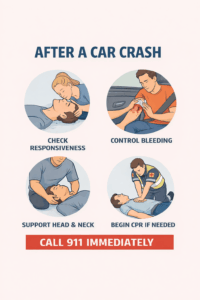
First Aid Response: What to Do
Based on standard first aid training practices in Canada:
- Ensure scene safety (watch for traffic, fire, or hazards)
- Call 911 immediately
- Avoid moving injured individuals unless necessary
- Support the head and neck if spinal injury is suspected
- Control bleeding with direct pressure
- Check breathing and responsiveness
- Begin CPR if unresponsive and not breathing normally
These steps are commonly taught in certified first aid and CPR courses across Canada.
Managing Common Crash Injuries
Bleeding
- Apply firm, direct pressure
- Use available materials to control blood flow
Suspected Spinal Injury
- Keep the person still
- Support head and neck if possible
Broken Bones
- Avoid moving the affected limb
- Keep the person comfortable and still
Unresponsiveness
- Monitor breathing
- Begin CPR if needed
These approaches are commonly taught in workplace and public first aid training.
Prevention and Workplace Safety Considerations
In Winnipeg and across Manitoba, road safety can be improved by:
- Following traffic laws and speed limits
- Staying alert in low-visibility areas
- Maintaining vehicles regularly
- Using seatbelts properly
- Promoting driver and pedestrian awareness
Prepared drivers and trained bystanders help improve outcomes.
Frequently Asked Questions
What should you do first after a car crash?
Ensure the scene is safe and call 911 immediately. Then assess injuries and provide first aid if it is safe to do so.
Should you move someone after a collision?
Only if necessary for safety. If a spinal injury is suspected, keep the person still and support the head and neck.
Can CPR help after a crash?
If a person is unresponsive and not breathing normally, CPR may help maintain circulation until emergency services arrive.
What injuries are most common in car crashes?
Common injuries include head injuries, fractures, spinal injuries, and internal trauma. Some may not be visible immediately.
Why is first aid training important for drivers?
Bystanders are often first on scene. Training helps individuals respond quickly and effectively during emergencies.
Educational Note
This article is for general awareness and reflects techniques commonly taught in certified first aid and CPR training across Canada. Early response and scene safety are essential in collision-related emergencies.
About The Author

Mark Kascha
Certified First Aid Instructor Trainer with 30+ years of real-world experience, including lifeguarding, workplace emergency response, and first aid program development across Canada. Has worked with WorkSafeBC, WSIB, and Manitoba Health.
👉 [View full credentials]🔗 View LinkedIn Profile
Last reviewed: March 2026