Understanding Assault-Related Injuries and Emergency Response
Violent incidents can lead to serious injuries that require immediate attention. Knowing what to do if someone is injured during an assault or how to respond when a person has head or body trauma can help stabilize the situation until emergency services arrive.
In Winnipeg, Manitoba, and across Canada, bystanders are often the first to respond. Quick action—calling 911 and providing basic first aid—can make a meaningful difference.
First Aid & Workplace Relevance in Canada
 Incidents like this can occur in homes, workplaces, and public settings across Winnipeg neighbourhoods such as Downtown, North End, and St. Vital.
Training is important for:
- Workplace staff and supervisors
- Security personnel
- Community members and families
- Caregivers and support workers
Programs such as CPR training Winnipeg, first aid certification Manitoba, and emergency response training Canada prepare individuals to respond to trauma-related emergencies.
Real-Life Scenario: Woman Assisted After Assault in Campbell River
In Campbell River, a 64-year-old woman was injured during an assault involving a hammer.
According to Ron Vlooswyk, neighbors and nearby witnesses quickly intervened. They helped stop the situation, provided first aid to the victim, and kept the suspect at a distance until police arrived.
The incident followed a dispute between the individuals, and authorities later took the suspect into custody pending further assessment.
While details about the victim’s condition were not publicly released, the quick response of bystanders played an important role in providing immediate care.
Common Injuries from Blunt Force Trauma
Assaults involving objects can result in various injuries:
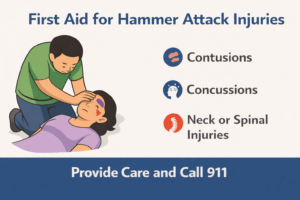
Contusions (Bruising)
- Caused by impact to soft tissue
- May result in swelling and discoloration
Concussions
- Temporary brain injury from impact
- Symptoms may include confusion, dizziness, or headache
Head Injuries
- Can range from mild to severe
- May involve loss of consciousness
Neck and Spinal Injuries
- Caused by forceful impact or sudden movement
- May affect mobility or sensation
Cuts and Lacerations
- From sharp edges or impact
- May involve bleeding
Some injuries may not be immediately visible but can worsen over time.
Symptoms and Warning Signs
After a traumatic incident, watch for:
- Confusion or disorientation
- Headache or dizziness
- Unresponsiveness
- Neck or back pain
- Bleeding or visible injuries
- Difficulty moving
These signs indicate the need for immediate care.
First Aid Response: What to Do
Based on standard first aid training practices in Canada:
- Ensure the scene is safe
- Call 911 immediately
- Check responsiveness and breathing
- Control any visible bleeding with direct pressure
- Avoid moving the person if spinal injury is suspected
- Support the head and neck if possible
- Monitor until emergency services arrive
These steps are commonly taught in certified first aid courses across Canada.
Managing Head, Neck, and Spinal Injuries
Because blunt force trauma can affect the head and spine:
- Keep the person as still as possible
- Avoid sudden movements
- Provide reassurance and monitor condition
Improper movement may increase the risk of further injury.
Prevention and Workplace Safety Considerations
In Winnipeg and across Manitoba, safety awareness can help reduce risks:
- Promote conflict de-escalation strategies
- Ensure workplace safety protocols are in place
- Provide staff with first aid and emergency training
- Encourage awareness of surroundings
Prepared individuals are better equipped to respond in emergencies.
Frequently Asked Questions
What should you do if someone is injured in an assault?
Ensure the area is safe, call 911, and provide first aid such as controlling bleeding and monitoring the person until help arrives.
What are signs of a concussion after an injury?
Confusion, dizziness, headache, or loss of consciousness may indicate a concussion. These symptoms require attention.
Should you move someone with a head or neck injury?
Avoid moving them unless necessary for safety. Keeping the head and neck stable helps reduce the risk of further injury.
What is a contusion?
A contusion is a bruise caused by impact to soft tissue, often resulting in swelling and discoloration.
Why is first aid training important in these situations?
Bystanders are often first on scene. Training helps individuals respond quickly and safely during emergencies.
Educational Note
This article is for general awareness and reflects techniques commonly taught in certified first aid and CPR training across Canada. Scene safety and early response are critical in trauma situations.
About The Author

Mark Kascha
Certified First Aid Instructor Trainer with 30+ years of real-world experience, including lifeguarding, workplace emergency response, and first aid program development across Canada. Has worked with WorkSafeBC, WSIB, and Manitoba Health.
👉 [View full credentials]🔗 View LinkedIn Profile
Last reviewed: March 2026