Understanding Severe Bleeding and Emergency Response
Stabbing injuries can cause life-threatening bleeding within minutes. Knowing what to do if someone is stabbed or how to respond when a person is bleeding heavily is critical for bystanders.
In Winnipeg, Manitoba, and across Canada, quick action—calling 911, controlling bleeding, and protecting yourself—can help stabilize a victim until emergency responders arrive.
First Aid & Workplace Relevance in Canada
Violent or accidental injuries can occur in public spaces, workplaces, and events across Winnipeg neighbourhoods like Downtown, Exchange District, and St. Vital.
Training is important for:
- Security personnel and event staff
- Workplace supervisors
- Healthcare students and workers
- Community members and bystanders
Programs such as CPR training Winnipeg, first aid certification Manitoba, and emergency response training Canada teach bleeding control and trauma response.
Real-Life Scenario: Bystander Provides First Aid After Vancouver Stabbing
 In Plaza of Nations, a violent altercation resulted in multiple stabbing victims during early morning hours.
Police received several emergency calls reporting a fight between groups. Among the victims was Hansen Jia Chen, a 25-year-old from Burnaby.
Before emergency crews arrived, a woman—believed to be a British Columbia Institute of Technology nursing student—stepped in to provide first aid near a nearby taxi stand.
Witnesses reported that she identified herself and began assisting the injured man, demonstrating how bystanders can play a critical role in emergencies.
Despite efforts, the incident had a tragic outcome, and authorities continued their investigation.
Common Injuries in Stabbing Incidents
Stabbing injuries may involve:
- Severe external bleeding
- Internal injuries not immediately visible
- Damage to organs or blood vessels
- Shock due to blood loss
Rapid response is essential.
Embedded Objects: What to Do
If an object remains in the wound:
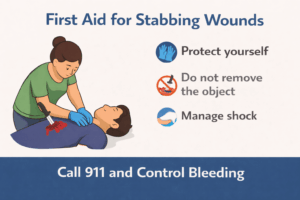
- Do not remove it
- The object may be helping limit bleeding
- Stabilize the object with dressings around it
- Apply pressure around—not directly on—the object
This approach is commonly taught in trauma first aid training in Canada.
Using Personal Protective Equipment (PPE)
When providing first aid, protect yourself whenever possible:
- Use gloves if available
- Avoid direct contact with blood
- Use barriers such as cloth or dressings
Personal safety is an important part of emergency response.
Symptoms and Warning Signs
Watch for:
- Heavy or uncontrolled bleeding
- Pale, cool, or clammy skin
- Weakness or confusion
- Rapid breathing
- Unresponsiveness
These may indicate shock or severe injury.
First Aid Response: What to Do
Based on standard first aid training practices in Canada:
- Ensure scene safety before approaching
- Call 911 immediately
- Apply direct pressure to bleeding wounds
- Use clean cloth or dressings if available
- Do not remove embedded objects
- Monitor breathing and responsiveness
- Begin CPR if unresponsive and not breathing normally
These steps are commonly taught in certified first aid courses across Canada.
Shock Management
Severe bleeding can lead to shock, which is a life-threatening condition.
General care includes:
- Keeping the person lying down if possible
- Maintaining warmth with clothing or blankets
- Reassuring the person and keeping them calm
- Monitoring their condition until help arrives
Early recognition and care are critical.
Prevention and Workplace Safety Considerations
In Winnipeg and across Manitoba, safety awareness can help reduce risks:
- Training staff in first aid and bleeding control
- Having emergency kits accessible
- Promoting awareness at public events
- Encouraging safe environments and rapid reporting
Prepared individuals can make a difference in emergencies.
Frequently Asked Questions
What should you do if someone is bleeding heavily?
Apply firm, direct pressure to the wound and call 911 immediately. Controlling bleeding is the priority.
Should you remove an object stuck in a wound?
No, do not remove embedded objects. Stabilize them and apply pressure around the wound.
Why is PPE important in first aid?
PPE helps protect the rescuer from exposure to blood and bodily fluids while providing care.
What are signs of shock after an injury?
Pale skin, weakness, confusion, and rapid breathing may indicate shock and require immediate attention.
Can CPR be needed in these situations?
If the person becomes unresponsive and is not breathing normally, CPR may be required until help arrives.
Educational Note
This article is for general awareness and reflects techniques commonly taught in certified first aid and CPR training across Canada. Bleeding control and personal safety are key priorities in trauma response.
About The Author

Mark Kascha
Certified First Aid Instructor Trainer with 30+ years of real-world experience, including lifeguarding, workplace emergency response, and first aid program development across Canada. Has worked with WorkSafeBC, WSIB, and Manitoba Health.
👉 [View full credentials]🔗 View LinkedIn Profile
Last reviewed: March 2026