Understanding Bicycle Collision Injuries and Emergency Response
Cyclists are vulnerable road users, and collisions with vehicles can result in serious injuries. Knowing what to do if a cyclist is hit by a vehicle or how to respond when someone is unresponsive after a crash is critical for bystanders.
In Winnipeg, Manitoba, and across Canada, cycling is common in both urban and residential areas. Quick action—calling 911, ensuring safety, and providing first aid or CPR—can help support survival until emergency crews arrive.
First Aid & Workplace Relevance in Canada
Cycling-related incidents can occur across Winnipeg neighbourhoods like Downtown, St. Vital, and Transcona, especially at intersections and shared roadways.
Training is important for:
- Cyclists and commuters
- Drivers and delivery workers
- Construction and roadside workers
- Community members and families
Programs such as CPR training Winnipeg, first aid certification Manitoba, and emergency response training Canada prepare individuals to respond effectively to collision-related emergencies.
Real-Life Scenario: Elderly Cyclist Struck in Chilliwack
 In Chilliwack, a 78-year-old cyclist was struck by a pickup truck at the intersection of Cheam Avenue and Young Road around mid-morning.
According to Mike Rail, the 26-year-old driver stopped immediately and began providing first aid until paramedics arrived.
The Chilliwack Fire Department, located nearby, responded quickly, and RCMP secured the scene while emergency crews worked.
Despite the rapid response and CPR efforts, the incident had a tragic outcome. Investigators and the BC Coroners Service reviewed the scene.
This event highlights both the risks cyclists face and the importance of immediate bystander response.
Common Injuries in Bicycle Collisions
Cyclists may experience a range of injuries depending on speed, impact, and protection:
Head Injuries and Concussions
- Loss of consciousness
- Confusion, dizziness, or headache
- Higher risk without a helmet
Spinal Injuries
- Neck or back pain
- Loss of movement or sensation
Broken Bones
- Arms, wrists, collarbone, or legs
- Common due to falls or impact
Bruising and Soft Tissue Injuries
- Pain, swelling, and visible bruising
Cuts and Lacerations
- From pavement or debris
Internal Injuries
- May not be immediately visible
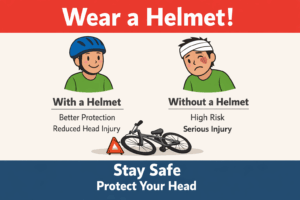
Helmet Use: Why It Matters
Helmets are one of the most effective ways to reduce injury risk:
With a Helmet
- Helps absorb impact forces
- Reduces risk of severe head injury
- Improves chances of survival
Without a Helmet
- Higher risk of traumatic brain injury
- Greater likelihood of serious complications
While helmets do not prevent all injuries, they significantly reduce the severity of head trauma and are strongly recommended for all cyclists.
Symptoms and Warning Signs
After a cycling collision, watch for:
- Unresponsiveness
- Difficulty or abnormal breathing
- Head injury symptoms (confusion, dizziness)
- Severe pain or inability to move
- Bleeding or visible injuries
Immediate action is required.
First Aid Response: What to Do
Based on standard first aid training practices in Canada:
- Ensure scene safety (watch for traffic hazards)
- Call 911 immediately
- Avoid moving the person unless necessary
- Support the head and neck if spinal injury is suspected
- Control bleeding with direct pressure
- Check breathing and responsiveness
- Begin CPR if unresponsive and not breathing normally
These steps are commonly taught in certified first aid and CPR courses across Canada.
Prevention and Workplace Safety Considerations
In Winnipeg and across Manitoba, cycling safety can be improved by:
- Wearing a properly fitted helmet
- Using lights and reflective gear
- Following traffic laws and signals
- Staying visible to drivers
- Maintaining bicycles regularly
Both cyclists and drivers share responsibility for road safety.
Frequently Asked Questions
What should you do if a cyclist is hit by a vehicle?
Ensure the area is safe, call 911, and check the person’s condition. Provide first aid and CPR if needed while waiting for emergency responders.
Why are helmets important for cyclists?
Helmets help reduce the risk of serious head injuries by absorbing impact. They are strongly recommended for all riders.
Should you remove a cyclist’s helmet after a crash?
Only remove a helmet if necessary for airway management or CPR. Otherwise, it is usually best to leave it in place to avoid movement.
What injuries are most common in cycling accidents?
Common injuries include head trauma, fractures, and soft tissue injuries. Some may not be immediately visible.
Can CPR help after a cycling collision?
If the person is unresponsive and not breathing normally, CPR may help maintain circulation until emergency services arrive.
Educational Note
This article is for general awareness and reflects techniques commonly taught in certified first aid and CPR training across Canada. Helmet use and early response are key to improving safety outcomes.
About The Author

Mark Kascha
Certified First Aid Instructor Trainer with 30+ years of real-world experience, including lifeguarding, workplace emergency response, and first aid program development across Canada. Has worked with WorkSafeBC, WSIB, and Manitoba Health.
👉 [View full credentials]🔗 View LinkedIn Profile
Last reviewed: March 2026