Understanding Cardiac Arrest and the Importance of Time
Sudden cardiac arrest is a life-threatening emergency where the heart stops pumping effectively. Knowing what to do if someone collapses and is not breathing or how to respond quickly with CPR and an AED can significantly impact survival.
In Winnipeg, Manitoba, and across Canada, immediate action is critical. Every minute without CPR and defibrillation reduces the chance of survival.
First Aid & Workplace Relevance in Canada
 Cardiac emergencies can occur anywhere—churches, workplaces, parking lots, and public spaces across Winnipeg neighbourhoods such as Downtown, St. Vital, and Transcona.
Training is important for:
- Workplace staff and supervisors
- Faith-based and community organizations
- Coaches and volunteers
- General public and families
Programs such as CPR training Winnipeg, AED training Winnipeg, and first aid certification Manitoba prepare individuals to act quickly when seconds matter.
Real-Life Scenario: CPR and AED Save a Life in Abbotsford
At Sevenoaks Alliance Church, a man collapsed in the parking lot due to cardiac arrest.
Bystanders Steve Stewart and Steve Parks immediately began CPR before emergency crews arrived.
When Abbotsford Fire Rescue Service responded, firefighters including Jim Durvin and team members continued care and used an AED multiple times.
Their combined efforts restored a pulse, and the patient—Colin James Lewis—was transported to hospital, where he later underwent surgery and recovered.
This incident demonstrates how early CPR and rapid AED use can save lives.
Why Time Is Critical in Cardiac Arrest
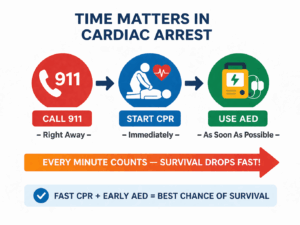
Time is the most important factor in survival:
- Brain cells begin to suffer damage within minutes without oxygen
- Survival chances decrease with every minute without CPR
- Early CPR helps maintain circulation
- Early AED use can restore a normal heart rhythm
Even small delays can significantly impact outcomes.
CPR and AED Timing: Why It Matters
Immediate CPR
- Keeps blood flowing to the brain and vital organs
- Buys time until an AED is available
Early AED Use
- Can correct certain abnormal heart rhythms
- Most effective when used as soon as possible
Survival Impact
- Survival rates are highest when CPR is started immediately
- Early defibrillation significantly improves outcomes
This is why AEDs are placed in public spaces across Canada.
Symptoms and Warning Signs
Watch for:
- Sudden collapse
- Unresponsiveness
- No normal breathing
- Gasping or irregular breathing
Immediate action is required.
First Aid Response: What to Do
Based on standard first aid training practices in Canada:
- Call 911 immediately
- Check responsiveness and breathing
- Start CPR right away
- Send someone to get an AED
- Turn on the AED and follow instructions
- Continue CPR until help arrives
These steps are commonly taught in certified CPR courses across Canada.
Prevention and Workplace Safety Considerations
In Winnipeg and across Manitoba, preparedness includes:
- Installing AEDs in public and workplace settings
- Training staff and community members
- Ensuring quick access to emergency equipment
- Promoting awareness of cardiac arrest signs
Prepared environments improve survival outcomes.
Frequently Asked Questions
Why is timing so important in cardiac arrest?
Survival chances decrease with every minute without CPR or AED use. Acting quickly can make a significant difference.
How soon should CPR be started?
CPR should begin immediately if a person is unresponsive and not breathing normally.
Why is an AED needed quickly?
An AED can restore a normal heart rhythm, especially in the early minutes of cardiac arrest.
Can someone survive without early CPR?
Survival is much less likely without early CPR and defibrillation.
Where are AEDs commonly found?
AEDs are often located in public places such as gyms, schools, workplaces, and community centres.
Educational Note
This article is for general awareness and reflects techniques commonly taught in certified CPR and AED training across Canada. Rapid response and early intervention are key factors in improving survival.
About The Author

Mark Kascha
Certified First Aid Instructor Trainer with 30+ years of real-world experience, including lifeguarding, workplace emergency response, and first aid program development across Canada. Has worked with WorkSafeBC, WSIB, and Manitoba Health.
👉 [View full credentials]🔗 View LinkedIn Profile
Last reviewed: March 2026