Understanding Vehicle Collisions and Emergency Response
Motor vehicle collisions can result in serious and sometimes life-threatening injuries. Knowing what to do if you witness a crash or how to respond when someone is unresponsive after a collision is essential.
In Winnipeg, Manitoba, and across Canada, bystanders are often first on scene. Calling 911, ensuring safety, and providing basic first aid or CPR can help support survival until emergency services arrive.
First Aid & Workplace Relevance in Canada
 Traffic incidents occur daily across Winnipeg neighbourhoods such as Downtown, St. Vital, and Transcona, especially at intersections and high-traffic routes.
Training is important for:
- Drivers and commuters
- Delivery and transport workers
- Construction and roadside crews
- Community members and families
Programs such as CPR training Winnipeg, first aid certification Manitoba, and emergency response training Canada prepare individuals to respond safely and effectively.
Real-Life Scenario: Multi-Vehicle Crash in Chilliwack
In Chilliwack, a serious multi-vehicle crash occurred just east of the Vedder Road overpass in the westbound lane.
The collision involved multiple vehicles, with one vehicle coming to rest on top of another—highlighting the severity of the impact.
Emergency crews, including paramedics, firefighters, and police, responded quickly. Witnesses reported that CPR was being performed on at least one victim at the scene.
Traffic was diverted as responders secured the area and established a landing zone for emergency transport.
This incident demonstrates how quickly a crash can escalate into a critical emergency requiring immediate intervention.
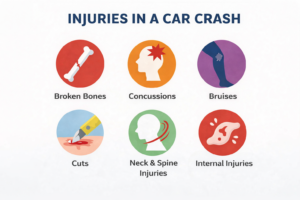
Common Injuries in Vehicle Collisions
Vehicle crashes can result in a wide range of injuries:
Broken Bones (Fractures)
- Arms, legs, ribs, or collarbone
- Often caused by impact or sudden force
Concussions and Head Injuries
- From hitting the steering wheel, window, or ground
- May cause confusion, dizziness, or loss of consciousness
Contusions (Bruising)
- Caused by blunt force trauma
- May involve swelling and pain
Lacerations (Cuts)
- From glass, metal, or debris
- May involve bleeding
Neck and Spinal Injuries
- Caused by sudden movement or impact (e.g., whiplash)
- May affect movement or sensation
Internal Injuries
- Not always visible but can be serious
Symptoms and Warning Signs
Watch for:
- Unresponsiveness
- Difficulty breathing
- Severe pain or inability to move
- Bleeding
- Confusion or disorientation
Immediate action is required.
First Aid Response: What to Do
Based on standard first aid training practices in Canada:
- Ensure scene safety (watch for traffic and hazards)
- Call 911 immediately
- Check responsiveness and breathing
- Avoid moving the person unless necessary
- Support head and neck if spinal injury is suspected
- Control bleeding with direct pressure
- Begin CPR if unresponsive and not breathing normally
These steps are commonly taught in certified first aid and CPR courses across Canada.
Prevention and Workplace Safety Considerations
In Winnipeg and across Manitoba, road safety can be improved by:
- Following traffic laws and speed limits
- Avoiding distractions while driving
- Using seatbelts properly
- Maintaining vehicles regularly
- Staying alert in high-traffic areas
Prepared drivers and trained bystanders improve outcomes.
Frequently Asked Questions
What should you do if you witness a car crash?
Ensure the scene is safe, call 911, and check on those involved. Provide first aid if it is safe to do so.
What injuries are common in vehicle collisions?
Common injuries include fractures, concussions, cuts, bruises, and spinal injuries.
Should you move someone after a crash?
Avoid moving them unless necessary for safety, as movement may worsen injuries.
When is CPR needed after a crash?
If the person is unresponsive and not breathing normally, CPR may be required.
Why is first aid training important for drivers?
Drivers are often first on scene. Training helps them respond safely and effectively in emergencies.
Educational Note
This article is for general awareness and reflects techniques commonly taught in certified first aid and CPR training across Canada. Scene safety and early response are critical in collision-related emergencies.
About The Author

Mark Kascha
Certified First Aid Instructor Trainer with 30+ years of real-world experience, including lifeguarding, workplace emergency response, and first aid program development across Canada. Has worked with WorkSafeBC, WSIB, and Manitoba Health.
👉 [View full credentials]🔗 View LinkedIn Profile
Last reviewed: March 2026