Understanding Bicycle Collision Injuries and Emergency Response
Cyclists are especially vulnerable in collisions with vehicles. Knowing what to do if a cyclist is hit by a vehicle or how to respond when someone is unresponsive after a crash is critical.
In Winnipeg, Manitoba, and across Canada, quick bystander action—calling 911, providing first aid, and starting CPR if needed—can help support survival until emergency crews arrive.
First Aid & Workplace Relevance in Canada
 Cycling incidents can occur on busy roads and intersections across Winnipeg neighbourhoods such as Downtown, St. Vital, and Transcona.
Training is important for:
- Cyclists and commuters
- Drivers and delivery workers
- Construction and roadside crews
- Community members and families
Programs such as CPR training Winnipeg, first aid certification Manitoba, and emergency response training Canada prepare individuals to respond effectively.
Real-Life Scenario: Fatal Collision in Abbotsford
At the intersection of Bourquin Crescent and Mill Lake Road in Abbotsford, a 72-year-old cyclist was struck by a truck.
Emergency responders arrived around mid-morning and immediately began CPR. Despite their efforts, the cyclist was pronounced dead at the scene.
The driver remained on site and cooperated with authorities. According to police, speed and alcohol were not considered contributing factors. The area was temporarily closed while investigators and the coroner examined the scene.
This incident highlights the serious risks cyclists face and the importance of rapid emergency response.
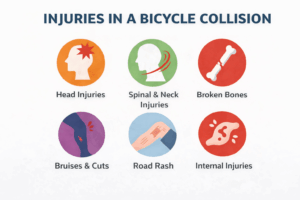
Common Injuries in Bicycle Collisions
Cyclists can sustain multiple injuries depending on impact and conditions:
Head Injuries and Concussions
- Caused by impact with the ground or vehicle
- May lead to confusion, dizziness, or loss of consciousness
Spinal and Neck Injuries
- From sudden impact or twisting motion
- May affect movement or sensation
Broken Bones (Fractures)
- Common in arms, legs, ribs, and collarbone
Contusions (Bruising)
- Result from blunt force trauma
Lacerations (Cuts)
- Caused by pavement, debris, or vehicle parts
Internal Injuries
- May involve organs and are not always visible
Road Rash (Abrasions)
- Skin injuries from sliding across pavement
Symptoms and Warning Signs
Watch for:
- Unresponsiveness
- Difficulty breathing
- Severe pain
- Bleeding
- Confusion or disorientation
Immediate action is required.
First Aid Response: What to Do
Based on standard first aid training practices in Canada:
- Ensure the scene is safe (watch for traffic hazards)
- Call 911 immediately
- Check responsiveness and breathing
- Avoid moving the person unless necessary
- Support the head and neck if spinal injury is suspected
- Control bleeding with direct pressure
- Begin CPR if unresponsive and not breathing normally
These steps are commonly taught in certified first aid and CPR courses across Canada.
Managing Common Bicycle Collision Injuries
- Head injuries: Monitor closely and avoid unnecessary movement
- Fractures: Keep the injured area still
- Bleeding: Apply steady pressure
- Road rash: Cover with clean material if possible
- Spinal concerns: Minimize movement and support alignment
Early care can help reduce complications.
Prevention and Workplace Safety Considerations
In Winnipeg and across Manitoba, cycling safety can be improved by:
- Wearing a properly fitted helmet
- Using lights and reflective gear
- Following traffic rules
- Staying visible to drivers
- Maintaining bicycles regularly
Both cyclists and drivers play a role in road safety.
Frequently Asked Questions
What should you do if a cyclist is hit by a vehicle?
Ensure the scene is safe, call 911, and provide first aid while waiting for emergency responders.
What injuries are common in bicycle accidents?
Head injuries, fractures, cuts, bruises, and spinal injuries are common.
Should you move an injured cyclist?
Avoid moving them unless necessary, as movement may worsen injuries.
Can CPR be required after a bicycle crash?
Yes, if the person is unresponsive and not breathing normally, CPR may be needed.
Why is helmet use important?
Helmets help reduce the risk of serious head injuries during collisions.
Educational Note
This article is for general awareness and reflects techniques commonly taught in certified first aid and CPR training across Canada. Scene safety and early response are critical in collision-related emergencies.
About The Author

Mark Kascha
Certified First Aid Instructor Trainer with 30+ years of real-world experience, including lifeguarding, workplace emergency response, and first aid program development across Canada. Has worked with WorkSafeBC, WSIB, and Manitoba Health.
👉 [View full credentials]🔗 View LinkedIn Profile
Last reviewed: March 2026