Understanding Sports Injuries and Emergency Response
Sports activities like soccer are generally safe, but unexpected emergencies can occur. Knowing what to do if someone is seriously injured during a game or how to respond when a player becomes unresponsive is essential.
In Winnipeg, Manitoba, and across Canada, quick bystander response—calling 911, providing first aid, and starting CPR if needed—can help stabilize a person until emergency services arrive.
First Aid & Workplace Relevance in Canada
 Sports-related incidents can happen in schools, recreation centres, and community leagues across Winnipeg neighbourhoods such as St. Vital, Transcona, and Downtown Winnipeg.
Training is important for:
- Coaches and volunteers
- Teachers and school staff
- Parents and caregivers
- Recreation and community workers
Programs such as CPR training Winnipeg, first aid certification Manitoba, and emergency response training Canada help prepare individuals for these situations.
Real-Life Scenario: Quick Action Saves Young Soccer Player
At a soccer field in Conception Bay South, an 11-year-old player was seriously injured during a fall skills camp event.
Residents Gerry Stead and Alana Langdon quickly responded. As a safety specialist and healthcare professional, they stepped in immediately to provide first aid and CPR while waiting for paramedics.
Their timely intervention helped stabilize the child, who later underwent multiple surgeries and eventually recovered, returning to soccer activities.
Their actions earned them recognition for life-saving efforts and highlight the importance of training and readiness.
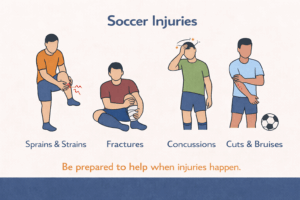
Common Soccer-Related Injuries
While this incident involved a serious emergency, most soccer injuries are less severe but still require attention:
Sprains and Strains
- Often affect ankles, knees, and muscles
- Caused by sudden movements or collisions
Fractures
- Can occur from falls or impacts
Concussions
- Result from head contact with another player, ball, or ground
- May cause confusion, dizziness, or headache
Cuts and Bruises
- From contact or falls on turf or grass
Heat-Related Issues (in warmer months)
- Dehydration or heat exhaustion during games
Understanding these risks helps improve safety on the field.
Symptoms and Warning Signs
Watch for:
- Unresponsiveness
- Difficulty breathing
- Severe pain or inability to move
- Confusion or dizziness
- Bleeding
Immediate action is required in serious cases.
First Aid Response: What to Do
Based on standard first aid training practices in Canada:
- Ensure the scene is safe
- Call 911 immediately
- Check responsiveness and breathing
- Provide first aid for visible injuries
- Begin CPR if unresponsive and not breathing normally
- Monitor until emergency services arrive
These steps are commonly taught in certified first aid and CPR courses across Canada.
Prevention and Safety in Soccer
In Winnipeg and across Manitoba, safety can be improved by:
- Wearing proper protective gear (shin guards, appropriate footwear)
- Ensuring fields are well maintained
- Staying hydrated
- Following rules and safe play guidelines
- Having trained personnel available during games and practices
Prepared teams and environments reduce risks.
Frequently Asked Questions
What should you do if a player collapses during a game?
Call 911 immediately, check breathing, and begin CPR if necessary while waiting for emergency responders.
What are common injuries in soccer?
Sprains, strains, concussions, and fractures are common due to physical contact and movement.
How can concussions be recognized?
Symptoms may include confusion, dizziness, headache, or difficulty concentrating after a hit.
Why is first aid training important in sports?
Quick response from trained individuals can help manage injuries and improve outcomes.
Can CPR be required during sports activities?
Yes, although rare, cardiac emergencies can occur and CPR may be needed to help sustain life.
Educational Note
This article is for general awareness and reflects techniques commonly taught in certified first aid and CPR training across Canada. Preparedness and early response are key to improving safety in sports settings.
About The Author

Mark Kascha
Certified First Aid Instructor Trainer with 30+ years of real-world experience, including lifeguarding, workplace emergency response, and first aid program development across Canada. Has worked with WorkSafeBC, WSIB, and Manitoba Health.
👉 [View full credentials]🔗 View LinkedIn Profile
Last reviewed: March 2026