Understanding Gunshot Injuries and Emergency Response
Gunshot wounds are serious medical emergencies that can cause both visible and internal injuries. Knowing what to do if someone is shot or how to respond when a person is bleeding or unresponsive is critical.
In Winnipeg, Manitoba, and across Canada, rapid bystander response—calling 911, controlling bleeding, and starting CPR if needed—can help support survival until emergency crews arrive.
First Aid & Workplace Relevance in Canada
 Incidents involving severe trauma can occur in public areas, workplaces, and residential settings across Winnipeg neighbourhoods such as Downtown, North End, and Transcona.
Training is important for:
- Security personnel and site workers
- Construction and industrial staff
- Community members and bystanders
- Event and public venue staff
Programs such as CPR training Winnipeg, first aid certification Manitoba, and emergency response training Canada prepare individuals to respond to traumatic injuries.
Real-Life Scenario: Man Injured in Langley Township Shooting
In Langley Township, a 23-year-old man, Tarek Ali Al-Romenshi, was seriously injured in a late-night shooting in the Willoughby area.
According to Frank Jang, the victim was found inside a vehicle with gunshot wounds to the chest.
Emergency crews, including paramedics and firefighters, arrived quickly and began CPR while transporting him to a healthcare facility.
Authorities believe the incident was targeted, and the investigation is ongoing.
This case highlights the importance of immediate first aid and emergency response in life-threatening situations.
How Gunshot Injuries Affect the Body
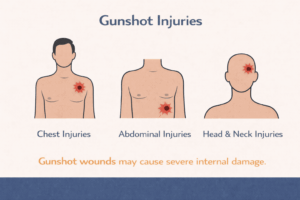
Gunshot wounds can cause different types of damage depending on the area affected:
Chest Injuries
- May affect lungs or heart
- Can interfere with breathing and circulation
Abdominal Injuries
- May involve internal organs
- Risk of internal bleeding
Limb Injuries
- Can damage bones, muscles, and blood vessels
- May result in heavy bleeding
Head and Neck Injuries
- Can affect brain or airway
- Often life-threatening
Even small entry wounds can hide serious internal damage.
Common First Aid Needs for Gunshot Wounds
Gunshot injuries often require:
- Immediate bleeding control
- Monitoring breathing and responsiveness
- CPR if the person becomes unresponsive
Rapid action is critical.
Symptoms and Warning Signs
Watch for:
- Heavy bleeding
- Difficulty breathing
- Pale or clammy skin
- Weakness or confusion
- Unresponsiveness
These may indicate shock or severe internal injury.
First Aid Response: What to Do
Based on standard first aid training practices in Canada:
- Ensure the scene is safe before approaching
- Call 911 immediately
- Apply firm pressure to control bleeding
- Use cloth or dressings if available
- Avoid probing or examining the wound deeply
- Monitor breathing and responsiveness
- Begin CPR if unresponsive and not breathing normally
These steps are commonly taught in certified first aid and CPR courses across Canada.
Shock Management
Gunshot injuries can quickly lead to shock.
General care includes:
- Keeping the person lying still if possible
- Maintaining warmth with clothing or blankets
- Providing reassurance
- Monitoring condition until help arrives
Early care can help stabilize the situation.
Prevention and Workplace Safety Considerations
In Winnipeg and across Manitoba, safety awareness includes:
- Emergency preparedness training
- Clear communication and reporting systems
- Access to first aid kits and trained personnel
- Situational awareness in public and work environments
Prepared individuals are better equipped to respond.
Frequently Asked Questions
What should you do if someone is shot?
Call 911 immediately, ensure the area is safe, and apply pressure to control bleeding while waiting for emergency responders.
Why is bleeding control important?
Severe blood loss can quickly become life-threatening. Controlling bleeding is a top priority in trauma care.
Can CPR be required after a gunshot injury?
Yes, if the person becomes unresponsive and is not breathing normally, CPR may be needed.
Are gunshot wounds always severe?
Even small wounds can cause serious internal damage, so all gunshot injuries should be treated as emergencies.
What are signs of shock after an injury?
Pale skin, weakness, confusion, and rapid breathing may indicate shock and require immediate attention.
Educational Note
This article is for general awareness and reflects techniques commonly taught in certified first aid and CPR training across Canada. Scene safety and rapid response are critical in trauma situations.
About The Author

Mark Kascha
Certified First Aid Instructor Trainer with 30+ years of real-world experience, including lifeguarding, workplace emergency response, and first aid program development across Canada. Has worked with WorkSafeBC, WSIB, and Manitoba Health.
👉 [View full credentials]🔗 View LinkedIn Profile
Last reviewed: March 2026