Understanding Pedestrian Collisions and Emergency Response
Pedestrian collisions can result in serious injuries, especially for older adults. Knowing what to do if an elderly person is struck by a vehicle or how to respond when someone is unresponsive after a collision is critical.
In Winnipeg, Manitoba, and across Canada, fast action—calling 911, providing first aid, and starting CPR if needed—can help support survival until emergency services arrive.
First Aid & Workplace Relevance in Canada
 Pedestrian incidents occur in residential streets, intersections, and parking areas across Winnipeg neighbourhoods such as Downtown, St. Vital, and Transcona.
Training is important for:
- Drivers and commuters
- Caregivers and family members
- Community members and bystanders
- Workplace and public safety staff
Programs such as CPR training Winnipeg, first aid certification Manitoba, and emergency response training Canada help individuals respond effectively—especially when assisting older adults.
Real-Life Scenario: Elderly Woman Struck in Richmond
In Richmond, an 81-year-old woman was struck by a vehicle at the intersection of No. 1 Road and Tucker Road.
Witnesses immediately stepped in to provide first aid and CPR while waiting for emergency crews. Despite these efforts, she later died in hospital due to her injuries.
According to Dennis Hwang, the driver remained at the scene and cooperated with investigators. Speed and alcohol were not considered contributing factors.
Authorities noted a rise in pedestrian-related incidents and emphasized the importance of awareness for both drivers and pedestrians.
Why Older Adults Are More Vulnerable
Elderly individuals are at higher risk during collisions due to:
- Reduced bone density (higher fracture risk)
- Slower reaction times
- Increased likelihood of complications
- Greater sensitivity to head and internal injuries
Even seemingly minor impacts can result in serious outcomes.
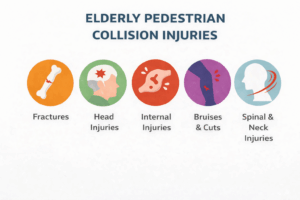
Common Injuries in Elderly Pedestrian Collisions
Fractures (Broken Bones)
- Hips, ribs, arms, and legs
- More likely due to fragile bones
Head Injuries and Concussions
- Higher risk of complications
- May result in confusion or loss of consciousness
Spinal and Neck Injuries
- Can affect mobility and sensation
Contusions (Bruising)
- May appear more severe due to thinner skin
Lacerations (Cuts)
- From impact with pavement or vehicle
Internal Injuries
- May not be immediately visible but can be life-threatening
Symptoms and Warning Signs
Watch for:
- Unresponsiveness
- Difficulty breathing
- Confusion or altered awareness
- Severe pain or inability to move
- Bleeding
Immediate action is required.
First Aid Response: What to Do
Based on standard first aid training practices in Canada:
- Ensure the scene is safe (watch for traffic)
- Call 911 immediately
- Check responsiveness and breathing
- Avoid moving the person unless necessary
- Support the head and neck if spinal injury is suspected
- Control bleeding with direct pressure
- Begin CPR if unresponsive and not breathing normally
Special Considerations for Elderly First Aid and CPR
When assisting older adults:
- Be gentle when applying pressure or positioning
- Monitor closely for changes in condition
- Understand injuries may be more severe than they appear
- Continue CPR if required until help arrives
These considerations are commonly taught in Canadian first aid courses.
Prevention and Community Safety Considerations
In Winnipeg and across Manitoba, pedestrian safety can be improved by:
- Staying visible (especially in low light)
- Using crosswalks and signals
- Drivers remaining alert in residential areas
- Reducing speed in pedestrian zones
- Community awareness campaigns
Both drivers and pedestrians play a role in safety.
Frequently Asked Questions
What should you do if an elderly person is hit by a vehicle?
Call 911 immediately, ensure the area is safe, and provide first aid while waiting for emergency responders.
Why are older adults more vulnerable in collisions?
They often have more fragile bones and are at higher risk of complications from injuries.
Should you move an injured elderly person?
Avoid moving them unless necessary, as movement may worsen injuries.
Can CPR be performed on older adults?
Yes, CPR can be performed and may help maintain circulation until help arrives.
What injuries are most common in elderly collisions?
Fractures, head injuries, and internal injuries are among the most common.
Educational Note
This article is for general awareness and reflects techniques commonly taught in certified first aid and CPR training across Canada. Early response and careful handling are essential when assisting older adults.
About The Author

Mark Kascha
Certified First Aid Instructor Trainer with 30+ years of real-world experience, including lifeguarding, workplace emergency response, and first aid program development across Canada. Has worked with WorkSafeBC, WSIB, and Manitoba Health.
👉 [View full credentials]🔗 View LinkedIn Profile
Last reviewed: March 2026