Vallejos recalled being pulled from another court when a junior player ran downstairs to alert him that someone was down. “You’ve got to act now,” Madsen said. “If we don’t do anything, who knows what the end result is going to be.”
AED Delivers a Life-Saving Shock
An automated external defibrillator (AED) was retrieved from another room and attached to Gray’s chest. The AED analyzed his heart rhythm and delivered a shock while Vallejos provided rescue breaths.
“Just the colour of his skin was enough to tell you something was seriously wrong,” Madsen said. “There was no blood flow.”
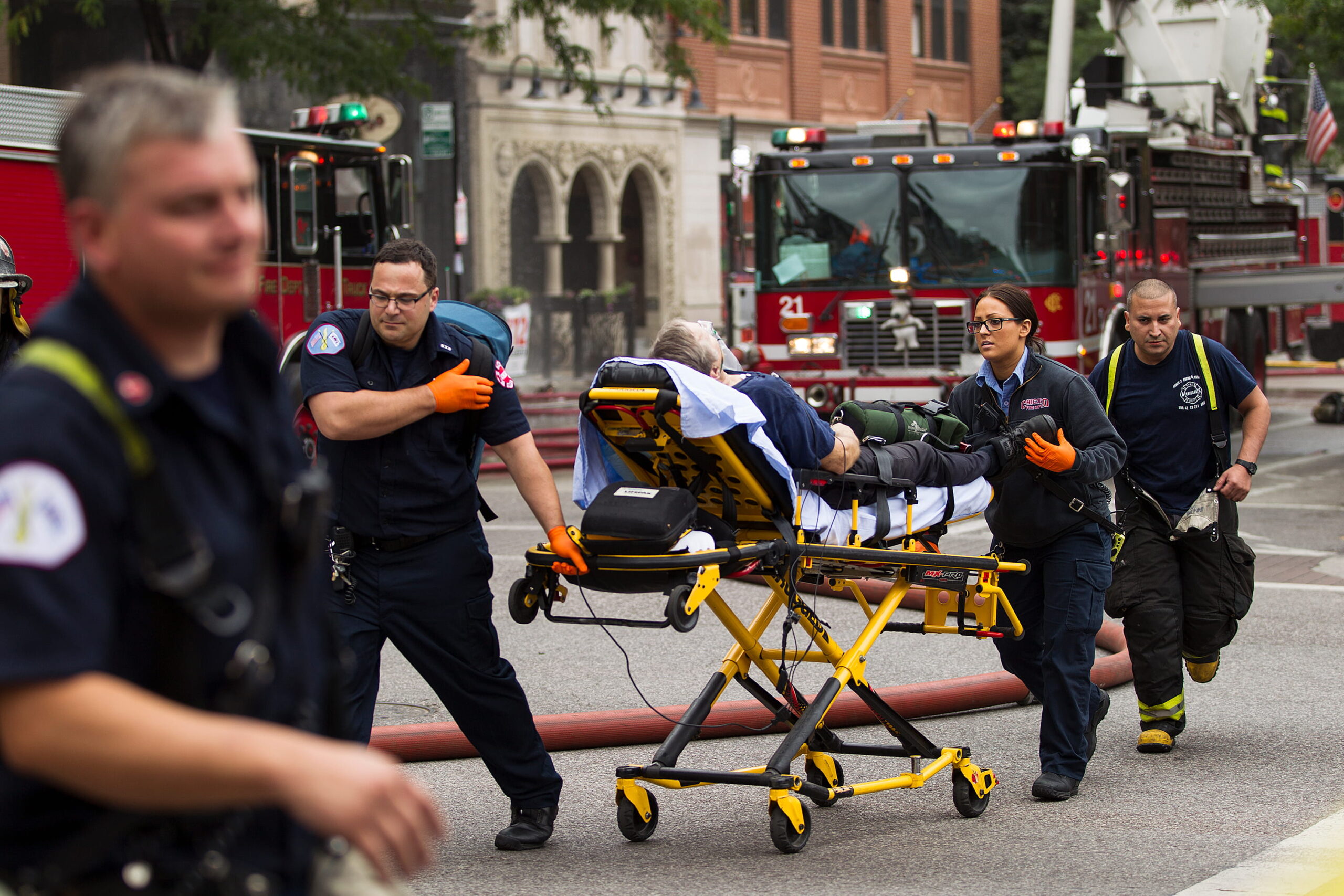
Moments later, Kristin Richardson, a nurse practitioner with Public Health who happened to be at the gym, arrived to help. She assessed the situation, instructed staff to call an ambulance, and continued CPR until paramedics arrived.
As CPR continued, Gray’s condition began to show signs of improvement.
“You could see the colour coming back to his face,” Madsen said. “He wasn’t so blue anymore. You could see his diaphragm trying to move.”
Recovery and a Second Chance at Life
Gray was rushed to Stanton Territorial Hospital, where he was placed in an induced coma. Three days later, he was transferred to Edmonton’s Royal Alexandra Hospital for further testing. Doctors determined that his heart was structurally healthy.
As a precaution, Gray now has an internal defibrillator implanted to protect him if he ever goes into cardiac arrest again.
Reflecting on the experience, Gray says there are no words that fully express his gratitude.
I’ve got a lot to say to all of them, and I haven’t figured out how I could ever repay them,” he said.
Without those people around i might not be here.
More details about this incident found in the original CBC News article here:  Rescuers restart man’s heart after collapse on Yellowknife squash court
This real-life emergency highlights how early CPR and rapid defibrillation can dramatically increase survival rates during cardiac arrest. Gray survived because people nearby recognized the Emergency acted immediately, and had access to life-saving equipment.
Cardiac arrest can happen to anyone—at the gym, at work, or at home. Learning CPR and how to properly use an AED gives everyday people the confidence to act when seconds matter most. If you’re interested in gaining these essential life-saving skills, explore CPR and AED training courses in Winnipeg.
Learn How You Can Help Save a Life
Enrolling in a CPR course prepares you to respond during emergencies—just like the individuals who saved Terry Gray.
For more information about CPR and AEDs, visit:
About The Author

Mark Kascha
Certified First Aid Instructor Trainer with 30+ years of real-world experience, including lifeguarding, workplace emergency response, and first aid program development across Canada. Has worked with WorkSafeBC, WSIB, and Manitoba Health.
👉 [View full credentials]🔗 View LinkedIn Profile
Last reviewed: March 2026