
Delay in Accessing a Defibrillator Raises Concerns About Emergency Preparedness

The death of an elderly passenger aboard a WestJet flight from Honolulu to Calgary has raised serious questions about emergency preparedness and access to lifesaving equipment during in-flight medical emergencies.

What Happened on the Flight

The flight departed Honolulu late at night on March 7 and was scheduled to arrive in Calgary the morning of March 8. Midway through the flight, passengers overheard flight attendants asking if there was a doctor or nurse on board.

A woman identified herself as a registered nurse and was escorted to a male passenger, believed to be in his 80s, who was seated near the front of the aircraft and showing signs of medical distress.

 Critical Delay in Finding the AED

According to reporting by CBC News, the nurse asked for assistance to move the man to the floor and requested that the flight crew retrieve the automated external defibrillator (AED).

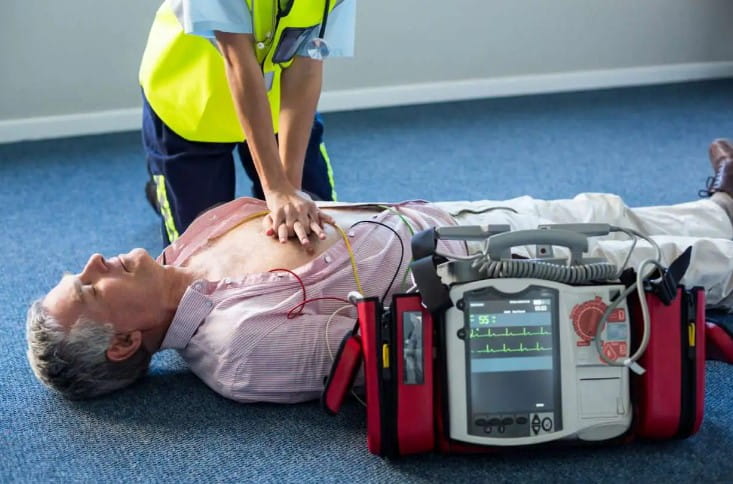
AED and CPR being used during a medical emergency on an aircraft
Delayed access to an AED during emergencies can significantly reduce survival chances without immediate CPR intervention.

Crew members were reportedly seen searching through overhead compartments, and it took approximately 10 minutes before the AED was located.

This delay is especially concerning because sudden cardiac arrest is extremely time-sensitive. According to the Heart and Stroke Foundation, when CPR and defibrillation are delivered within the first few minutes, survival rates can double. However, with every minute that passes without defibrillation, the chance of survival decreases by 7–10%.

CPR Efforts and Outcome

CBC News later confirmed that CPR was performed for more than 30 minutes before it was determined that the passenger had died. His body was then moved back into a seat and secured for the remainder of the flight.

Once the aircraft landed at Calgary International Airport at approximately 6:30 a.m., paramedics responded and officially pronounced the man deceased. It is not known whether earlier access to the AED would have changed the outcome in this specific case.

Readers can view the full original news report here:
👉 Failure to quickly find defibrillator for man who died on WestJet plane raises queries about crew preparedness

Airline Response and Broader Concerns

In a statement, WestJet confirmed that a medical incident occurred and stated that the flight crew used the AED and performed CPR with the assistance of the nurse on board. When asked whether the 10-minute delay was acceptable, the airline stated it was “comfortable with the way the situation was handled.”

WestJet also confirmed that all aircraft are equipped with a medical emergency kit, a MEDAire satellite phone for direct access to emergency physicians, and an AED. Transport Canada noted that medical emergencies onboard aircraft are not required to be reported to the agency.

Why AED and CPR Training Matters

This incident highlights an important reality: having an AED available is not enough. In high-stress emergencies, responders must know where equipment is stored and how to use it immediately.

AEDs are designed to be simple, safe, and effective when used quickly. When combined with prompt CPR, they significantly improve survival outcomes in cardiac arrest situations—whether on a plane, at work, or in the community.

Individuals interested in becoming prepared to respond to cardiac emergencies can Being trained saves lives. Enrolling in a first aid and CPR course gives you the skills and confidence to act quickly when every second counts.

For additional trusted information, visit:

About The Author

Mark Kascha

Certified First Aid Instructor Trainer with 30+ years of real-world experience, including lifeguarding, workplace emergency response, and first aid program development across Canada. Has worked with WorkSafeBC, WSIB, and Manitoba Health.

👉 [View full credentials]🔗 View LinkedIn Profile

Last reviewed: March 2026

Serving Winnipeg and south Manitoba with the cheapest priced, highest quality first aid training, CPR and food safety courses since 2012 with a commitment to providing the best classes to Canadians.

Shopping Cart
Scroll to Top
Call Now Button
Maple Leaf Choose locally-owned, Canadian-operated businesses with no connections or partnerships to American corporate entities. Maple Leaf
This is default text for notification bar