Understanding Snowmobile Accidents and Cold Exposure
Snowmobiling is a popular winter activity across Canada, but it comes with serious risks—especially in remote and mountainous areas. Knowing what to do if a snowmobile accident occurs or how to respond when someone is buried, injured, or unresponsive in the snow is critical.
In Winnipeg, Manitoba, and across Canada, rapid response, proper gear, and first aid training can make a life-saving difference in cold-weather emergencies.
First Aid & Workplace Relevance in Canada
 Winter recreation and backcountry travel are common across Manitoba and areas like Winnipeg, Transcona, and St. Vital, as well as rural and northern regions.
Training is important for:
- Snowmobilers and outdoor enthusiasts
- Search and rescue volunteers
- Workers in remote or outdoor environments
- Hunters, hikers, and winter travelers
Programs such as CPR training Winnipeg, first aid certification Manitoba, and wilderness first aid Canada prepare individuals for cold-weather emergencies.
Real-Life Scenario: Snowmobile Tragedy Near Whistler
At Mt. Callaghan, a 52-year-old snowmobiler stopped on a snow cornice that suddenly collapsed beneath him.
He fell approximately 250 feet and was partially buried in snow. Other snowmobilers nearby quickly responded, digging him out and performing CPR.
Despite their efforts, he was pronounced dead at the scene.
According to Carly Trobridge, the victim was an experienced outdoorsman who valued safety and avalanche awareness—highlighting how unpredictable backcountry conditions can be.
Common Injuries in Snowmobile Accidents
Traumatic Injuries
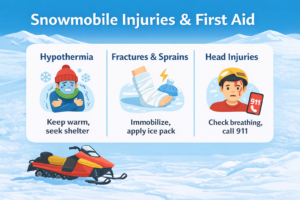
- Fractures (arms, legs, ribs)
- Head injuries and concussions
- Spinal and neck injuries
Soft Tissue Injuries
- Contusions (bruising)
- Lacerations (cuts)
Internal Injuries
- May not be immediately visible but can be serious
Burial and Suffocation Risks
- Snow can block the airway
- Limited oxygen can quickly lead to unconsciousness
Cold-Related Medical Emergencies
Hypothermia
- Occurs when the body loses heat faster than it can produce it
- Symptoms: shivering, confusion, fatigue
Frostbite
- Freezing of skin and tissue
- Common in fingers, toes, ears, and nose
Frostnip (Early Stage)
- Mild cold injury affecting skin surface
- Can progress if not addressed
Cold exposure can worsen other injuries and delay rescue.
Symptoms and Warning Signs
Watch for:
- Unresponsiveness
- Difficulty breathing
- Pale or cold skin
- Confusion or disorientation
- Severe pain or inability to move
Immediate action is required.
First Aid Response: What to Do
Based on standard first aid training practices in Canada:
- Ensure scene safety (watch for avalanche or terrain hazards)
- Call for help / 911 if possible
- Carefully remove snow from airway if buried
- Check responsiveness and breathing
- Begin CPR if unresponsive and not breathing normally
- Keep the person warm (insulate from snow and wind)
- Avoid unnecessary movement if spinal injury is suspected
Prevention and Snowmobile Safety
In Winnipeg and across Manitoba, safe snowmobiling includes:
- Checking weather and avalanche conditions
- Avoiding unstable terrain such as cornices
- Traveling with others (never alone)
- Wearing helmets and proper winter gear
- Carrying emergency equipment (beacon, shovel, probe, first aid kit)
Preparation is critical in remote environments.
Frequently Asked Questions
What injuries are common in snowmobile accidents?
Fractures, head injuries, spinal injuries, and cold-related conditions are common.
How dangerous is being buried in snow?
Snow can block airflow and lead to suffocation within minutes if the airway is obstructed.
What is hypothermia?
A dangerous drop in body temperature that can affect thinking and movement.
Should you move an injured person in the snow?
Avoid moving them unless necessary, especially if spinal injury is suspected.
Why is training important for winter activities?
It prepares individuals to respond safely in remote and cold environments.
Educational Note
This article is for general awareness and reflects techniques commonly taught in certified first aid and CPR training across Canada. Preparedness and early response are essential in cold-weather emergencies.
About The Author

Mark Kascha
Certified First Aid Instructor Trainer with 30+ years of real-world experience, including lifeguarding, workplace emergency response, and first aid program development across Canada. Has worked with WorkSafeBC, WSIB, and Manitoba Health.
👉 [View full credentials]🔗 View LinkedIn Profile
Last reviewed: March 2026