Understanding Drowning Emergencies in Children
Water emergencies involving children can happen quickly and often without warning. Knowing what to do if a child is pulled from water and not breathing or how to respond when a child becomes unresponsive in a pool is critical.
Children can lose consciousness within a short period if they are unable to breathe. Fast recognition and immediate action—especially CPR and safe water rescue techniques—can make a life-saving difference.
First Aid & Workplace Relevance in Winnipeg, Manitoba
 In Winnipeg, Manitoba, pools, splash parks, and recreation centres—such as those in St. Vital, Transcona, and Downtown Winnipeg—are common places where water-related emergencies may occur.
CPR training in Winnipeg and first aid certification in Manitoba are essential for:
- Lifeguards and recreation staff
- Teachers and school supervisors
- Parents and caregivers
- Fitness and facility employees
These skills are widely taught in emergency response training across Canada, helping individuals respond effectively in public and workplace environments.
Scenario: Child Rescued at Westhills YMCA-YWCA
At the Westhills YMCA-YWCA on Vancouver Island, lifeguards and staff were recognized for their quick actions in saving the life of a young child.
According to reports, the child had been submerged for approximately 30 seconds before being noticed and pulled from the water. A witness described the situation as urgent, with the child appearing unconscious when removed from the pool.
Lifeguards immediately began life-saving first aid, while two off-duty paramedics nearby stepped in to assist. Together, they worked to support the child’s breathing and circulation.
The YMCA/YWCA of Vancouver Island confirmed that it was a medical emergency. The facility was quickly cleared, and the pool temporarily closed while responders focused on the rescue.
Thanks to the coordinated efforts, the child regained consciousness before being transported to a healthcare facility.
While this incident occurred in British Columbia, similar situations can happen in Winnipeg pools and recreation centres, where quick action by trained staff and bystanders is critical.
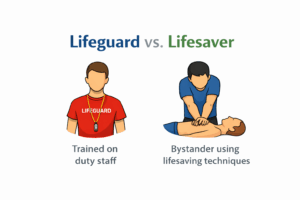
Lifeguards vs. Lifesavers: What’s the Difference?
Understanding roles in a water emergency is important:
Lifeguards
- Trained professionals responsible for monitoring swimmers
- Actively supervise water areas and prevent incidents
- Certified in rescue techniques, CPR, and emergency procedures
- Typically employed at pools, beaches, and aquatic facilities
Lifesavers (Bystanders Using Lifesaving Techniques)
- Members of the public who step in during an emergency
- May not be on duty but can assist using basic rescue and first aid skills
- Often rely on training such as CPR courses in Winnipeg or general water safety knowledge
Why Lifesaving Techniques Matter
If you are not the lifeguard on duty, it is still important to act safely and appropriately:
- Use non-contact rescue methods first (reach or throw, don’t go if unsafe)
- Avoid putting yourself at risk
- Assist with CPR once the person is out of the water
- Support trained responders when they arrive
These principles are commonly taught in first aid and water safety training across Canada.
Symptoms and Warning Signs After a Water Incident
After a child is removed from water, watch for:
- Unresponsiveness or decreased awareness
- Difficulty breathing or irregular breathing
- Persistent coughing
- Pale or bluish skin tone
- Fatigue or confusion
Even if the child regains consciousness, monitoring is important as symptoms can develop later.
Causes and Risk Factors
Common factors in child water emergencies include:
- Lack of supervision
- Slippery pool edges or sudden slips
- Inexperience in swimming
- Distractions in busy pool environments
- Overcrowding in public facilities
In Manitoba, indoor pools and summer recreation programs require constant supervision and awareness.
First Aid Response: What to Do
Based on standard first aid training practices in Canada:
- Remove the child from the water safely
- Call for help and alert lifeguards immediately
- Check breathing and responsiveness
- If not breathing, begin CPR (chest compressions and rescue breaths)
- Continue until the child starts breathing or help arrives
- Monitor closely even after recovery
Early CPR is especially important in children, as oxygen deprivation is a key concern.
Prevention and Workplace Safety Considerations
Preventing water incidents is critical across Winnipeg and Manitoba:
- Always supervise children around water
- Ensure staff are trained in CPR and AED use in Winnipeg
- Follow pool safety rules and capacity limits
- Encourage swimming lessons and water safety education
- Maintain clear emergency response plans
Prepared environments help reduce risk and improve outcomes.
Frequently Asked Questions
What should you do if a child is unconscious in water?
Remove the child from the water safely and call for help immediately. Check breathing and begin CPR if necessary. Quick action is essential and is commonly taught in CPR training across Canada.
What is the difference between a lifeguard and a lifesaver?
A lifeguard is a trained professional responsible for supervising swimmers, while a lifesaver is a bystander who assists during an emergency using basic rescue and first aid skills.
Should you help if you’re not a lifeguard?
Yes, but only if it is safe. Use simple, low-risk rescue methods and avoid entering the water if it puts you in danger. Assist with CPR and follow guidance from trained responders.
Why is CPR important in drowning cases involving children?
Children are especially vulnerable to lack of oxygen. CPR helps restore oxygen flow to the brain and body, improving the chances of recovery until emergency services arrive.
Can a child recover after being submerged?
In some cases, yes—especially with quick rescue and immediate first aid. However, all water incidents should be taken seriously and followed up with medical evaluation.
Educational Note
This article is for general awareness and reflects commonly taught first aid and water safety practices in Canada. Quick recognition, safe rescue, and early CPR are key in water-related emergencies.
About The Author

Mark Kascha
Certified First Aid Instructor Trainer with 30+ years of real-world experience, including lifeguarding, workplace emergency response, and first aid program development across Canada. Has worked with WorkSafeBC, WSIB, and Manitoba Health.
👉 [View full credentials]🔗 View LinkedIn Profile
Last reviewed: March 2026