
Understanding Drowning Emergencies and CPR Response
Drowning emergencies require immediate action, especially when a child is not breathing. Knowing what to do if a child is pulled from water and unresponsive or how to respond when CPR is needed after a drowning incident can save a life.
Unlike some cardiac emergencies, drowning is primarily a lack of oxygen problem. This is why both chest compressions and rescue breaths (ventilations) are especially important in these situations.
First Aid & Workplace Relevance in Winnipeg, Manitoba
In Winnipeg, Manitoba, water-related incidents can occur at pools, community centres, and recreation facilities in areas like St. Vital, Transcona, and Downtown Winnipeg.
CPR training in Winnipeg and first aid certification in Manitoba are essential for:
- Lifeguards and aquatic staff
- Parents and caregivers
- Teachers and school supervisors
- Fitness and recreation workers
These skills are commonly taught in emergency response training across Canada, helping individuals respond quickly and confidently.
Scenario: Off-Duty Paramedic Responds at Langford Pool
 At a pool in Langford, British Columbia, a potentially life-threatening situation unfolded when a young child was pulled from the water unresponsive.
Kyle Klint and his wife, Karlie Wilson, were at the Westhills YMCA-YWCA pool with their children when they noticed lifeguards reacting and heard a whistle signaling an emergency.
Wilson quickly reached the child, identified herself as a paramedic, and immediately began CPR. Klint moved down from a nearby slide and saw the child being pulled from the water—pale and not moving.
Working together, they coordinated their efforts:
- Wilson continued chest compressions
- Klint helped clear the airway and provided rescue breaths (ventilations)
They maintained this effort for approximately three and a half minutes, after which the child began to take small breaths independently. Within about five minutes, the child became responsive and started crying.
Emergency medical services arrived shortly after and transported the child to Victoria General Hospital.
This incident highlights how fast, coordinated action—and proper CPR technique—can make a critical difference. Similar situations can occur in Winnipeg pools and aquatic facilities, where trained responders and bystanders play an important role.
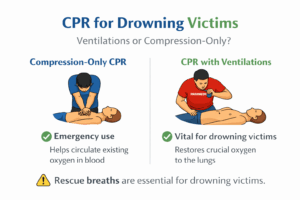
Ventilations vs. Compression-Only CPR in Drowning
Understanding the difference is important:
Compression-Only CPR
- Focuses on chest compressions only
- Commonly used in adult sudden cardiac arrest
- Helps circulate existing oxygen in the blood
CPR with Ventilations (Rescue Breaths)
- Combines compressions with breaths
- Especially important in drowning cases
- Helps introduce oxygen into the lungs
Why Ventilations Matter in Drowning
In drowning emergencies, the main issue is oxygen deprivation, not just circulation. This means:
- Rescue breaths help restore oxygen levels
- Compressions alone may not be enough
- Combined CPR (compressions + breaths) is commonly taught for children and drowning victims in certified CPR courses across Canada
Symptoms and Warning Signs After a Water Incident
After a child is rescued, watch for:
- Slow or irregular breathing
- Persistent coughing
- Fatigue or unusual quietness
- Confusion or decreased responsiveness
- Pale or bluish skin tone
Even if the child improves, continued monitoring is important.
Causes and Risk Factors
Water-related emergencies in children can occur due to:
- Lack of supervision
- Slips or falls into water
- Fatigue while swimming
- Panic or inability to stay afloat
- Crowded pool environments
In Manitoba, both indoor and outdoor aquatic settings require constant awareness and supervision.
First Aid Response: What to Do
Based on standard first aid training practices in Canada:
- Remove the child from the water safely
- Call for help and alert lifeguards immediately
- Check breathing and responsiveness
- If not breathing, begin CPR with compressions and rescue breaths
- Continue until breathing returns or help arrives
- Monitor closely after recovery
Using both compressions and ventilations is especially important in drowning-related emergencies.
Prevention and Workplace Safety Considerations
To reduce risk in Winnipeg and across Manitoba:
- Always supervise children near water
- Ensure staff have CPR and AED training in Winnipeg
- Follow pool safety guidelines
- Encourage swimming lessons and water safety education
- Maintain clear emergency procedures in facilities
Preparedness helps improve outcomes in emergencies.
Frequently Asked Questions
What should you do if a child is not breathing after being in water?
Call for help immediately and begin CPR with both chest compressions and rescue breaths. This approach is commonly taught in CPR training across Canada for drowning-related emergencies.
Why are rescue breaths important in drowning cases?
Drowning limits oxygen intake, so rescue breaths help restore oxygen to the lungs. This makes combined CPR more effective than compression-only CPR in these situations.
Can compression-only CPR be used for drowning?
Compression-only CPR may help circulate blood, but it does not provide oxygen. In drowning cases, rescue breaths are strongly emphasized in training.
How quickly should CPR be started after a water rescue?
As soon as the person is removed from the water and found not breathing, CPR should begin immediately. Early action improves outcomes.
Who should learn CPR in Winnipeg?
Parents, teachers, lifeguards, and workers can all benefit. CPR training in Winnipeg prepares individuals to respond effectively in emergencies.
Educational Note
This article is for general awareness and reflects commonly taught first aid and CPR practices in Canada. Quick action, including the use of ventilations in drowning cases, plays a key role in emergency response.
About The Author

Mark Kascha
Certified First Aid Instructor Trainer with 30+ years of real-world experience, including lifeguarding, workplace emergency response, and first aid program development across Canada. Has worked with WorkSafeBC, WSIB, and Manitoba Health.
👉 [View full credentials]🔗 View LinkedIn Profile
Last reviewed: March 2026