Understanding Road Emergencies and Head Injury Risks
Road collisions—whether involving motorcycles, bicycles, or vehicles—can result in serious injuries within seconds. Knowing what to do if someone is unresponsive after a crash or how to respond when CPR is needed at the scene is critical.
One of the most serious risks in any road incident is head injury, especially when a rider is not wearing a helmet. Even at moderate speeds, impacts can lead to life-threatening outcomes.
First Aid & Workplace Relevance in Winnipeg, Manitoba
In Winnipeg, Manitoba, road incidents occur on busy streets in areas like Downtown Winnipeg, St. Vital, and Transcona, as well as along commuter routes and bike paths.
CPR training in Winnipeg and first aid certification in Manitoba are essential for:
- Cyclists and commuters
- Delivery and transportation workers
- Construction and roadside crews
- Teachers, parents, and community members
These skills are widely taught in emergency response training across Canada, helping bystanders act quickly before paramedics arrive.
Scenario: Collision on Schubert Drive
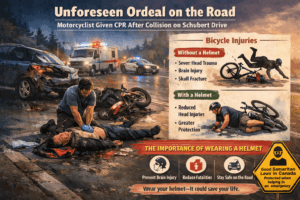 A fatal crash occurred on Schubert Drive near Richmond Avenue in Kamloops, British Columbia, involving a rider who struck a parked vehicle.
According to Kamloops RCMP, speed was a contributing factor in the collision. The 34-year-old man, believed to be local, sustained critical injuries.
Witness Stephanie Moniuk and her friend were among the first to arrive at the scene. She described seeing one man performing CPR, while another injured individual lay motionless on the pavement nearby. It appeared the two may have been riding together.
Moniuk immediately called emergency services and soon heard sirens approaching. Her friend rushed to assist with resuscitation efforts, helping provide CPR until responders arrived.
A damaged van with front-end impact was seen nearby, indicating the force of the collision. Despite efforts by bystanders and emergency crews, the man was declared deceased at the scene. The area remained closed while RCMP and the BC Coroners Service conducted their investigation.
While this incident involved a motorcycle, similar risks apply to cyclists in Winnipeg and across Manitoba, especially when speed, visibility, or lack of protective equipment are factors.
Bicycle Injuries: With and Without Safety Equipment
Cyclists face many of the same risks as motorcyclists, particularly in collisions with vehicles or fixed objects.
Common Injuries (With or Without Equipment)
- Broken bones (arms, legs, collarbone)
- Road rash or abrasions
- Chest and abdominal injuries
- Spinal injuries
- Concussions
Injuries Without a Helmet
Riding without a helmet significantly increases the risk of:
- Severe head trauma
- Brain injury
- Skull fractures
- Loss of consciousness
Even a fall at low speed can result in serious head injury without protection.
Injuries With a Helmet
Helmets help reduce the severity of impact but may still be associated with:
- Minor concussions
- Facial injuries
- Neck strain
However, helmets are widely recognized as one of the most effective ways to reduce serious injury and fatal outcomes.
Why Helmets Are Critical
Wearing a helmet:
- Helps absorb impact forces
- Protects the brain during sudden stops or collisions
- Reduces the risk of life-threatening injury
- Is strongly recommended in cycling safety practices across Canada
In Winnipeg and Manitoba, helmet use is an important part of both recreational and workplace safety for cyclists.
Symptoms and Warning Signs After a Crash
After a collision, watch for:
- Unresponsiveness or unconsciousness
- Headache or confusion
- Difficulty breathing
- Visible injuries or bleeding
- Neck or back pain
- Dizziness or loss of balance
Symptoms may not appear immediately, so ongoing observation is important.
First Aid Response: What to Do
Based on standard first aid training practices in Canada:
- Ensure scene safety (watch for traffic and hazards)
- Call emergency services immediately
- Check responsiveness and breathing
- If not breathing, begin CPR (chest compressions)
- Avoid moving the person unless necessary
- Support the head and neck if possible
- Stay with the person until help arrives
Using an AED may also be part of the response if available.
Prevention and Workplace Safety Considerations
To reduce risk in Winnipeg and across Manitoba:
- Always wear a properly fitted helmet when cycling
- Follow traffic laws and use bike lanes where available
- Ensure visibility with lights and reflective gear
- Provide first aid and CPR training in Winnipeg workplaces
- Promote cycling safety education in schools and communities
Preparedness and proper equipment significantly reduce injury risk.
Frequently Asked Questions
What should you do if a cyclist is unconscious after a crash?
Call emergency services immediately and check for breathing. If the person is not breathing, begin CPR. Avoid moving them unless necessary due to possible spinal injuries.
Why are helmets so important when cycling?
Helmets help reduce the risk of serious head injury by absorbing impact forces. They are one of the most effective safety measures for cyclists.
Can you still get injured while wearing a helmet?
Yes, but helmets significantly reduce the severity of head injuries. Other injuries may still occur, but outcomes are generally improved.
What injuries are common in bicycle accidents?
Common injuries include fractures, abrasions, head injuries, and concussions. The severity depends on speed, impact, and protective equipment used.
Who should take CPR training in Winnipeg?
Anyone can benefit, including cyclists, workers, and community members. CPR training prepares individuals to respond quickly in emergencies.
Educational Note
This article is for general awareness and reflects commonly taught first aid and safety practices in Canada. Proper equipment, including helmets, and quick emergency response play a key role in reducing injury severity.
About The Author

Mark Kascha
Certified First Aid Instructor Trainer with 30+ years of real-world experience, including lifeguarding, workplace emergency response, and first aid program development across Canada. Has worked with WorkSafeBC, WSIB, and Manitoba Health.
👉 [View full credentials]🔗 View LinkedIn Profile
Last reviewed: March 2026