Understanding Drowning Risks in Group Settings
Swimming in groups can feel safer, but it can also create a false sense of security. Knowing what to do if someone in your group is struggling in water or how to respond when CPR is needed after a drowning incident is critical.
Drowning is often silent and quick—especially in natural swimming areas where conditions can change unexpectedly.
First Aid & Workplace Relevance in Winnipeg, Manitoba
 In Winnipeg, Manitoba, popular swimming areas such as rivers, lakes, and quarries—along with community pools in St. Vital, Transcona, and Downtown Winnipeg—present similar risks.
CPR training in Winnipeg and first aid certification in Manitoba are important for:
- Youth leaders and camp supervisors
- Teachers and school groups
- Parents and caregivers
- Recreation and outdoor workers
These skills are widely taught in emergency response training across Canada, helping groups respond effectively in water emergencies.
Scenario: Drowning at Jim Dunn’s Hole
A tragic incident occurred in Flatrock, Newfoundland, at a popular swimming area known as Jim Dunn’s Hole, located off Windgap Road.
At approximately 3:30 PM, a 16-year-old boy was swimming with others when he encountered difficulty in the water.
Emergency response teams—including the Torbay Volunteer Fire Department, St. John’s Regional Fire Department, and a Cold Water Rescue team—were dispatched to the scene.
The boy was eventually brought out of the water. An onlooker immediately began CPR before he was transferred to paramedics and transported to the Health Sciences Centre. Despite these efforts, he was later declared deceased.
Authorities, including the Royal Newfoundland Constabulary, gathered statements from witnesses to understand what happened.
This incident highlights the importance of awareness and preparedness—especially in group settings, which are common in Manitoba’s recreational swimming areas.
Water Safety in Groups with Mixed Skill Levels
Swimming with people of different abilities requires extra awareness.
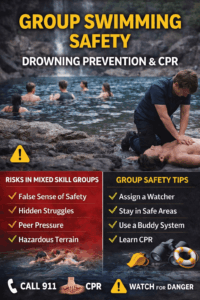
Key Risks in Group Swimming
- Stronger swimmers may move farther from shore
- Less experienced swimmers may struggle silently
- Groups may assume “someone else is watching”
- Peer pressure may lead individuals into unsafe areas
Best Practices for Group Safety
- Assign a watcher: Ensure someone is always actively observing
- Stay within skill limits: Avoid deep or fast-moving water if unsure
- Buddy system: Pair swimmers and check in regularly
- Know entry/exit points: Identify safe ways in and out of the water
- Avoid risky terrain: Rocks, drop-offs, and currents increase danger
These principles are commonly taught in water safety training across Canada.
Symptoms and Warning Signs of Drowning
Watch for:
- Head low in water or mouth at water level
- Gasping or trying to breathe
- Quiet or no movement
- Unresponsiveness after rescue
- Difficulty breathing
Drowning is often silent—constant observation is key.
First Aid Response: What to Do
Based on standard first aid training practices in Canada:
- Ensure your own safety first
- Remove the person from the water safely
- Call emergency services immediately
- Check breathing and responsiveness
- If not breathing, begin CPR with compressions and rescue breaths
- Continue until help arrives
Rescue breaths are especially important in drowning emergencies.
Prevention and Water Safety Considerations
To reduce risks in Winnipeg and across Manitoba:
- Supervise group swimming activities closely
- Avoid swimming in unsupervised or hazardous areas
- Encourage swimming lessons and skill development
- Ensure access to CPR training in Winnipeg
- Promote awareness of water hazards
Prepared groups are safer groups.
Frequently Asked Questions
Why is group swimming sometimes risky?
Groups can create a false sense of safety. Individuals may assume others are watching, which can delay recognition of an emergency.
What should you do if someone is struggling in water?
Call for help and attempt a safe rescue using reach or throw methods. Avoid entering the water unless it is safe.
Why are rescue breaths important in drowning?
Drowning reduces oxygen levels, so rescue breaths help restore oxygen and improve the effectiveness of CPR.
How can groups stay safer while swimming?
Use a buddy system, assign supervision, and stay within skill limits. Awareness and planning are key.
Who should take CPR training in Winnipeg?
Anyone involved in group activities or water recreation can benefit. Training prepares individuals to respond effectively.
Educational Note
This article is for general awareness and reflects commonly taught first aid and water safety practices in Canada. Supervision, safe practices, and early CPR are key in drowning emergencies.
About The Author

Mark Kascha
Certified First Aid Instructor Trainer with 30+ years of real-world experience, including lifeguarding, workplace emergency response, and first aid program development across Canada. Has worked with WorkSafeBC, WSIB, and Manitoba Health.
👉 [View full credentials]🔗 View LinkedIn Profile
Last reviewed: March 2026