Understanding Water Emergencies and Boating Risks
Boating and rafting incidents can escalate quickly, even in calm-looking water. Knowing what to do if a raft overturns or how to respond when someone is pulled from water and not breathing is critical.
In water-related emergencies, the primary concern is lack of oxygen, which is why CPR that includes rescue breaths (ventilations) is especially important.
First Aid & Workplace Relevance in Winnipeg, Manitoba
In Winnipeg, Manitoba, boating and water recreation are common on the Red River, Assiniboine River, and nearby lakes. Similar risks exist in both recreational and work environments.
CPR training in Winnipeg and first aid certification in Manitoba are important for:
- Boaters and outdoor recreation groups
- Fishing and tourism workers
- Camp leaders and guides
- Families and community members
These skills are widely taught in emergency response training across Canada, helping people respond quickly during water emergencies.
Scenario: Raft Overturns on Miramichi River
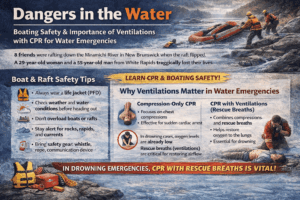 A tragic incident occurred on New Brunswick’s Miramichi River in the Gray Rapids area, where a group of eight friends were rafting when their raft suddenly overturned.
According to RCMP Sgt. Brent Johnston, six individuals were able to reach shore on their own. However, two members of the group did not make it out safely.
A 29-year-old woman from White Rapids was pulled from the water by first responders. CPR was administered at the scene, and she was transported to a healthcare facility, where she was later declared deceased.
Shortly after, the body of a 55-year-old man, also from White Rapids, was recovered. Authorities noted that foul play was not suspected, and an investigation was underway to determine why the raft overturned, despite reports that water conditions did not appear extreme.
This incident highlights how quickly conditions can change on rivers—even those that seem manageable. Similar risks exist across Manitoba waterways, where currents, obstacles, and environmental factors can create unexpected hazards.
Boating and Rafting Safety Essentials
Preventing water emergencies starts with preparation:
- Always wear a properly fitted life jacket (PFD)
- Check weather and water conditions before heading out
- Avoid overloading boats or rafts
- Stay aware of obstacles like rocks and rapids
- Ensure someone knows your planned route and return time
- Carry safety equipment (whistle, rope, communication device)
In Canada, life jackets are strongly recommended and are a key part of boating safety guidelines.
Why Ventilations Are Critical in Water Emergencies
Compression-Only CPR
- Focuses on chest compressions
- Helps circulate oxygen already in the blood
- Common in sudden cardiac arrest cases
CPR with Ventilations (Rescue Breaths)
- Combines compressions with breaths
- Essential in drowning and water incidents
- Helps restore oxygen to the lungs
Key Point
In drowning situations, oxygen levels are already low. This means:
- Rescue breaths are necessary to introduce oxygen
- Compressions alone may not be sufficient
- Combined CPR (compressions + ventilations) is commonly taught in certified CPR courses across Canada
Symptoms and Warning Signs After a Water Incident
Watch for:
- Difficulty or absence of breathing
- Persistent coughing
- Fatigue or confusion
- Pale or bluish skin
- Unresponsiveness
Even if someone appears to recover, monitoring is important.
First Aid Response: What to Do
Based on standard first aid training practices in Canada:
- Ensure your own safety first
- Remove the person from the water safely
- Call emergency services immediately
- Check breathing and responsiveness
- If not breathing, begin CPR with compressions and rescue breaths
- Continue until help arrives or breathing returns
Early ventilations are especially important in water-related emergencies.
Prevention and Workplace Safety Considerations
To reduce risks in Winnipeg and across Manitoba:
- Provide CPR and AED training in Winnipeg workplaces
- Enforce life jacket use during water activities
- Train staff in water rescue awareness
- Conduct safety briefings before trips
- Promote water safety education
Prepared groups are better equipped to respond in emergencies.
Frequently Asked Questions
What should you do if a raft overturns?
Stay calm, try to keep your head above water, and move toward shore or a safe area. Once out, check others and call for help if anyone is missing or injured.
Why are rescue breaths important in drowning cases?
Drowning reduces oxygen levels in the body. Rescue breaths help restore oxygen to the lungs, making CPR more effective in these situations.
Are life jackets really necessary in calm water?
Yes, even calm water can become dangerous quickly. Life jackets provide critical flotation and increase survival chances during unexpected incidents.
Can CPR save someone after drowning?
CPR can help restore breathing and circulation if started quickly. Early action by bystanders is emphasized in CPR training across Canada.
Who should take CPR training in Winnipeg?
Boaters, families, workers, and outdoor enthusiasts can all benefit. Training prepares individuals to respond effectively in emergencies.
Educational Note
This article is for general awareness and reflects commonly taught first aid and water safety practices in Canada. Safe boating practices and early CPR with ventilations are key in water emergencies.
About The Author

Mark Kascha
Certified First Aid Instructor Trainer with 30+ years of real-world experience, including lifeguarding, workplace emergency response, and first aid program development across Canada. Has worked with WorkSafeBC, WSIB, and Manitoba Health.
👉 [View full credentials]🔗 View LinkedIn Profile
Last reviewed: March 2026