Understanding Heart Attacks and Cardiac Emergencies
A heart attack occurs when blood flow to part of the heart is blocked, while cardiac arrest happens when the heart stops beating effectively. Knowing what to do if someone collapses during a heart attack or how to respond when CPR and an AED are needed can save a life.
In many cases, individuals with a history of heart problems may carry prescribed emergency medications, which can play an important role during an incident.
First Aid & Workplace Relevance in Winnipeg, Manitoba
 In Winnipeg, Manitoba, cardiac emergencies can happen anywhere—schools, workplaces, and public settings such as Downtown Winnipeg, St. Vital, and Transcona.
CPR training in Winnipeg and first aid certification in Manitoba are essential for:
- Office and school staff
- Public service workers
- Teachers and administrators
- Community members and volunteers
These skills are widely taught in emergency response training across Canada, helping bystanders respond quickly and confidently.
Scenario: Life Saved at a Polling Station
At a polling place inside Barnard Elementary School in Washington, D.C., a 75-year-old man collapsed while voting.
Several staff members—including an election observer, assistant principal, and school counsellor—quickly recognized the emergency and stepped in to help.
They immediately:
- Called emergency services (911)
- Began CPR, taking turns to maintain compressions
- Retrieved and used an AED (Automated External Defibrillator)
Following dispatcher instructions, they continued their efforts until emergency responders arrived. A firefighter and paramedic later credited their teamwork for helping restore the man’s breathing and consciousness.
This type of coordinated response is equally important in Winnipeg schools, workplaces, and public buildings, where AEDs and trained staff can make a life-saving difference.
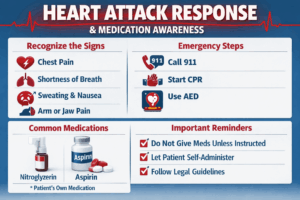
Heart Attack Symptoms and Warning Signs
Recognizing early signs is critical:
- Chest discomfort or pressure
- Pain in the arm, neck, jaw, or back
- Shortness of breath
- Nausea or lightheadedness
- Sweating or fatigue
If symptoms progress to unresponsiveness, immediate CPR may be required.
Medications Carried by Heart Patients
Some individuals with known heart conditions may carry medications such as:
- Nitroglycerin (for chest pain relief)
- Aspirin (as advised by their healthcare provider)
Important Considerations
- These medications are prescribed for that individual only
- The person may indicate how and when to use them
- Bystanders should not administer medication unless directed and trained
- Always prioritize calling emergency services
This approach aligns with first aid training standards in Canada, which emphasize safety and acting within your level of training.
Legal Considerations in Canada
Providing Help (Good Samaritan Principles)
In Canada:
- Bystanders who help in good faith are generally protected under Good Samaritan laws
- Acting within your training level is important
- Providing CPR and using an AED is encouraged
Medication Use
- Giving someone else’s prescribed medication without proper direction may have legal and safety implications
- If the person is conscious, they may self-administer their medication
- Always follow dispatcher instructions when available
These principles are commonly discussed in CPR and first aid courses in Winnipeg and across Manitoba.
First Aid Response: What to Do
Based on standard first aid training practices in Canada:
- Call emergency services immediately
- Check responsiveness and breathing
- If not breathing, begin CPR (chest compressions)
- Retrieve and use an AED as soon as possible
- Continue CPR until help arrives
Early CPR and AED use are critical in cardiac emergencies.
Prevention and Workplace Safety Considerations
To improve response readiness in Winnipeg and across Manitoba:
- Install AEDs in workplaces and public buildings
- Ensure staff are trained in CPR and AED use in Winnipeg
- Encourage awareness of heart attack symptoms
- Promote regular health check-ups
- Develop emergency response plans
Prepared environments can significantly improve outcomes.
Frequently Asked Questions
What should you do if someone collapses from a heart attack?
Call emergency services immediately and check for breathing. If the person is not breathing, begin CPR and use an AED as soon as possible.
Can you give someone their heart medication?
Only if the person is conscious and able to take it themselves, or if you are trained and instructed to assist. Do not give medication without proper guidance.
Why is an AED important during a heart emergency?
An AED can help restore a normal heart rhythm during cardiac arrest. Early use improves survival chances.
Are you legally protected if you help someone in Canada?
Yes, Good Samaritan laws generally protect individuals who provide reasonable assistance in good faith.
Who should take CPR training in Winnipeg?
Anyone can benefit, including workers, teachers, and community members. Training prepares individuals to respond effectively in emergencies.
Educational Note
This article is for general awareness and reflects commonly taught first aid practices in Canada. Recognizing symptoms, acting quickly, and using available tools like AEDs are key in cardiac emergencies.
About The Author

Mark Kascha
Certified First Aid Instructor Trainer with 30+ years of real-world experience, including lifeguarding, workplace emergency response, and first aid program development across Canada. Has worked with WorkSafeBC, WSIB, and Manitoba Health.
👉 [View full credentials]🔗 View LinkedIn Profile
Last reviewed: March 2026