Understanding Sudden Medical Emergencies in Public Places
Medical emergencies can happen anywhere—even during major sporting events. Knowing what to do if someone collapses in a crowd or how to respond when CPR and an AED are needed in a public setting can make a life-saving difference.
In many cases, these incidents may involve cardiac arrest, where immediate CPR and AED use are critical.
First Aid & Workplace Relevance in Winnipeg, Manitoba
In Winnipeg, Manitoba, large venues like hockey arenas, community centres, and stadiums in areas such as Downtown Winnipeg, St. Vital, and Transcona regularly host large crowds.
CPR training in Winnipeg, AED training in Canada, and first aid certification in Manitoba are essential for:
- Arena staff and event personnel
- Coaches and volunteers
- Security teams and facility operators
- Members of the public
These skills are widely taught in emergency response training across Canada, helping ensure rapid response in crowded environments.
Scenario: CPR Emergency During NHL Game
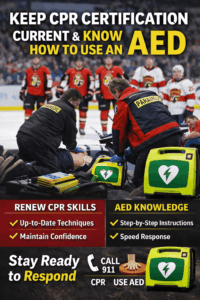 During a game between the Ottawa Senators and Florida Panthers, play was suddenly interrupted due to a medical emergency involving a fan in the stands.
With 3:37 remaining in the first period, both teams were sent back to their dressing rooms while emergency personnel responded.
The fan required CPR, and attention quickly shifted from the game to the unfolding emergency. The delay impacted players, staff, and spectators, highlighting how serious and unexpected these situations can be.
After the situation was addressed, play resumed—but the game was later delayed again due to a separate on-ice injury requiring a stretcher.
This incident shows how quickly emergencies can occur in public settings—something that is equally relevant in Winnipeg arenas and event spaces.
Why CPR Certification Must Be Kept Current
CPR techniques and guidelines evolve based on research and real-world outcomes. Keeping certification current ensures:
- You are using up-to-date techniques
- You understand correct compression depth and rate
- You can respond confidently in high-pressure situations
- You are familiar with current AED protocols
In Winnipeg and across Manitoba, many certifications require renewal every 1–3 years, depending on workplace or organizational standards.
Importance of Knowing How to Use an AED
AEDs are commonly available in arenas and public venues, but effective use depends on familiarity.
Why AED Training Matters
- AEDs provide step-by-step voice instructions, but training improves speed and confidence
- Knowing pad placement and safety precautions helps avoid delays
- Early AED use can significantly improve outcomes in cardiac arrest
Key Points
- AEDs are safe and designed for public use
- They analyze heart rhythm and only deliver a shock if needed
- They are most effective when used as soon as possible
This knowledge is commonly taught in CPR and AED courses in Winnipeg and across Canada.
Symptoms and Warning Signs of Cardiac Emergency
Watch for:
- Sudden collapse
- No breathing or abnormal breathing
- Unresponsiveness
- Possible seizure-like activity
Immediate action is critical.
First Aid Response: What to Do
Based on standard first aid training practices in Canada:
- Call emergency services immediately
- Check responsiveness and breathing
- Begin CPR (chest compressions)
- Retrieve and use an AED as soon as possible
- Follow AED prompts
- Continue CPR until help arrives
Early CPR and AED use are critical in public emergencies.
Prevention and Public Safety Considerations
To improve safety in Winnipeg and across Manitoba:
- Ensure AEDs are clearly visible and accessible in venues
- Train staff in CPR and AED use in Winnipeg
- Conduct regular emergency drills
- Promote public awareness of AED locations
- Encourage CPR certification for community members
Prepared venues help save lives.
Frequently Asked Questions
What should you do if someone collapses in a crowd?
Call emergency services immediately, check breathing, and begin CPR if necessary. Ask someone to bring an AED as quickly as possible.
How often should CPR certification be renewed in Canada?
Most certifications are valid for 1 to 3 years. Regular renewal ensures skills remain current and effective.
Are AEDs easy to use?
Yes, AEDs provide voice instructions and are designed for public use. Training helps improve confidence and response speed.
Why is early AED use important?
Early defibrillation can restore a normal heart rhythm and significantly improve survival chances during cardiac arrest.
Who should take CPR training in Winnipeg?
Anyone can benefit, especially those working in public or high-traffic environments. Training prepares individuals to respond effectively in emergencies.
Educational Note
This article is for general awareness and reflects commonly taught first aid and CPR practices in Canada. Keeping skills current and acting quickly are key in public emergency response.
About The Author

Mark Kascha
Certified First Aid Instructor Trainer with 30+ years of real-world experience, including lifeguarding, workplace emergency response, and first aid program development across Canada. Has worked with WorkSafeBC, WSIB, and Manitoba Health.
👉 [View full credentials]🔗 View LinkedIn Profile
Last reviewed: March 2026