Understanding Toxic Shock Syndrome (TSS)
Toxic Shock Syndrome (TSS) is a rare but serious condition caused by toxins produced by certain bacteria, most commonly Staphylococcus aureus. Knowing what to do if someone suddenly becomes very ill and unresponsive or how to respond when CPR is needed in a medical emergency like TSS can be life-saving.
TSS can develop quickly and may initially appear similar to common illnesses such as the flu, making early recognition difficult.
First Aid & Workplace Relevance in Winnipeg, Manitoba
 In Winnipeg, Manitoba, TSS awareness is important in schools, camps, workplaces, and homes—especially in environments like overnight trips, sports programs, and shared accommodations in areas such as St. Vital, Transcona, and Downtown Winnipeg.
First aid certification in Manitoba and CPR training in Winnipeg are important for:
- Teachers and school staff
- Camp leaders and youth supervisors
- Parents and caregivers
- Workplace first aid attendants
These skills are commonly taught in emergency response training across Canada, helping individuals recognize serious symptoms and respond quickly.
Scenario: Student Dies During School Trip
A tragic incident occurred during a school camping trip at the Outdoor Education Centre in Tribune Bay Provincial Park, British Columbia, involving 16-year-old Sara Manitoski from Courtenay.
During the overnight trip, Sara reportedly complained of feeling unwell and experiencing cramping while participating in activities. These early symptoms did not initially appear severe.
The next morning, other students left the cabin for breakfast. When they returned, they noticed Sara’s alarm was going off and had not been turned off. One student checked on her and found her unresponsive.
Teachers were immediately alerted, and emergency services were called. Staff began CPR (cardiopulmonary resuscitation) while waiting for paramedics.
Upon arrival, paramedics continued resuscitation efforts but were unable to restore vital signs.
A later report from the BC Coroners Service determined that Sara’s death was due to toxic shock syndrome. Findings included widespread skin redness and the presence of Staphylococcus aureus, consistent with TSS.
This case highlights how quickly TSS can develop and become life-threatening—even in otherwise healthy individuals.
Symptoms and Warning Signs of Toxic Shock Syndrome
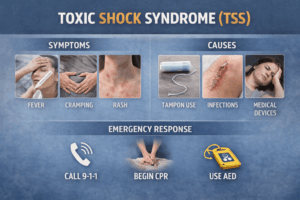
TSS symptoms can progress rapidly and may include:
Early Symptoms
- Fever
- Muscle aches or cramping
- Fatigue or weakness
- Nausea or vomiting
Progressing Symptoms
- Confusion or disorientation
- Dizziness or fainting
- Rapid breathing
- Skin redness or rash
Severe Signs
- Unresponsiveness
- Difficulty breathing
- Drop in blood pressure
- Signs of shock
Early symptoms may seem mild, making awareness especially important.
Causes and Risk Factors
TSS is most commonly associated with:
- Use of certain menstrual products (e.g., tampons)
- Skin infections or wounds
- Post-surgical infections
- Prolonged use of medical devices
It is important to understand that TSS can affect anyone, though it is often discussed in relation to menstrual health.
First Aid Response: What to Do
Based on standard first aid training practices in Canada:
- Call emergency services immediately
- Check responsiveness and breathing
- If not breathing, begin CPR (chest compressions)
- Monitor for changes in breathing and consciousness
- Stay with the person until help arrives
Early recognition and rapid response are critical in medical emergencies like TSS.
Prevention and Awareness
Reducing risk involves awareness and good hygiene practices:
- Follow recommended use guidelines for menstrual products
- Maintain good personal hygiene
- Monitor for unusual symptoms during illness
- Encourage early reporting of symptoms in schools and camps
In Winnipeg and across Manitoba, education and awareness programs can help reduce risk and improve early recognition.
Frequently Asked Questions
What is toxic shock syndrome?
Toxic shock syndrome is a rare but serious condition caused by bacterial toxins. It can develop quickly and requires immediate medical attention.
What are early signs of TSS?
Early signs may include fever, fatigue, muscle aches, and nausea. These symptoms can resemble common illnesses, which makes awareness important.
Can TSS become life-threatening quickly?
Yes, TSS can progress rapidly and lead to severe complications. Early recognition and emergency response are critical.
What should you do if someone becomes unresponsive?
Call emergency services immediately and begin CPR if the person is not breathing. Quick action can help maintain circulation until help arrives.
Who should learn CPR in Winnipeg?
Teachers, parents, and community members can all benefit. CPR training prepares individuals to respond to emergencies in schools, workplaces, and public settings.
Educational Note
This article is for general awareness and reflects commonly taught first aid practices in Canada. Recognizing symptoms early and responding quickly are key in serious medical emergencies like toxic shock syndrome.
About The Author

Mark Kascha
Certified First Aid Instructor Trainer with 30+ years of real-world experience, including lifeguarding, workplace emergency response, and first aid program development across Canada. Has worked with WorkSafeBC, WSIB, and Manitoba Health.
👉 [View full credentials]🔗 View LinkedIn Profile
Last reviewed: March 2026