Understanding Cold-Related Emergencies
Cold environments can quickly become dangerous, especially in remote or outdoor settings. Knowing what to do if someone is buried in snow or exposed to extreme cold or how to respond when CPR is needed in cold conditions is critical.
Cold-related emergencies may include hypothermia, frostbite, and traumatic injuries, all of which can affect breathing, circulation, and overall survival.
First Aid & Workplace Relevance in Winnipeg, Manitoba
 In Winnipeg, Manitoba, winter conditions can be severe, with freezing temperatures affecting workers, outdoor enthusiasts, and commuters in areas like Transcona, St. Vital, and Downtown Winnipeg.
First aid certification in Manitoba and CPR training in Winnipeg are essential for:
- Construction and outdoor workers
- Snowmobilers and winter recreation users
- Emergency responders and volunteers
- Employers managing outdoor job sites
These skills are commonly taught in emergency response training across Canada, especially for cold-weather environments.
Scenario: Snowmobile Incident at Mt. Callaghan
A tragic incident occurred near Mt. Callaghan in British Columbia, where a 52-year-old man from Nanaimo died after a snow cornice collapsed beneath him.
According to RCMP, search and rescue teams were dispatched after reports that a snowmobiler had fallen from a cornice—a buildup of snow that can break unexpectedly.
The man had stopped his snowmobile on the edge when the cornice gave way. He fell approximately 250 feet and was partially buried in snow.
Nearby snowmobilers quickly responded:
- They dug him out of the snow
- Began CPR immediately
Despite their efforts, the man was pronounced dead at the scene.
The victim, identified as Karl Baker, was a long-time member of Nanaimo Search and Rescue and an advocate for avalanche safety and backcountry awareness.
This incident highlights how quickly conditions can change in winter environments—something that also applies across Manitoba’s rural areas and winter recreation zones.
Cold-Related Injuries and Emergencies
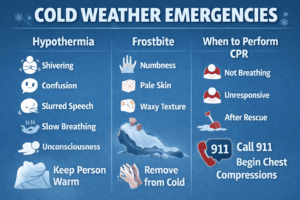
Hypothermia (Low Body Temperature)
Occurs when the body loses heat faster than it can produce it.
Signs may include:
- Shivering
- Slurred speech
- Confusion
- Slow or shallow breathing
- Loss of consciousness
Frostbite
Frostbite affects exposed skin and underlying tissue.
Commonly affected areas:
- Fingers and toes
- Nose and ears
- Cheeks
Signs may include:
- Numbness or tingling
- Pale, waxy, or hardened skin
- Loss of sensation
Cold + Trauma Combination
In incidents like falls or avalanches:
- Injuries may include fractures or internal trauma
- Cold exposure can worsen outcomes
- Breathing and circulation may be affected
First Aid Response: What to Do
Based on standard first aid training practices in Canada:
If the Person Is Unresponsive:
- Call emergency services immediately
- Check breathing and responsiveness
- If not breathing, begin CPR (chest compressions)
- Continue until help arrives
If Hypothermia Is Suspected:
- Move the person to a warmer environment
- Remove wet clothing if possible
- Wrap in blankets or dry clothing
- Handle gently to avoid further stress
If Frostbite Is Present:
- Protect the affected area from further cold
- Avoid rubbing or applying direct heat
- Cover loosely and keep the person warm
Prevention and Cold Weather Safety
To reduce risk in Winnipeg and across Manitoba:
- Dress in layers and protect exposed skin
- Monitor weather and terrain conditions
- Avoid unstable snow formations like cornices
- Travel with others in remote areas
- Carry emergency gear and communication devices
- Ensure training in CPR and first aid in Winnipeg
Preparation is key in cold environments.
Frequently Asked Questions
What should you do if someone is buried in snow?
Call emergency services immediately and begin rescue if safe to do so. Once the person is freed, check breathing and start CPR if needed.
What is the difference between frostbite and hypothermia?
Frostbite affects specific body parts, while hypothermia affects the entire body’s core temperature. Both are serious and require prompt attention.
Can CPR be effective in cold conditions?
Yes, CPR is still important. Cold temperatures may slow the body, but maintaining circulation is critical until help arrives.
How can you prevent frostbite?
Wear proper winter clothing, limit exposure time, and keep skin covered in cold and windy conditions.
Who should take first aid training in Winnipeg?
Outdoor workers, winter recreation users, and community members can all benefit. Training prepares individuals for emergencies in cold environments.
Educational Note
This article is for general awareness and reflects commonly taught first aid practices in Canada. Cold-weather preparedness and early response are essential in preventing serious outcomes.
About The Author

Mark Kascha
Certified First Aid Instructor Trainer with 30+ years of real-world experience, including lifeguarding, workplace emergency response, and first aid program development across Canada. Has worked with WorkSafeBC, WSIB, and Manitoba Health.
👉 [View full credentials]🔗 View LinkedIn Profile
Last reviewed: March 2026