Understanding Drowning Emergencies and Safe Rescue
Drowning incidents can happen quickly, especially in natural environments like beaches and rocky shorelines. Knowing what to do if someone falls into water and becomes unresponsive or how to respond safely during a drowning emergency is critical.
In these situations, lack of oxygen is the primary concern—making CPR with rescue breaths (ventilations) especially important.
First Aid & Workplace Relevance in Winnipeg, Manitoba
 In Winnipeg, Manitoba, water risks exist along the Red River, Assiniboine River, and recreational areas in St. Vital, Transcona, and Downtown Winnipeg.
CPR training in Winnipeg and first aid certification in Manitoba are important for:
- Outdoor event staff and volunteers
- Camp leaders and recreation workers
- Parents and community members
- Workers near water environments
These skills are commonly taught in emergency response training across Canada, helping people respond safely and effectively.
Scenario: Drowning Incident at Shingle Beach
A tragic incident occurred on Texada Island, British Columbia, during a public event near Shingle Beach.
At approximately 6:20 PM, RCMP responded to reports of a possible drowning during a festival. A 23-year-old woman from Prince Rupert had reportedly been climbing a rocky bluff when it is believed she fell into the water below.
Bystanders quickly reacted:
- They located and removed the woman from the water
- CPR was already in progress when RCMP arrived
An air ambulance was dispatched to assist, but despite these efforts, the woman was later declared deceased at the scene.
Authorities, including Powell River RCMP, Texada RCMP, and the BC Coroners Service, continued to investigate the circumstances.
This type of incident highlights risks that also exist in Manitoba’s rivers, lakes, and shoreline areas, particularly around uneven terrain.
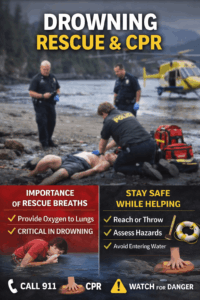
Why Ventilations Are Critical in Drowning
Compression-Only CPR
- Focuses on chest compressions
- Helps circulate existing oxygen
CPR with Ventilations (Rescue Breaths)
- Provides oxygen directly into the lungs
- Essential in drowning emergencies
Key Takeaway
In drowning cases:
- The body is deprived of oxygen
- Rescue breaths help restore oxygen levels
- Combined CPR (compressions + breaths) is commonly taught in Canadian CPR courses
Staying Safe While Helping a Drowning Victim
Your safety is always the first priority.
Safe Rescue Principles
- Reach or throw, don’t go if possible (use a stick, rope, or flotation device)
- Avoid entering the water unless trained
- Be cautious of strong currents or slippery surfaces
- Watch for hazards like rocks or sudden drop-offs
Why This Matters
Untrained rescuers can become victims themselves. Safe rescue techniques are emphasized in water safety training across Canada.
Symptoms and Warning Signs After Rescue
After removing someone from water, watch for:
- Difficulty or absence of breathing
- Persistent coughing
- Confusion or decreased awareness
- Pale or bluish skin
- Fatigue or weakness
Even if breathing returns, monitoring is important.
First Aid Response: What to Do
Based on standard first aid training practices in Canada:
- Ensure scene safety first
- Remove the person from the water safely
- Call emergency services immediately
- Check breathing and responsiveness
- If not breathing, begin CPR with compressions and rescue breaths
- Continue until help arrives
Early ventilations are especially important.
Prevention and Water Safety Considerations
To reduce risk in Winnipeg and across Manitoba:
- Avoid climbing unstable or slippery surfaces near water
- Supervise activities near rivers and lakes
- Wear appropriate footwear for rocky areas
- Ensure access to CPR training in Winnipeg
- Promote water safety awareness at events
Preparedness helps prevent emergencies.
Frequently Asked Questions
What should you do if someone falls into water?
Call for help immediately and attempt a safe rescue using reach or throw techniques. Avoid entering the water unless it is safe to do so.
Why are rescue breaths important in drowning?
Drowning reduces oxygen levels in the body. Rescue breaths help restore oxygen, making CPR more effective.
Is it safe to jump in to save someone?
Only if you are trained and it is safe. Many rescuers are injured when attempting unsafe water entries.
Can CPR help after drowning?
Yes, CPR can help restore breathing and circulation if started quickly. Early action is critical.
Who should take CPR training in Winnipeg?
Anyone can benefit, especially those near water or in public settings. Training prepares individuals to respond effectively.
Educational Note
This article is for general awareness and reflects commonly taught first aid and water safety practices in Canada. Safe rescue and early CPR with ventilations are key in drowning emergencies.
About The Author

Mark Kascha
Certified First Aid Instructor Trainer with 30+ years of real-world experience, including lifeguarding, workplace emergency response, and first aid program development across Canada. Has worked with WorkSafeBC, WSIB, and Manitoba Health.
👉 [View full credentials]🔗 View LinkedIn Profile
Last reviewed: March 2026