Understanding Pedestrian Collision Emergencies
Pedestrian collisions can result in serious, life-threatening injuries—especially for older adults. Knowing what to do if a pedestrian is hit by a vehicle or how to respond when someone is unresponsive after a crash is critical.
Older individuals are more vulnerable to injury due to factors like reduced bone strength and slower recovery. Even low-speed impacts can lead to severe complications.
First Aid & Workplace Relevance in Winnipeg, Manitoba
In Winnipeg, Manitoba, pedestrian incidents occur in busy areas such as Downtown Winnipeg, St. Vital, and Transcona, particularly near intersections, crosswalks, and parking areas.
CPR training in Winnipeg and first aid certification in Manitoba are essential for:
- Drivers and commuters
- Delivery and transportation workers
- Construction and roadside crews
- Teachers, parents, and community members
These skills are widely taught in emergency response training across Canada, helping bystanders provide early assistance.
Scenario: Pedestrian Struck in Richmond
 An 81-year-old woman from Richmond, British Columbia, died following a pedestrian collision involving a vehicle at the intersection of No. 1 Road and Tucker Road.
According to RCMP, the incident occurred around 6:30 PM when the woman was struck by a late-model Mercedes SUV driven by a 78-year-old man.
Witnesses at the scene immediately stepped in to help. They provided first aid and CPR while waiting for emergency responders. The woman was transported to a healthcare facility but later died from her injuries.
Police reported that the driver remained at the scene and cooperated fully. Investigators indicated that speed and alcohol were not contributing factors.
Authorities also noted a rise in pedestrian-related incidents across Metro Vancouver, including other fatal cases, highlighting ongoing road safety concerns.
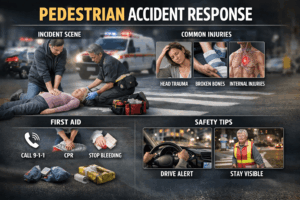
Common Injuries in Pedestrian Collisions (Especially in Older Adults)
When a pedestrian is struck by a vehicle, injuries can vary widely:
Head and Brain Injuries
- Concussion or traumatic brain injury
- Loss of consciousness
- Skull fractures
Chest and Internal Injuries
- Rib fractures
- Lung injuries affecting breathing
- Internal bleeding
Limb and Orthopedic Injuries
- Broken arms, legs, or hips
- Pelvic injuries (common in elderly pedestrians)
Spinal Injuries
- Neck or back trauma
- Possible paralysis in severe cases
Older adults are at higher risk of complications, even from seemingly minor impacts.
Symptoms and Warning Signs After a Collision
Watch for:
- Unresponsiveness or confusion
- Difficulty breathing
- Visible injuries or bleeding
- Severe pain or inability to move
- Pale or clammy skin
- Dizziness or loss of balance
Symptoms may worsen over time, so continuous monitoring is important.
First Aid Response: What to Do
Based on standard first aid training practices in Canada:
- Ensure scene safety (watch for traffic hazards)
- Call emergency services immediately
- Check responsiveness and breathing
- If not breathing, begin CPR (chest compressions)
- Avoid moving the person unless necessary
- Support the head and neck to reduce movement
- Keep the person warm and reassured
If trained, using an AED may be part of the response when available.
Managing Different Types of Injuries (General Awareness)
While waiting for help:
- Head injuries: Minimize movement and monitor responsiveness
- Bleeding: Apply gentle pressure if safe to do so
- Fractures: Keep the person still and avoid repositioning
- Breathing issues: Monitor closely and be prepared to provide CPR
These approaches are commonly taught in first aid courses across Canada.
Prevention and Road Safety Considerations
To reduce pedestrian risks in Winnipeg and across Manitoba:
For Pedestrians
- Wear reflective or bright clothing
- Use crosswalks and follow signals
- Stay visible, especially at night
For Drivers
- Stay alert and avoid distractions
- Reduce speed in residential and high-traffic areas
- Watch for pedestrians at intersections
Workplace Safety
- Provide first aid and CPR training in Winnipeg workplaces
- Promote road safety awareness programs
- Ensure visibility measures for outdoor workers
Frequently Asked Questions
What should you do if a pedestrian is unconscious after being hit?
Call emergency services immediately and check for breathing. If the person is not breathing, begin CPR. Avoid moving them unless necessary due to possible spinal injuries.
Why are older adults more at risk in collisions?
Older adults may have more fragile bones and underlying health conditions, increasing the risk of serious injury even in lower-impact incidents.
Can CPR help after a pedestrian collision?
Yes, if the person is not breathing, CPR helps maintain circulation and oxygen flow until emergency responders arrive.
Should you move an injured pedestrian?
Only if there is immediate danger. Otherwise, keep them still and support their head and neck to reduce the risk of further injury.
Who should take CPR training in Winnipeg?
Anyone can benefit, including drivers, workers, and community members. Training prepares individuals to respond effectively in emergencies.
Educational Note
This article is for general awareness and reflects commonly taught first aid practices in Canada. Early recognition, safe response, and proper training help improve outcomes in pedestrian emergencies.
About The Author

Mark Kascha
Certified First Aid Instructor Trainer with 30+ years of real-world experience, including lifeguarding, workplace emergency response, and first aid program development across Canada. Has worked with WorkSafeBC, WSIB, and Manitoba Health.
👉 [View full credentials]🔗 View LinkedIn Profile
Last reviewed: March 2026