
Understanding Electrical Injuries and Medical Emergencies
Electrical-related incidents—such as exposure to a conducted energy weapon (CEW) or other electrical sources—can cause serious internal and external injuries. Knowing what to do if someone collapses after electrical exposure or how to respond when CPR is needed is critical.
Electrical injuries may affect the heart, breathing, skin, and nervous system, sometimes leading to sudden medical distress even if there are few visible signs.
First Aid & Workplace Relevance in Winnipeg, Manitoba
In Winnipeg, Manitoba, electrical hazards can occur in workplaces, public settings, and even during emergency response situations. Incidents may involve:
- Construction or maintenance work
- Law enforcement or security settings
- Industrial environments
- Public or residential areas
CPR training in Winnipeg and first aid certification in Manitoba are essential for:
- Workers in electrical or construction fields
- Security and law enforcement personnel
- Teachers, parents, and community members
These skills are commonly taught in emergency response training across Canada, helping individuals act quickly and safely.
Scenario: Medical Distress Following Police Intervention
 A tragic incident occurred in Chilliwack, British Columbia, involving a man who went into medical distress after a confrontation with police.
According to reports, the man’s estranged wife had brought their 4-year-old daughter to a supervised visit at Seasons Mediation and Family Services, as required by a court order.
During the visit, the situation escalated. The man reportedly fled with the child and was seen running into traffic along Vedder Road. Bystanders intervened, attempting to separate the child from him.
Police arrived shortly after. During the arrest, the man resisted, and a conducted energy weapon (Taser) was used. Soon after, he went into medical distress.
A police officer began CPR immediately, and paramedics provided advanced care upon arrival. Despite these efforts, the man later died.
This incident highlights how quickly a situation involving stress, physical exertion, or electrical exposure can turn into a life-threatening emergency.
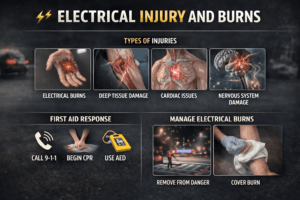
Types of Electrical Injuries and Burns
Electrical injuries can vary depending on the source and intensity:
1. Electrical Burns (Surface Burns)
- Occur where the current enters or exits the body
- May appear as small wounds but can hide deeper damage
2. Deep Tissue Injury
- Damage to muscles, nerves, and internal organs
- Not always visible on the skin
3. Cardiac Effects
- Irregular heart rhythms
- Cardiac arrest in severe cases
4. Nervous System Effects
- Confusion or disorientation
- Loss of consciousness
5. Low-Voltage vs High-Voltage Exposure
- Low voltage (household or CEW): may still affect heart rhythm
- High voltage: more likely to cause severe burns and internal damage
Symptoms and Warning Signs After Electrical Exposure
Watch for:
- Unresponsiveness or collapse
- Difficulty breathing
- Burns or skin damage
- Confusion or unusual behaviour
- Muscle pain or weakness
- Irregular or absent pulse
Symptoms may appear immediately or develop shortly after.
First Aid Response: What to Do
Based on standard first aid training practices in Canada:
- Ensure scene safety (do not touch if electrical source is still active)
- Call emergency services immediately
- Once safe, check responsiveness and breathing
- If not breathing, begin CPR (chest compressions)
- Use an AED if available
- Monitor the person until help arrives
Managing Electrical Burns (General Awareness)
If burns are present:
- Do not touch the source of electricity until it is safe
- Cover burns with a clean, dry cloth if available
- Avoid applying substances to the burn
- Monitor for breathing or circulation issues
Even small burns may indicate deeper internal injury.
Prevention and Workplace Safety Considerations
To reduce risk in Winnipeg and across Manitoba:
- Follow electrical safety procedures in workplaces
- Use proper protective equipment
- Ensure staff are trained in CPR and AED use in Winnipeg
- Promote awareness of electrical hazards
- Maintain equipment and infrastructure
Prepared environments reduce risk and improve response outcomes.
Frequently Asked Questions
What should you do if someone collapses after electrical exposure?
Ensure the scene is safe, call emergency services, and check for breathing. If the person is not breathing, begin CPR immediately.
Are electrical burns always visible?
No, electrical injuries can cause internal damage even if the skin appears normal. Monitoring is important after any exposure.
Can a Taser cause medical emergencies?
In some situations, electrical exposure combined with other factors may lead to medical distress. Immediate response is important.
Why is CPR important in electrical incidents?
Electrical exposure can disrupt the heart’s rhythm. CPR helps maintain circulation until emergency responders arrive.
Who should take CPR training in Winnipeg?
Workers, parents, and community members can all benefit. Training helps individuals respond effectively in emergencies.
Educational Note
This article is for general awareness and reflects commonly taught first aid practices in Canada. Electrical incidents require quick recognition, safe response, and immediate assistance.
About The Author

Mark Kascha
Certified First Aid Instructor Trainer with 30+ years of real-world experience, including lifeguarding, workplace emergency response, and first aid program development across Canada. Has worked with WorkSafeBC, WSIB, and Manitoba Health.
👉 [View full credentials]🔗 View LinkedIn Profile
Last reviewed: March 2026