Understanding Head-On Collision Injuries
Head-on collisions are among the most serious types of vehicle crashes due to the combined force of impact. Knowing what to do if you witness a head-on collision or how to respond when multiple people are injured is critical.
In these crashes, injuries can vary widely depending on speed, vehicle size, and safety features such as seatbelts and airbags.
First Aid & Workplace Relevance in Winnipeg, Manitoba
 In Winnipeg, Manitoba, head-on collisions can occur on highways and major routes, especially during winter driving conditions in areas like Transcona, St. Vital, and Downtown Winnipeg.
CPR training in Winnipeg and first aid certification in Manitoba are essential for:
- Drivers and commuters
- Transportation and delivery workers
- Construction and roadside crews
- Workplace safety teams
These skills are widely taught in emergency response training across Canada, helping people respond to serious collisions.
Scenario: Head-On Collision on Grandview Highway
A serious crash occurred on Grandview Highway near Penticton Street in Vancouver, involving a Ford Focus and a Mercedes SUV that collided after crossing the centre line.
Emergency responders attended the scene where:
- Seven people were injured
- Two individuals (a 20-year-old driver and 19-year-old passenger) sustained life-threatening injuries
- A third occupant had serious but non-life-threatening injuries
- Four passengers in the second vehicle sustained minor injuries
The highway was closed for several hours while authorities investigated.
This type of collision reflects risks also present on Manitoba highways, where speed and road conditions can contribute to severe outcomes.
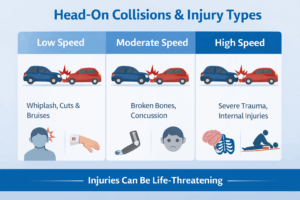
How Speed Affects Injury Severity in Head-On Collisions
Low-Speed Collisions (e.g., city driving)
- Whiplash and soft tissue injuries
- Minor cuts and bruises
- Airbag-related injuries (face, arms)
Moderate-Speed Collisions
- Broken bones (arms, ribs)
- Head injuries (concussion)
- Chest injuries from seatbelt force
High-Speed Collisions
- Severe head or brain injuries
- Internal bleeding
- Spinal injuries
- Life-threatening trauma
The higher the speed, the greater the force—and the more severe the injuries.
Common Injuries in Head-On Crashes
Head and Brain Injuries
- Concussion or loss of consciousness
- Confusion or dizziness
Chest and Torso Injuries
- Rib discomfort or breathing issues
- Seatbelt-related impact injuries
Limb Injuries
- Fractures in arms or legs
- Difficulty moving
Soft Tissue Injuries
- Whiplash affecting neck and shoulders
- Bruising and swelling
Internal Injuries
- May not be immediately visible
- Can worsen over time
Symptoms and Warning Signs
Watch for:
- Difficulty breathing
- Unresponsiveness or confusion
- Severe pain or swelling
- Bleeding
- Limited movement
Some symptoms may appear later, so ongoing monitoring is important.
First Aid Response: What to Do
Based on standard first aid training practices in Canada:
- Ensure scene safety (watch for traffic hazards)
- Call emergency services immediately
- Check responsiveness and breathing
- Begin CPR if the person is not breathing
- Control bleeding with gentle pressure
- Keep injured individuals still and calm
- Monitor until help arrives
Managing Injuries (General Awareness)
Bleeding
- Apply gentle pressure with a clean cloth
Suspected Fractures
- Avoid movement
- Support the injured area
Head/Neck Injuries
- Keep the head and neck still
- Monitor for changes
Shock (General Awareness)
- Keep the person warm
- Reassure and monitor
These approaches are commonly taught in first aid courses across Canada.
Prevention and Road Safety Considerations
To reduce risk in Winnipeg and across Manitoba:
- Avoid distractions while driving
- Maintain safe speeds, especially in poor weather
- Stay in your lane and be alert on highways
- Ensure proper use of seatbelts
- Maintain vehicle safety systems
Prepared drivers help prevent serious collisions.
Frequently Asked Questions
Why are head-on collisions so dangerous?
They involve combined impact forces from both vehicles, increasing the severity of injuries.
What injuries are common in high-speed crashes?
Severe head injuries, internal trauma, and fractures are more likely at higher speeds.
What should you do first at a crash scene?
Ensure safety, call emergency services, and check for breathing and responsiveness.
Can injuries appear later after a crash?
Yes, some injuries—especially internal ones—may not be immediately obvious.
Who should take first aid training in Winnipeg?
Drivers, workers, and community members can all benefit. Training prepares individuals to respond effectively.
Educational Note
This article is for general awareness and reflects commonly taught first aid practices in Canada. Recognizing injury severity and responding quickly can improve outcomes.
About The Author

Mark Kascha
Certified First Aid Instructor Trainer with 30+ years of real-world experience, including lifeguarding, workplace emergency response, and first aid program development across Canada. Has worked with WorkSafeBC, WSIB, and Manitoba Health.
👉 [View full credentials]🔗 View LinkedIn Profile
Last reviewed: March 2026