In Winnipeg, Manitoba, incidents involving pellet guns can occur in parks, neighbourhoods, and recreational areas in places like Transcona, St. Vital, and Downtown Winnipeg.
First aid certification in Manitoba and CPR training in Winnipeg are important for:
- Parents and caregivers
- Teachers and school staff
- Community and recreation workers
- Youth leaders and supervisors
These skills are commonly taught in emergency response training across Canada, helping people respond safely to injuries.
Scenario: Youth Injured in Cloverdale Park
 A 12-year-old boy was injured while sledding at a park in Cloverdale, Surrey, British Columbia, after being shot with a pellet gun.
According to Surrey RCMP, the boy sustained injuries to his face and neck and received first aid at the scene.
Police responded along with a Police Service Dog unit to search for the suspects, believed to be two youths who fled the area after allegedly discharging pellet rifles.
Authorities emphasized that pellet guns are not toys and that using them in public spaces or against others can result in serious consequences.
This type of incident highlights risks that can also occur in Winnipeg parks and public spaces, especially where youth may underestimate the danger.
Types of Injuries Caused by Pellet Guns
Pellet guns can cause a range of injuries:
1. Superficial Wounds
- Cuts or punctures to the skin
- Bruising or swelling
- Minor bleeding
2. Penetrating Injuries
- Pellets can embed under the skin
- Risk of deeper tissue damage
3. Eye Injuries (High Risk)
- Vision damage or loss
- Severe trauma to the eye
4. Facial and Neck Injuries
- Sensitive areas with vital structures
- Risk of bleeding and swelling
5. Internal Injury (Rare but Possible)
- Pellets can penetrate deeper depending on distance and force
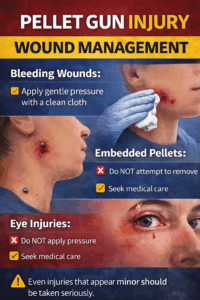
Even injuries that appear minor should be taken seriously.
Symptoms and Warning Signs
Watch for:
- Bleeding or visible wound
- Pain or swelling
- Difficulty seeing (if near eyes)
- Embedded object under the skin
- Signs of distress or shock
First Aid Response: What to Do
Based on standard first aid training practices in Canada:
- Ensure scene safety first
- Call for help if needed
- Control bleeding with gentle pressure
- Avoid touching or removing embedded objects
- Keep the injured area still
- Monitor the person for changes
For injuries involving the face, neck, or eyes, extra caution is required.
Managing Specific Pellet Gun Injuries (General Awareness)
Bleeding Wounds
- Apply gentle pressure with a clean cloth
- Avoid excessive pressure on sensitive areas
Embedded Pellets
- Do not attempt to remove
- Stabilize the area and wait for medical care
Eye Injuries
- Do not apply pressure
- Keep the person still and calm
Facial/Neck Injuries
- Monitor breathing and swelling
- Keep the person still
These approaches are commonly taught in first aid courses across Canada.
Prevention and Safety Considerations
To reduce risk in Winnipeg and across Manitoba:
- Treat pellet guns as potentially dangerous devices
- Never use pellet guns in public spaces
- Educate youth on safe handling and legal responsibilities
- Supervise use in appropriate environments
- Promote safety awareness in communities
Understanding risks helps prevent injuries.
Frequently Asked Questions
Are pellet guns dangerous?
Yes, pellet guns can cause serious injuries, especially to the eyes, face, and neck. They should be handled with caution.
What should you do if someone is hit in the eye?
Do not apply pressure. Keep the person still and seek immediate medical attention.
Should you remove a pellet from a wound?
No, embedded objects should not be removed. This can worsen the injury.
Can pellet injuries become serious?
Yes, even small wounds can involve deeper tissue damage or sensitive areas.
Who should take first aid training in Winnipeg?
Parents, teachers, and community members can all benefit. Training helps individuals respond effectively in emergencies.
Educational Note
This article is for general awareness and reflects commonly taught first aid practices in Canada. Recognizing injury severity and responding safely are key in preventing complications.
About The Author

Mark Kascha
Certified First Aid Instructor Trainer with 30+ years of real-world experience, including lifeguarding, workplace emergency response, and first aid program development across Canada. Has worked with WorkSafeBC, WSIB, and Manitoba Health.
👉 [View full credentials]🔗 View LinkedIn Profile
Last reviewed: March 2026