Understanding Opioid Overdoses and Naloxone
An opioid overdose can slow or stop breathing, making it a life-threatening emergency. Knowing what to do if someone is unresponsive due to a suspected overdose or how to respond using naloxone (Narcan) and CPR can save a life.
Naloxone is a medication that can temporarily reverse the effects of opioids, helping restore breathing until emergency care arrives.
First Aid & Workplace Relevance in Winnipeg, Manitoba
In Winnipeg, Manitoba, opioid-related emergencies can occur in public places, workplaces, and retail settings—especially in areas like Downtown Winnipeg, Transcona, and St. Vital.
CPR training in Winnipeg, first aid certification in Manitoba, and naloxone kit training in Canada are important for:
- Retail and customer service staff
- Security personnel and public workers
- Teachers and community organizations
- Families and caregivers
Naloxone kits are widely available across Canada, and training is often included in emergency response programs.
Scenario: Life Saved by Quick-Thinking Staff
 At a London Drugs store in Courtenay, British Columbia, staff responded quickly to a medical emergency involving a 24-year-old man.
The man had asked to use the store’s washroom but did not return. After approximately 40 minutes, staff checked on him and found him:
- Unresponsive and slumped over
- Showing signs of slow or minimal breathing
- Pale with a bluish appearance
Staff immediately activated their emergency response:
- Called 911
- Secured the area
- Began CPR
- Retrieved a naloxone kit
Pharmacy manager Tara Oxford administered naloxone. Shortly after:
- The man’s breathing improved
- His skin colour returned
- He regained consciousness
Paramedics arrived and continued care before transporting him to hospital. The man later returned to thank the staff.
This incident highlights how quick access to naloxone and trained responders can save lives—something increasingly relevant in Winnipeg and across Manitoba.
What Is Naloxone (Narcan)?
Naloxone is a medication that:
- Temporarily reverses opioid effects
- Helps restore breathing
- Works within minutes
- May require additional doses
It is commonly available as:
- Nasal spray (Narcan)
- Injectable form
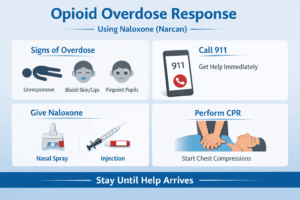
Signs of an Opioid Overdose
Watch for:
- Slow or no breathing
- Unresponsiveness
- Blue or pale lips and skin
- Pinpoint pupils
- Snoring or gurgling sounds
Immediate action is critical.
How to Use a Naloxone Kit (General Awareness)
Based on standard training practices in Canada:
- Call emergency services immediately
- Check responsiveness and breathing
- Administer naloxone (nasal spray or injection)
- Begin CPR (chest compressions) if not breathing
- Monitor and provide additional doses if needed
- Stay with the person until help arrives
Naloxone may wear off, so continued monitoring is important.
Important Safety Considerations
- Naloxone works only on opioids
- Effects are temporary
- The person may become disoriented upon waking
- Always wait for emergency responders
These steps are commonly taught in first aid and naloxone training across Canada.
Prevention and Community Safety
To reduce overdose risks in Winnipeg and across Manitoba:
- Carry a naloxone kit if at risk or working in public settings
- Promote awareness of overdose signs
- Encourage training in CPR and naloxone use in Winnipeg
- Support community safety initiatives
- Ensure workplaces have emergency response plans
Prepared communities save lives.
Frequently Asked Questions
What should you do if someone is not breathing from an overdose?
Call emergency services immediately, administer naloxone if available, and begin CPR if the person is not breathing.
How does naloxone work?
Naloxone temporarily blocks opioid effects, helping restore breathing until emergency care arrives.
Can naloxone be used by anyone?
Yes, naloxone kits are designed for public use and are commonly distributed across Canada with basic training.
How long does naloxone last?
Its effects are temporary, so the person may require further care once it wears off.
Who should carry naloxone in Winnipeg?
Anyone at risk or working in public-facing roles can benefit. Training helps ensure a quick and effective response.
Educational Note
This article is for general awareness and reflects commonly taught first aid and overdose response practices in Canada. Early recognition, naloxone use, and CPR are key in opioid emergencies.
About The Author

Mark Kascha
Certified First Aid Instructor Trainer with 30+ years of real-world experience, including lifeguarding, workplace emergency response, and first aid program development across Canada. Has worked with WorkSafeBC, WSIB, and Manitoba Health.
👉 [View full credentials]🔗 View LinkedIn Profile
Last reviewed: March 2026