Understanding Fire Emergencies and First Priorities
House fires can cause a combination of burn injuries, airway damage, and breathing emergencies—often within seconds. Knowing what to do if someone is pulled from a fire and not breathing or how to respond when both burns and life-threatening conditions are present is critical.
In any emergency, responders are trained to focus on “life or limb” priorities first—addressing the most immediate threats before secondary injuries.
First Aid & Workplace Relevance in Winnipeg, Manitoba
In Winnipeg, Manitoba, residential fires in areas like St. Vital, Transcona, and Downtown Winnipeg can occur due to heating systems, electrical issues, or accidental ignition.
CPR training in Winnipeg and first aid certification in Manitoba emphasize life-or-limb decision-making, which is essential for:
- Homeowners and families
- Maintenance and property workers
- Workplace emergency teams
- Community responders
These principles are commonly taught in emergency response training across Canada.
Scenario: Fatal Fire in Glace Bay Duplex
 A fire at a duplex on Concord Street in Glace Bay, Nova Scotia led to a tragic outcome involving 54-year-old Gerry Somerton.
A neighbour, Leo O’Connell, was alerted and rushed to assist. Fire crews entered the smoke-filled structure and quickly located Somerton.
- He was removed rapidly from the building
- CPR was initiated immediately
- The structure had heavy smoke but minimal visible flames
Despite rapid response and transport to hospital, Somerton later died.
Investigators determined the fire was accidental, caused by smouldering insulation in the attic.
This situation reflects the importance of prioritizing breathing and circulation first, even when burns are present—something highly relevant in Manitoba homes.
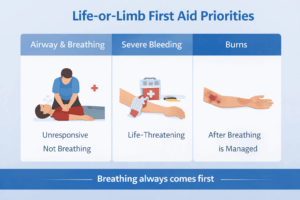
What “Life or Limb” Means in First Aid
“Life or limb” refers to conditions that can immediately threaten survival or cause permanent damage if not addressed right away.
Life-Threatening Priorities
- Airway blockage
- Not breathing
- Severe bleeding
- Cardiac arrest
Limb-Threatening Priorities
- Severe bleeding from arms or legs
- Loss of circulation
- Crushing or severe trauma
In fire situations, life threats (breathing and oxygen) almost always come before burn care.
Life-or-Limb First Aid Approach (Primary Survey)
Based on standard first aid training practices in Canada, responders follow a structured approach:
1. Airway
- Ensure the airway is open and clear
- Watch for swelling or obstruction from smoke
2. Breathing
- Check if the person is breathing
- If not, begin CPR immediately
3. Circulation
- Check for signs of circulation
- Control severe bleeding if present
4. Disability (Consciousness)
- Assess responsiveness
5. Exposure (Burns/Injuries)
- Address burns only after life threats are managed
Why CPR Takes Priority Over Burn Treatment
In fire emergencies:
- Oxygen deprivation can cause unconsciousness quickly
- Brain injury can begin within minutes without oxygen
- Burns, while serious, are often secondary to breathing issues
Key takeaway:
If a person is not breathing → CPR comes first
If breathing is present → then manage burns
Types of Fire-Related Injuries
Smoke Inhalation (Primary Risk)
- Reduced oxygen intake
- Toxic gas exposure
- Can lead to unconsciousness
Burns (Thermal Injuries)
- Skin damage ranging from mild to severe
- Pain, redness, or blistering
Airway Burns
- Swelling that may block breathing
- Often not immediately visible
Combined Injuries
- Burns + breathing compromise
- Higher risk in enclosed fires
Symptoms and Warning Signs
Watch for:
- No breathing or irregular breathing
- Unresponsiveness
- Soot around nose or mouth
- Burn injuries
- Confusion or weakness
First Aid Response: Life-or-Limb Focus
Step 1: Scene Safety
- Do not enter unsafe structures
- Wait for trained responders if needed
Step 2: Check Airway & Breathing
- If not breathing → start CPR immediately
Step 3: Call Emergency Services
- Activate emergency response
Step 4: Control Severe Bleeding (if present)
- Apply pressure if needed
Step 5: Treat Burns (Secondary Priority)
- Cool with clean water
- Cover loosely
Step 6: Monitor Continuously
- Watch for changes in breathing or consciousness
This structured approach is commonly taught in CPR and first aid courses across Canada.
Prevention and Fire Safety Considerations
To reduce risk in Winnipeg and across Manitoba:
- Install working smoke alarms
- Maintain heating and electrical systems
- Practice fire escape plans
- Keep emergency numbers accessible
- Ensure access to CPR training in Winnipeg
Prepared households improve survival outcomes.
Frequently Asked Questions
What does “life or limb” mean in first aid?
It refers to prioritizing the most critical threats—such as breathing or severe bleeding—before treating less urgent injuries like burns.
Why is breathing checked first in fire emergencies?
Smoke inhalation can quickly stop breathing, making it the most immediate life threat.
Should you treat burns right away?
Only after confirming the person is breathing and stable. Life-threatening issues come first.
What happens if CPR is delayed?
Delays can reduce survival chances significantly, especially in oxygen-deprived situations.
Who should learn CPR in Winnipeg?
Anyone can benefit—especially homeowners and workers. Training prepares individuals to respond effectively.
Educational Note
This article is for general awareness and reflects commonly taught first aid and CPR practices in Canada. Prioritizing life-threatening conditions first is essential in emergency response.
About The Author

Mark Kascha
Certified First Aid Instructor Trainer with 30+ years of real-world experience, including lifeguarding, workplace emergency response, and first aid program development across Canada. Has worked with WorkSafeBC, WSIB, and Manitoba Health.
👉 [View full credentials]🔗 View LinkedIn Profile
Last reviewed: March 2026