Understanding Gunshot Injuries and Immediate Response
Gunshot wounds are serious emergencies that require rapid action. Knowing what to do if someone is shot or how to respond before paramedics arrive can make a critical difference.
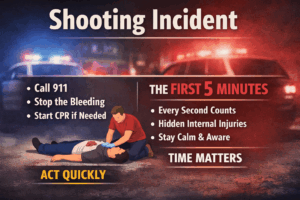
A unique and important concept in first aid is the “First 5 Minutes”—the period where bystanders can have the greatest impact by controlling bleeding and supporting breathing.
First Aid & Workplace Relevance in Winnipeg, Manitoba
 In Winnipeg, Manitoba, emergency preparedness for severe injuries is important in workplaces, homes, and public areas across Downtown Winnipeg, Transcona, and St. Vital.
CPR training in Winnipeg and first aid certification in Manitoba are essential for:
- Security and frontline workers
- Construction and industrial teams
- Teachers and office staff
- Community members
These skills are widely taught in emergency response training across Canada, including trauma care and bleeding control.
Scenario: Shooting Incident in Abbotsford
A shooting occurred at a residence in the 2500 block of Birch Street in east Abbotsford, British Columbia.
- Police received a 911 hang-up call around 6:15 PM
- BC Ambulance Service arrived at the scene
- A man in his 20s was found with an apparent gunshot wound
He was:
- Provided emergency care on-site
- Transported to hospital in severe condition
Police later arrested an 18-year-old suspect at a different location. Authorities confirmed the individuals knew each other and that the incident was not gang-related.
This case highlights how quickly situations can escalate and reinforces the importance of early first aid response, a skill emphasized across Manitoba training programs.
A Unique First Aid Insight: “The First 5 Minutes”
In severe trauma cases like gunshot wounds:
- The first few minutes are critical
- Bystanders often arrive before emergency services
- Immediate action can help stabilize the person
Why This Matters
- Severe bleeding can become life-threatening quickly
- Early pressure can slow blood loss
- Supporting breathing improves oxygen delivery
This concept is commonly emphasized in Canadian first aid and CPR courses.
Types of Gunshot Injuries
External Bleeding
- Visible wounds with blood loss
Internal Bleeding
- Hidden damage to organs or vessels
Tissue and Organ Damage
- May affect lungs, abdomen, or chest
Shock (Circulatory Collapse)
- Reduced blood flow to vital organs
Signs of Severe Injury
Watch for:
- Heavy bleeding
- Pale, cool, or clammy skin
- Rapid breathing
- Weakness or confusion
- Reduced responsiveness
These may indicate shock, a life-threatening condition.
First Aid Response: What to Do
Based on standard first aid training practices in Canada:
Step 1: Ensure Scene Safety
- Do not approach if unsafe
Step 2: Call Emergency Services Immediately
Step 3: Control Bleeding (Top Priority)
- Apply firm, direct pressure
Step 4: Check Airway and Breathing
- If not breathing → begin CPR
Step 5: Keep the Person Still
- Limit movement to prevent further injury
Step 6: Monitor and Support
- Watch for changes
- Keep the person calm
Another Unique Factor: “Invisible Severity”
Gunshot wounds can appear small but be very serious.
- Entry wounds may be minimal
- Internal damage can be extensive
- Condition may worsen over time
This is why all gunshot injuries are treated as serious, even if they seem minor.
Prevention and Safety Considerations
To improve readiness in Winnipeg and across Manitoba:
- Encourage first aid and CPR training
- Promote workplace emergency preparedness
- Increase awareness of bleeding control techniques
- Ensure access to emergency response resources
Prepared individuals can make a critical difference.
Frequently Asked Questions
What is the “First 5 Minutes” in first aid?
It refers to the critical early period where bystanders can provide life-saving care before professionals arrive.
What is the first priority in a gunshot emergency?
Controlling severe bleeding and ensuring breathing are the top priorities.
Can a small wound still be serious?
Yes, internal damage may be severe even if the external wound looks minor.
When should CPR be used?
If the person is unresponsive and not breathing normally.
Who should take first aid training in Winnipeg?
Anyone can benefit. Training prepares individuals for real-life emergencies.
Educational Note
This article is for general awareness and reflects commonly taught first aid practices in Canada. Early action during the first few minutes can significantly impact outcomes.
About The Author

Mark Kascha
Certified First Aid Instructor Trainer with 30+ years of real-world experience, including lifeguarding, workplace emergency response, and first aid program development across Canada. Has worked with WorkSafeBC, WSIB, and Manitoba Health.
👉 [View full credentials]🔗 View LinkedIn Profile
Last reviewed: March 2026