Understanding Gunshot Injuries Beyond What You See
Gunshot wounds can be misleading. Knowing what to do if someone is shot or how to respond when injuries are not immediately visible is critical.
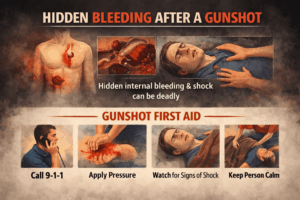
A unique and important concept in first aid is that serious internal bleeding can occur even when there is very little visible blood. This makes early assessment and rapid response essential.
First Aid & Workplace Relevance in Winnipeg, Manitoba
In Winnipeg, Manitoba, emergency preparedness for severe trauma is important in workplaces, public spaces, and rural settings similar to many communities across Canada.
First aid certification in Manitoba, CPR training in Winnipeg, and emergency response training in Canada are valuable for:
- Security and public-facing workers
- Industrial and construction workers
- Rural and remote community members
- Everyday citizens
These programs teach how to respond to severe bleeding, shock, and life-threatening injuries.
Scenario: Fatal Shooting in Rural British Columbia
 A tragic shooting occurred in the small rural community of Needles, located along the west shore of the Arrow Lakes in British Columbia.
According to RCMP:
- Reports of gunfire prompted a response to the area
- Officers secured the scene and waited for specialized teams
- Two homes were entered
Inside, officers discovered:
- An 83-year-old man in one residence
- A 58-year-old man in another
Both had sustained fatal gunshot wounds and were declared deceased.
The RCMP Southeast District Major Crimes Unit and BC Coroners Service are investigating the incident.
This event highlights how serious trauma can occur quickly, reinforcing the importance of first aid knowledge across Canadian communities, including Manitoba.
A Unique First Aid Insight: Hidden Internal Bleeding
Gunshot injuries often cause:
- Internal bleeding that is not visible externally
- Damage to organs or blood vessels
- Rapid decline even if the wound appears small
Why This Matters
- A person may appear stable at first
- Symptoms can worsen quickly
- Early recognition of shock is critical
This concept is commonly taught in advanced first aid and trauma response training in Canada.
Types of Gunshot-Related Injuries
Entry and Exit Wounds
- Entry wounds may be small
- Exit wounds (if present) may be larger
Internal Organ Damage
- Lungs, liver, or other organs may be affected
Bleeding (External & Internal)
- Visible or hidden
Bone and Tissue Damage
- Fractures or soft tissue injury
Signs of Internal Bleeding and Shock
Watch for:
- Pale, cool, or clammy skin
- Rapid breathing
- Weakness or confusion
- Dizziness
- Decreased responsiveness
These are signs of shock, a life-threatening condition.
First Aid Response: What to Do
Based on standard first aid training practices in Canada:
Step 1: Ensure Scene Safety
- Do not approach if unsafe
Step 2: Call Emergency Services Immediately
Step 3: Control Visible Bleeding
- Apply firm, direct pressure
Step 4: Check Airway and Breathing
- If not breathing → begin CPR
Step 5: Position and Monitor
- Keep the person still
- Watch for signs of shock
Step 6: Provide Comfort
- Keep the person calm and warm
Why Treating Shock Is Critical
Even without heavy external bleeding:
- Internal bleeding can reduce circulation
- Organs may not receive enough oxygen
- Condition can deteriorate quickly
Recognizing shock early is a key skill taught in first aid courses in Winnipeg and across Manitoba.
Prevention and Safety Considerations
To improve emergency readiness in Winnipeg and across Manitoba:
- Promote first aid and CPR training
- Encourage workplace emergency planning
- Improve awareness of trauma response
- Ensure access to emergency services
Prepared individuals can respond more effectively in critical situations.
Frequently Asked Questions
Can a gunshot wound bleed internally without visible signs?
Yes, internal bleeding can be severe even if external bleeding appears minimal.
What is shock in first aid?
Shock is a condition where the body is not getting enough blood flow and oxygen.
What should you do first in a gunshot emergency?
Ensure safety, call emergency services, and control bleeding if possible.
When should CPR be used?
If the person is unresponsive and not breathing normally.
Who should take first aid training in Winnipeg?
Anyone can benefit. Training prepares individuals for real emergencies.
Educational Note
This article is for general awareness and reflects commonly taught first aid practices in Canada. Recognizing hidden injuries and responding quickly can improve outcomes.
About The Author

Mark Kascha
Certified First Aid Instructor Trainer with 30+ years of real-world experience, including lifeguarding, workplace emergency response, and first aid program development across Canada. Has worked with WorkSafeBC, WSIB, and Manitoba Health.
👉 [View full credentials]🔗 View LinkedIn Profile
Last reviewed: March 2026