
Understanding Gunshot Wounds and Emergency Response
Gunshot wounds are serious medical emergencies that can cause internal and external injuries, even if the wound appears small. Knowing what to do if someone is shot or how to respond to severe bleeding and trauma is critical.
Gunshot injuries often involve damage beneath the surface, making quick action essential.
First Aid & Workplace Relevance in Winnipeg, Manitoba
 In Winnipeg, Manitoba, emergency preparedness—including response to severe trauma—is important in workplaces, public spaces, and community settings across areas like Downtown Winnipeg, Transcona, and St. Vital.
First aid certification in Manitoba and CPR training in Winnipeg are essential for:
- Security personnel and public workers
- Construction and industrial workers
- Teachers and community leaders
- Everyday citizens
These skills are widely taught in emergency response training across Canada, including how to respond to severe bleeding and life-threatening injuries.
Scenario: Shooting Incident in Cloverdale
A shooting occurred in Cloverdale, Surrey, British Columbia, in the 18200-block of 67A Avenue.
At approximately 4 PM, Surrey RCMP responded to reports of gunfire in the Clayton area. Upon arrival:
- Officers found a man with gunshot wounds
- He was transported to hospital
- He was later declared deceased
The Integrated Homicide Investigation Team (IHIT), along with forensic and coroner services, began investigating the incident.
This situation highlights how quickly severe trauma can occur and the importance of immediate response—skills that are equally relevant in Manitoba communities.
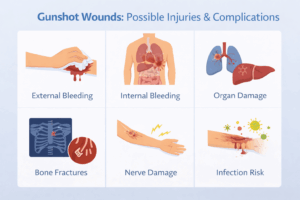
Types of Injuries Caused by Gunshot Wounds
Gunshot wounds can affect multiple body systems:
1. External Bleeding
- Visible wounds with significant blood loss
- May appear small but bleed heavily
2. Internal Bleeding
- Damage to organs or blood vessels
- Not always immediately visible
3. Organ Damage
- Lungs, liver, or other organs may be affected
- Can impact breathing or circulation
4. Bone Fractures
- Bullets can break or shatter bones
- May limit movement
5. Nerve Damage
- Loss of sensation or movement
6. Infection Risk
- Open wounds increase risk of complications
Symptoms and Warning Signs
Watch for:
- Heavy bleeding
- Difficulty breathing
- Unresponsiveness
- Pale or clammy skin
- Confusion or weakness
Immediate action is critical.
First Aid Response: Life-Threatening Priorities
Based on standard first aid training practices in Canada:
Step 1: Ensure Scene Safety
- Do not approach if unsafe
- Wait for authorities if necessary
Step 2: Call Emergency Services Immediately
Step 3: Control Severe Bleeding
- Apply firm, direct pressure
- Use available materials (cloth, bandage)
Step 4: Check Breathing
- If not breathing, begin CPR
Step 5: Keep the Person Still
- Reduce movement to prevent further injury
Step 6: Monitor Continuously
- Watch for changes until help arrives
Complications of Gunshot Injuries
Even after initial care, complications may include:
- Continued internal bleeding
- Breathing difficulties
- Shock (reduced circulation)
- Infection
These risks highlight the need for rapid emergency response.
Prevention and Safety Considerations
To improve safety in Winnipeg and across Manitoba:
- Promote awareness of emergency response skills
- Encourage CPR training in Winnipeg
- Support workplace safety planning
- Ensure access to first aid resources
- Encourage community preparedness
Prepared individuals can make a difference in critical situations.
Frequently Asked Questions
What is the first priority in a gunshot injury?
Controlling severe bleeding and ensuring breathing are the top priorities.
Can a gunshot wound look minor but still be serious?
Yes, internal damage may not be visible, making all gunshot wounds serious.
When should CPR be used in a gunshot emergency?
If the person is unresponsive and not breathing, CPR should be started.
Why is bleeding control important?
Severe blood loss can quickly become life-threatening if not addressed.
Who should take first aid training in Winnipeg?
Anyone can benefit. Training prepares individuals to respond effectively in emergencies.
Educational Note
This article is for general awareness and reflects commonly taught first aid practices in Canada. Rapid response to life-threatening conditions such as bleeding and breathing is essential.
About The Author

Mark Kascha
Certified First Aid Instructor Trainer with 30+ years of real-world experience, including lifeguarding, workplace emergency response, and first aid program development across Canada. Has worked with WorkSafeBC, WSIB, and Manitoba Health.
👉 [View full credentials]🔗 View LinkedIn Profile
Last reviewed: March 2026