
Knowing what to do if someone is buried in snow or how to respond when a skier is trapped in a tree well can be life-saving. These incidents can lead to breathing problems, hypothermia, and limited movement, making early first aid awareness critical.
In Winnipeg and across Manitoba, winter recreation is common, and many residents travel to ski areas across Canada. This makes first aid certification Manitoba and emergency response training Canada especially important for outdoor enthusiasts.
First Aid & Workplace Relevance in Canada
Across Canada, cold-weather and wilderness first aid knowledge is important for:
- Skiers and snowboarders
- Outdoor workers and guides
- Search and rescue volunteers
- Winter recreation participants
Even in Winnipeg, where extreme winter conditions are common, understanding cold exposure, hypothermia, and rescue safety is highly relevant.
Scenario Story: Skier Trapped Upside Down in Tree Well
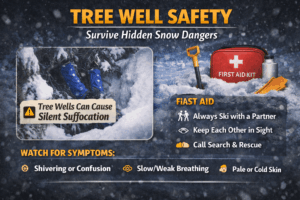 A backcountry skiing incident near Shames Mountain, west of Terrace, British Columbia highlights the dangers of deep snow and tree wells.
Two men in their early 40s were skiing when one suddenly went missing. His partner searched the area repeatedly, eventually discovering him after nearly two hours.
The missing skier had fallen into a tree well—a deep pocket of loose snow around the base of a tree—and was trapped upside down, buried and unable to move.
Despite the situation, he managed to create a small air pocket, allowing him to breathe while waiting for help.
Search and rescue teams were called and faced challenging conditions, including deep snow, fading daylight, and difficult terrain. Initially, the plan was to wait until morning for helicopter extraction, but due to the skier’s injuries and hypothermia risk, crews moved in immediately.
The skier was rescued, transported off the mountain, and taken for emergency care.
This incident shows how quick thinking, persistence, and coordinated rescue efforts can save lives in extreme environments.
A Unique First Aid Insight: “Tree Wells Can Cause Silent Suffocation”
A surprising and lesser-known danger in winter first aid is:
➡️ Tree wells can cause suffocation without obvious warning signs.
When someone falls into a tree well:
- Loose snow collapses around them
- The person may become inverted (upside down)
- Breathing becomes restricted as snow packs tightly
What makes this especially dangerous:
- There may be no visible movement or sound
- Even experienced skiers can become trapped
- Self-rescue is often difficult or impossible
This is why first aid and outdoor safety training emphasize:
- Skiing with a partner at all times
- Maintaining visual contact
- Checking immediately if someone disappears from view
Symptoms / Warning Signs
In snow burial or cold exposure cases, watch for:
- Slow or shallow breathing
- Confusion or disorientation
- Shivering or lack of shivering
- Weakness or inability to move
- Pale or cold skin
These signs may indicate hypothermia or oxygen restriction.
Causes / Risk Factors
Common contributing factors include:
- Deep powder snow conditions
- Skiing near tree lines
- Falling headfirst into tree wells
- Skiing alone or out of sight
- Remote or backcountry terrain
Awareness and preparation are essential in these environments.
First Aid Response for Tree Well & Hypothermia Emergencies
Based on standard first aid training practices in Canada, general response includes:
- Ensuring rescuer safety before approaching
- Calling emergency services or search and rescue
- Carefully freeing the airway first if the person is buried
- Avoiding sudden or rough movement
- Keeping the person warm and minimizing heat loss
- Monitoring breathing and responsiveness
- If unresponsive and not breathing normally, CPR may be required
These skills are commonly taught in certified first aid and wilderness response training across Canada.
Prevention & Workplace Considerations
To improve safety in Manitoba and beyond:
- Always ski or travel with a partner
- Maintain visual contact in wooded or deep snow areas
- Carry communication devices in remote areas
- Take wilderness or winter first aid training
- Understand terrain risks before heading out
Preparedness is critical in outdoor environments.
FAQ
What is a tree well and why is it dangerous?
A tree well is a deep pocket of loose snow around a tree. It can trap and suffocate a person if they fall in.
What should you do if someone is buried in snow?
Call for help immediately and focus on clearing the airway first while ensuring your own safety.
Why is hypothermia a concern in these situations?
Cold exposure can quickly affect the body’s ability to function, especially if the person is immobile.
Who should take first aid training in Winnipeg?
Outdoor enthusiasts, workers, and anyone exposed to winter conditions can benefit.
What is the most important safety rule when skiing?
Never ski alone and always keep your partner within sight.
Educational Note
This content is for general awareness and reflects commonly taught practices in first aid and emergency response training across Canada. Hands-on training helps individuals respond more effectively in real-life emergencies.
About The Author

Mark Kascha
Certified First Aid Instructor Trainer with 30+ years of real-world experience, including lifeguarding, workplace emergency response, and first aid program development across Canada. Has worked with WorkSafeBC, WSIB, and Manitoba Health.
👉 [View full credentials]🔗 View LinkedIn Profile
Last reviewed: March 2026