Understanding Burns Beyond the Surface
In fire emergencies, burns are not always what they seem. Knowing what to do if someone is rescued from a house fire or how to respond when burns are not immediately visible is critical.
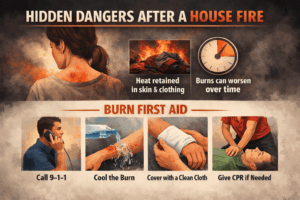
A key but often overlooked concept is that burn injuries can continue to worsen even after the person is removed from the heat source. This is sometimes called the “burn progression effect”, where damage continues beneath the skin.
First Aid & Workplace Relevance in Winnipeg, Manitoba
In Winnipeg, Manitoba, house fires in areas like St. Vital, Transcona, and Downtown Winnipeg can occur during colder months due to heating systems, cooking incidents, or electrical faults.
CPR training in Winnipeg and first aid certification in Manitoba are essential for:
- Homeowners and families
- Property managers and maintenance staff
- Workplace safety teams
- Community members
These skills are widely taught in emergency response training across Canada, including fire response and burn management.
Scenario: Fatal House Fire in Calgary
 A house fire in northwest Calgary, located in the 2200 block of Ninth Avenue N.W., led to a tragic outcome involving an elderly woman.
When crews from the Calgary Fire Department arrived:
- Flames and heavy smoke were visible
- Firefighters entered through a side entryway
- The woman was found just inside the front door
Emergency responders:
- Removed her from the structure
- Began CPR immediately
- Transported her to hospital
Despite these efforts, she later died from her injuries.
Investigators noted that another resident was not home at the time. The cause of the fire remains under investigation.
This incident highlights how fire-related injuries—especially burns and smoke inhalation—can be severe even when rescue is rapid, a risk also present in Manitoba homes.
A Unique Risk: Burns Can Worsen After Rescue
Even after removal from the fire:
- Heat trapped in the skin can continue damaging tissue
- Clothing and skin retain heat
- Burns may appear mild at first but deepen over time
Why This Matters
- Early cooling can limit burn progression
- Delays in care can worsen injury severity
- Hidden damage may not be immediately visible
This concept is commonly emphasized in advanced first aid training in Canada.
Types of Burns (Quick Overview)
- First-degree: Red, painful
- Second-degree: Blisters, swelling
- Third-degree: Deep tissue damage, altered skin appearance
- Fourth-degree: Severe, involving muscle or bone
Burn severity is not always obvious right away.
Symptoms and Warning Signs
Watch for:
- Redness or blistering
- Skin that appears pale, dark, or leathery
- Pain or lack of sensation
- Difficulty breathing (possible smoke inhalation)
- Confusion or weakness
First Aid Response: What to Do
Based on standard first aid training practices in Canada:
Step 1: Ensure Scene Safety
- Do not enter unsafe structures
Step 2: Check Airway and Breathing
- If not breathing → begin CPR immediately
Step 3: Call Emergency Services
Step 4: Stop the Burning Process
- Remove from heat source
- Remove smouldering clothing if safe
Step 5: Cool the Burn (Important Step)
- Use clean, cool water
- Helps reduce ongoing damage
Step 6: Cover the Burn
- Use a clean, dry cloth
- Protect the area
Step 7: Monitor the Person
- Watch for changes in breathing or consciousness
Another Overlooked Factor: Heat Retention
Burn injuries can continue because:
- Skin holds heat even after flames are gone
- Tight clothing or materials trap heat
- Delayed cooling increases tissue damage
Cooling early is key—a principle taught in Canadian first aid programs.
Prevention and Fire Safety Considerations
To reduce risks in Winnipeg and across Manitoba:
- Install working smoke alarms
- Keep exits clear and accessible
- Practice fire escape plans
- Monitor cooking and heating equipment
- Ensure access to CPR training in Winnipeg
Prepared households improve survival outcomes.
Frequently Asked Questions
Can burns get worse after the fire is out?
Yes, heat trapped in the skin can continue to damage tissue, making early cooling important.
What is the first priority in a fire emergency?
Check breathing and begin CPR if needed before treating burns.
Why is cooling burns important?
Cooling helps stop ongoing tissue damage and may reduce severity.
Are all burns immediately visible?
No, some deeper burns may not appear severe at first.
Who should take CPR training in Winnipeg?
Anyone can benefit. Training prepares individuals to respond effectively in emergencies.
Educational Note
This article is for general awareness and reflects commonly taught first aid practices in Canada. Early action, especially addressing breathing and cooling burns, is essential in fire emergencies.
About The Author

Mark Kascha
Certified First Aid Instructor Trainer with 30+ years of real-world experience, including lifeguarding, workplace emergency response, and first aid program development across Canada. Has worked with WorkSafeBC, WSIB, and Manitoba Health.
👉 [View full credentials]🔗 View LinkedIn Profile
Last reviewed: March 2026