Understanding Snowmobile Accidents and Emergency Response
Snowmobile crashes can lead to both traumatic injuries and environmental dangers. Knowing what to do after a crash in cold conditions or how to respond when someone is unresponsive outdoors is critical.
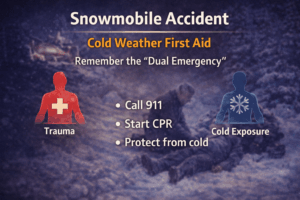
A unique and often overlooked concept is the “dual emergency”—when a person is dealing with both trauma (injuries) and cold exposure at the same time.
First Aid & Workplace Relevance in Winnipeg, Manitoba
In Winnipeg, Manitoba, and across rural and northern areas, snowmobile use is common during winter. This makes first aid certification in Manitoba and CPR training in Winnipeg especially important for:
- Outdoor workers and contractors
- Snowmobile riders and recreational users
- Search and rescue volunteers
- Families and community members
These skills are widely taught in emergency response training across Canada, especially for cold-weather emergencies.
Scenario: Snowmobile Crash Near Yellowknife
 A tragic snowmobile crash occurred near Reid Lake, approximately 60 km northeast of Yellowknife.
- Jeffrey Lindsay, a 46-year-old Canadian Ranger, struck a snow-covered rock
- The crash occurred in a remote, cold environment
- Police responded and performed CPR on scene
Despite immediate efforts:
- Lindsay was declared dead at the scene
He was remembered as an experienced ranger and dedicated community member.
This incident highlights how quickly emergencies can escalate in remote and cold environments—something also relevant to Manitoba’s winter conditions.
A Unique First Aid Insight: The “Dual Emergency”
In cold-weather crashes, responders often face two emergencies at once:
1. Traumatic Injuries
- Head, neck, or internal injuries
- Bleeding or fractures
2. Cold Exposure (Hypothermia)
- Rapid heat loss
- Reduced body function
Why This Is Important
- Cold can slow breathing and pulse, making assessment difficult
- Hypothermia can affect how CPR is performed and how long resuscitation may continue
- The body may appear unresponsive but still benefit from continued care
This principle is commonly emphasized in Canadian wilderness and first aid training.
Another Unique Factor: “Cold Can Mimic Death”
In very cold conditions:
- Breathing may become very slow
- Pulse may be faint or hard to detect
- The person may appear lifeless
Key Takeaway
Care should continue until properly assessed by professionals
This is why cold-weather rescues are treated with extra caution in Canada’s first aid guidelines.
Common Injuries in Snowmobile Crashes
Head and Neck Injuries
- Due to impact or sudden stops
Chest and Internal Injuries
- From collision with objects
Fractures
- Arms, legs, or ribs
Hypothermia
- From exposure to cold and snow
Signs of Serious Injury or Cold Exposure
Watch for:
- Unresponsiveness
- Slow or absent breathing
- Pale or cold skin
- Confusion or disorientation
- Weak or difficult-to-find pulse
Immediate action is critical.
First Aid Response: What to Do
Based on standard first aid training practices in Canada:
Step 1: Ensure Scene Safety
- Watch for hazards (ice, terrain, vehicles)
Step 2: Call Emergency Services Immediately
Step 3: Check Airway and Breathing
- If not breathing → begin CPR
Step 4: Protect From Cold
- Insulate from snow and ground
- Reduce further heat loss
Step 5: Limit Movement
- Suspect spinal injuries
- Keep the person as still as possible
Step 6: Monitor Continuously
- Stay with the person until help arrives
A Surprising Detail: Cold May Extend Survival Window
In some cold environments:
- Lower body temperature may slow the body’s need for oxygen
- This can sometimes extend the window where CPR may still be effective
This is why persistence in resuscitation is emphasized in cold-weather first aid training in Canada.
Prevention and Safety Considerations
To improve safety in Winnipeg and across Manitoba:
- Wear proper protective gear
- Avoid high speeds in unfamiliar terrain
- Travel with others when possible
- Carry emergency communication devices
- Take first aid and CPR training in Winnipeg
Preparedness is key in remote environments.
Frequently Asked Questions
What is a “dual emergency” in first aid?
It refers to situations where trauma and environmental exposure (like cold) happen at the same time.
Can cold affect CPR decisions?
Yes, cold conditions can make assessment difficult and may extend the need for continued care.
Why is hypothermia dangerous after a crash?
It affects breathing, circulation, and awareness, increasing overall risk.
What is the first priority after a snowmobile crash?
Ensure safety, call for help, and check breathing.
Who should take first aid training in Manitoba?
Anyone who spends time outdoors, works in remote areas, or wants to be prepared.
Educational Note
This article is for general awareness and reflects commonly taught first aid practices in Canada. Cold-weather emergencies require careful assessment and prompt action.
About The Author

Mark Kascha
Certified First Aid Instructor Trainer with 30+ years of real-world experience, including lifeguarding, workplace emergency response, and first aid program development across Canada. Has worked with WorkSafeBC, WSIB, and Manitoba Health.
👉 [View full credentials]🔗 View LinkedIn Profile
Last reviewed: March 2026