Understanding Cold Water Drowning and CPR
Cold water incidents are especially dangerous. Knowing what to do if someone is pulled from icy water and not breathing or how to respond when hypothermia is involved is critical.
A unique and important concept in cold water emergencies is that cold temperatures can slow the body’s metabolism, which may sometimes extend the window for resuscitation efforts.
First Aid & Workplace Relevance in Winnipeg, Manitoba
In Winnipeg, Manitoba, frozen lakes and rivers are common during winter in areas like St. Vital Park, Assiniboine Park, and surrounding rural regions.
CPR training in Winnipeg and first aid certification in Manitoba are essential for:
- Outdoor workers and contractors
- Families and pet owners
- Ice anglers and recreational users
- Emergency response teams
These skills are widely taught in emergency response training across Canada, including cold exposure and water rescue awareness.
Scenario: Drowning in Ice-Covered Lake in Nova Scotia
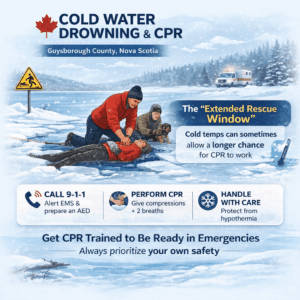 A tragic incident occurred at Indian Harbour Lake in Guysborough County, Nova Scotia, involving a 57-year-old woman.
- Two individuals went to check on her
- They discovered her in an ice-covered lake
- She was pulled from the water
They immediately:
- Began CPR
- Called emergency services
Despite their efforts, she was later declared deceased at hospital.
Investigators believe she may have entered the water while attempting to rescue a dog, though this was not confirmed.
This situation highlights the dangers of ice-covered water, which is also a concern across Manitoba during winter months.
A Unique CPR Insight: Cold Water and “Extended Rescue Window”
In cold water incidents:
- The body cools rapidly
- Oxygen demand may decrease
- This can sometimes allow longer resuscitation attempts compared to typical cases
Why This Matters
- CPR may still be effective even after longer submersion times
- Continuous efforts are important
- Early rescue and CPR remain critical
This concept is often summarized in training as:
“They are not considered beyond help until warming and assessment are complete.”
This principle is commonly discussed in advanced first aid and CPR courses in Canada.
Additional Risk: Hypothermia
Cold water exposure can lead to:
- Reduced body temperature
- Slowed breathing and heart rate
- Confusion or unconsciousness
Signs of Hypothermia
- Shivering (early)
- Slowed breathing
- Weak pulse
- Drowsiness or confusion
Symptoms and Warning Signs
Watch for:
- Unresponsiveness
- Absent or irregular breathing
- Pale or cold skin
- Weak pulse
- Confusion or collapse
Immediate action is required.
First Aid Response: What to Do
Based on standard first aid training practices in Canada:
Step 1: Ensure Scene Safety
- Avoid stepping onto unsafe ice
Step 2: Remove the Person Safely
- Use reaching or throwing methods if possible
Step 3: Check Airway and Breathing
- If not breathing → begin CPR immediately
Step 4: Call Emergency Services
Step 5: Protect from Cold
- Remove wet clothing if possible
- Cover with dry materials
Step 6: Continue CPR
- Maintain steady compressions and breaths
Another Unique Factor: Cold Water Rescuer Risk
Many incidents occur when people attempt rescues:
- Ice may not support weight
- Cold shock can affect rescuers
- Secondary victims are common
Key takeaway:
Always prioritize your own safety first
Prevention and Water Safety Considerations
To reduce risks in Winnipeg and across Manitoba:
- Avoid walking on uncertain ice
- Supervise pets near frozen water
- Carry ice safety tools when outdoors
- Never attempt risky rescues alone
- Take CPR training in Winnipeg
Prepared individuals can make a difference without becoming victims themselves.
Frequently Asked Questions
Can CPR still work after cold water drowning?
Cold temperatures may slow body processes, which can extend the window for resuscitation in some cases.
What is the biggest danger with ice-covered lakes?
Unstable ice can break suddenly, leading to cold water immersion.
Should you stop CPR if the person is very cold?
Continue until trained responders take over, as outcomes can vary in cold conditions.
Why is rescuer safety important?
Many injuries occur when untrained rescuers enter unsafe environments.
Who should take CPR training in Winnipeg?
Anyone spending time outdoors or near water can benefit from training.
Educational Note
This article is for general awareness and reflects commonly taught first aid practices in Canada. Cold water emergencies require rapid response, careful rescue, and consistent CPR efforts.
About The Author

Mark Kascha
Certified First Aid Instructor Trainer with 30+ years of real-world experience, including lifeguarding, workplace emergency response, and first aid program development across Canada. Has worked with WorkSafeBC, WSIB, and Manitoba Health.
👉 [View full credentials]🔗 View LinkedIn Profile
Last reviewed: March 2026