Understanding Burns and Smoke Inhalation
Fires can cause both burn injuries and life-threatening breathing problems. Knowing what to do if someone is pulled from a fire and not breathing or how to respond to different types of burns is critical.
In many fire emergencies, smoke inhalation affects breathing before burns become the main concern, making CPR and airway management the first priority.
First Aid & Workplace Relevance in Winnipeg, Manitoba
In Winnipeg, Manitoba, fire-related emergencies can occur in homes, workplaces, and kitchens across areas like St. Vital, Transcona, and Downtown Winnipeg.
CPR training in Winnipeg and first aid certification in Manitoba are essential for:
- Homeowners and families
- Kitchen and food service workers
- Maintenance and industrial workers
- Workplace safety teams
These skills are widely taught in emergency response training across Canada, including burn care and airway management.
Scenario: Man Rescued from House Fire in Toronto
 A house fire in north Toronto, near Eglinton Avenue West and Dufferin Street, resulted in a serious emergency.
When firefighters arrived, heavy smoke was pouring from the home. Crews quickly entered and located a man believed to be in his 40s.
- He was removed without vital signs
- Emergency crews began CPR immediately
- He was suffering from severe smoke inhalation
Paramedics were able to resuscitate him, and he was transported to Sunnybrook Health Sciences Centre in life-threatening condition.
The fire was contained to the kitchen, and investigators began examining the cause.
This incident highlights how breathing emergencies and burns often occur together, a risk also present in homes across Manitoba.
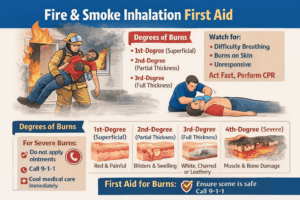
Types (Degrees) of Burns
Burns are classified based on how deeply they affect the skin:
1. First-Degree Burns (Superficial)
- Affect only the outer layer of skin
- Redness and mild pain
- No blisters
2. Second-Degree Burns (Partial Thickness)
- Affect deeper skin layers
- Blisters, swelling, and pain
- Skin may appear moist
3. Third-Degree Burns (Full Thickness)
- Damage all layers of skin
- Skin may appear white, charred, or leathery
- May be less painful due to nerve damage
4. Fourth-Degree Burns (Severe)
- Extend into muscle or bone
- Life-threatening injuries
Understanding burn severity helps guide response.
Smoke Inhalation: A Critical Risk
Smoke inhalation can:
- Reduce oxygen levels
- Cause breathing difficulty
- Lead to unconsciousness
Signs include:
- Trouble breathing
- Soot around nose or mouth
- Confusion or dizziness
Symptoms and Warning Signs
Watch for:
- Burns or skin damage
- Difficulty breathing
- Unresponsiveness
- Coughing or wheezing
- Weakness or confusion
Immediate action is essential.
First Aid Response: What to Do
Based on standard first aid training practices in Canada:
Step 1: Ensure Scene Safety
- Do not enter unsafe environments
Step 2: Check Airway and Breathing
- If not breathing → begin CPR immediately
Step 3: Call Emergency Services
Step 4: Manage Burns (After Breathing Is Addressed)
- Cool the burn with clean, cool water
- Cover loosely with a clean cloth
- Avoid applying substances
Step 5: Monitor the Person
- Watch for changes in breathing or responsiveness
Managing Burns by Severity (General Awareness)
First-Degree Burns
- Cool with water
- Protect the area
Second-Degree Burns
- Cool gently
- Avoid breaking blisters
Severe Burns (Third/Fourth Degree)
- Do not apply water if extensive
- Cover loosely
- Seek immediate medical care
Burn care is always secondary to life-threatening issues like breathing.
Prevention and Fire Safety Considerations
To reduce risks in Winnipeg and across Manitoba:
- Install and maintain smoke alarms
- Practice fire escape plans
- Monitor cooking areas closely
- Maintain heating and electrical systems
- Ensure access to CPR training in Winnipeg
Prepared homes and workplaces improve safety outcomes.
Frequently Asked Questions
What is the most important step after a fire rescue?
Check breathing first. If the person is not breathing, begin CPR immediately.
How are burns classified?
Burns are classified by depth, from first-degree (mild) to fourth-degree (severe).
Should you treat burns before CPR?
No, breathing and circulation always take priority.
Why is smoke inhalation dangerous?
It reduces oxygen and can quickly lead to unconsciousness or cardiac arrest.
Who should take CPR training in Winnipeg?
Anyone can benefit, especially homeowners and workers. Training improves emergency response.
Educational Note
This article is for general awareness and reflects commonly taught first aid practices in Canada. Prioritizing breathing and understanding burn severity are key in fire emergencies.
About The Author

Mark Kascha
Certified First Aid Instructor Trainer with 30+ years of real-world experience, including lifeguarding, workplace emergency response, and first aid program development across Canada. Has worked with WorkSafeBC, WSIB, and Manitoba Health.
👉 [View full credentials]🔗 View LinkedIn Profile
Last reviewed: March 2026