Understanding Fall-Related Workplace Injuries
Falls from height are one of the leading causes of serious workplace injuries. Knowing what to do if someone falls from a ladder or elevated surface or how to respond when spinal injuries are suspected is critical.
Even a short fall can result in head trauma, internal injuries, or spinal damage, especially in industrial environments.
First Aid & Workplace Relevance in Winnipeg, Manitoba
 In Winnipeg, Manitoba, falls are a major concern in industries such as construction, warehousing, and manufacturing—particularly in areas like Transcona, St. Vital, and industrial zones around Downtown Winnipeg.
First aid certification in Manitoba, CPR training in Winnipeg, and fall protection training are essential for:
- Construction and industrial workers
- Warehouse and maintenance staff
- Supervisors and safety officers
- Employers and workplace safety teams
These skills are widely taught in emergency response training across Canada, including fall prevention and injury management.
Scenario: Fatal Fall at Industrial Site
A tragic workplace incident occurred near Eddystone Avenue and Oakdale Road in Toronto, involving a man in his 50s.
Emergency services responded after reports that the worker had fallen from a height at an industrial site.
- The man was found breathing but critically injured
- He received first aid care during transport
- He was taken to a trauma centre with life-threatening injuries
Despite medical efforts, he was later declared deceased.
Investigators believe the fall may have occurred from a ladder or forklift while performing painting work at a food manufacturing facility.
The Ministry of Labour launched an investigation into the incident.
This situation reflects similar risks in Manitoba workplaces, where working at heights is common.
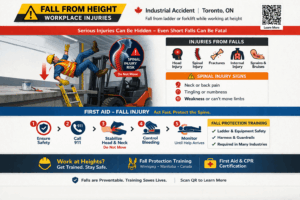
Common Injuries from Falls
1. Head Injuries
- Concussion or loss of consciousness
- Confusion or dizziness
2. Spinal Injuries (High Risk)
- Damage to neck or back
- Possible loss of movement or sensation
- Requires minimal movement
3. Fractures
- Broken arms, legs, or ribs
- Pain and limited mobility
4. Internal Injuries
- Damage to organs
- May not be immediately visible
5. Soft Tissue Injuries
- Sprains, strains, and bruising
Spinal Injuries: Why They Matter
Spinal injuries are a major concern after falls.
Warning Signs:
- Neck or back pain
- Tingling or numbness
- Weakness or inability to move limbs
- Loss of coordination
Key Principle:
Do not move the person unless necessary for safety
This helps prevent further injury.
Symptoms and Warning Signs After a Fall
Watch for:
- Unresponsiveness
- Difficulty breathing
- Severe pain
- Bleeding
- Confusion or disorientation
Immediate assessment is critical.
First Aid Response: What to Do
Based on standard first aid training practices in Canada:
Step 1: Ensure Scene Safety
- Check for hazards (equipment, height risks)
Step 2: Call Emergency Services Immediately
Step 3: Check Airway and Breathing
- If not breathing, begin CPR
Step 4: Protect the Spine
- Keep the head and neck still
- Avoid unnecessary movement
Step 5: Control Bleeding
- Apply gentle pressure if needed
Step 6: Monitor the Person
- Watch for changes until help arrives
Workplace Prevention and Fall Protection
To reduce fall risks in Winnipeg and across Manitoba:
Fall Prevention Measures
- Use proper ladders and equipment
- Maintain clean and stable work surfaces
- Follow safety procedures
Fall Protection Training
- Teaches hazard awareness
- Covers proper use of safety gear (harnesses, guardrails)
- Reinforces safe work practices
Why Training Matters
- Reduces risk of serious injury
- Improves emergency response
- Required in many workplaces across Canada
Frequently Asked Questions
What should you do if someone falls from a height?
Ensure safety, call emergency services, and avoid moving the person—especially if a spinal injury is suspected.
Why are spinal injuries dangerous?
They can affect movement and sensation. Improper handling may worsen the injury.
When should CPR be used after a fall?
If the person is unresponsive and not breathing, CPR should be started immediately.
What is fall protection training?
It teaches workers how to prevent falls and use safety equipment properly.
Who should take first aid training in Winnipeg workplaces?
Workers, supervisors, and safety personnel can all benefit. Training prepares teams to respond effectively.
Educational Note
This article is for general awareness and reflects commonly taught first aid and workplace safety practices in Canada. Preventing falls and responding appropriately can reduce serious outcomes.
About The Author

Mark Kascha
Certified First Aid Instructor Trainer with 30+ years of real-world experience, including lifeguarding, workplace emergency response, and first aid program development across Canada. Has worked with WorkSafeBC, WSIB, and Manitoba Health.
👉 [View full credentials]🔗 View LinkedIn Profile
Last reviewed: March 2026