Knowing what to do if someone is found unresponsive with traumatic injuries or how to respond when a person has no vital signs is critical. In these situations, scene safety, bleeding awareness, and CPR readiness are essential while waiting for emergency services.
In Winnipeg and across Manitoba, emergencies can occur in public places such as shopping areas, workplaces, or parking lots. This is why CPR training Winnipeg and first aid certification Manitoba are important for both the public and employees.
First Aid & Workplace Relevance in Canada
Across Canada, trauma response training is important for:
- Retail and shopping centre staff
- Security personnel
- Workplace first aid attendants
- General public in high-traffic areas
In busy Winnipeg areas like Downtown or retail centres in St. Vital, knowing how to respond to unconsciousness, severe trauma, and cardiac arrest can make a difference before paramedics arrive.
Scenario Story: Man Found with Severe Trauma at Shopping Plaza
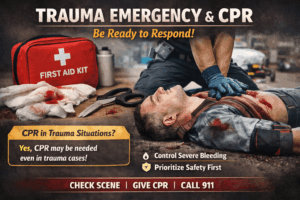 A serious incident in Toronto highlights the importance of rapid emergency response.
Police were called to a shopping plaza near Birchmount Road and Huntingwood Drive after reports of a man in his 50s with significant injuries.
When emergency crews arrived, the man was unresponsive and showing no vital signs. Paramedics immediately began CPR at the scene before transporting him to a healthcare facility.
Authorities later indicated that the injuries appeared to be self-inflicted. The situation remains under investigation.
This incident reflects how quick recognition of cardiac arrest and immediate CPR efforts are critical—even in complex trauma situations.
A Unique First Aid Insight: “CPR in Trauma Is Different—But Still Important”
A lesser-known and surprising concept in first aid is:
➡️ CPR may still be performed in trauma cases, even when the cause is not cardiac-related.
While cardiac arrest is often linked to heart issues, in trauma:
- The heart may stop due to severe injury or blood loss
- Oxygen delivery to the brain is still critical
- CPR can help maintain circulation temporarily
However, first aid training in Canada also emphasizes:
- Identifying and managing life-threatening bleeding at the same time
- Understanding that outcomes may vary depending on the injury
This highlights the importance of multi-skill training—not just CPR alone.
Symptoms / Warning Signs
In a severe trauma situation, watch for:
- Unresponsiveness
- Absence of normal breathing
- Visible injuries or signs of trauma
- Pale or cool skin
- Weak or absent pulse
These signs indicate a life-threatening emergency.
Causes / Risk Factors
Traumatic emergencies in public spaces may involve:
- Physical injuries
- Falls or impacts
- Sharp object injuries
- Medical or psychological distress
Preparedness helps improve response in unpredictable situations.
First Aid & CPR Response for Trauma Emergencies
Based on standard first aid training practices in Canada, general response includes:
- Ensuring the scene is safe before approaching
- Calling emergency services immediately
- Checking responsiveness and breathing
- If unresponsive and not breathing normally, CPR may be started
- Watching for severe bleeding and addressing it if possible
- Minimizing movement unless necessary for safety
- Continuing care until emergency responders arrive
These skills are commonly taught in certified CPR and emergency response training across Canada.
Prevention & Workplace Considerations
To improve safety in Manitoba:
- Train staff in first aid and CPR
- Maintain accessible first aid kits
- Promote awareness of emergency procedures
- Encourage reporting of unusual or unsafe situations
- Support mental health awareness and workplace safety initiatives
Preparedness involves both physical and situational awareness.
FAQ
What should you do if someone is unresponsive with injuries?
Call emergency services immediately, ensure the scene is safe, and check breathing. Begin CPR if needed.
Is CPR used in trauma cases?
Yes, CPR may be used if a person is not breathing normally, even when injuries are involved.
Why is scene safety important?
Unsafe scenes can put rescuers at risk. Always assess the environment before helping.
Who should take first aid training in Winnipeg?
Workers, security staff, and the general public can all benefit from training across Manitoba.
What is the first priority in a trauma emergency?
Ensuring safety and calling for help are always the first steps before providing care.
Educational Note
This content is for general awareness and reflects commonly taught practices in first aid and CPR training across Canada. Hands-on training helps individuals respond more confidently in real-life emergencies.
About The Author

Mark Kascha
Certified First Aid Instructor Trainer with 30+ years of real-world experience, including lifeguarding, workplace emergency response, and first aid program development across Canada. Has worked with WorkSafeBC, WSIB, and Manitoba Health.
👉 [View full credentials]🔗 View LinkedIn Profile
Last reviewed: March 2026