Knowing what to do if someone is stabbed or how to respond when there is severe bleeding or an object embedded in the body is critical. These situations can escalate quickly, and early first aid—especially bleeding control and scene safety—can help stabilize a person until emergency services arrive.
In Winnipeg and across Manitoba, public spaces such as transit stations, shopping areas, and workplaces can be settings where emergencies occur unexpectedly. This makes CPR training Winnipeg and first aid certification Manitoba valuable for everyday preparedness.
First Aid & Workplace Relevance in Canada
Across Canada, bleeding control and trauma response training are important for:
- Transit workers and commuters
- Security personnel and retail staff
- Construction and industrial workers
- Teachers, students, and the general public
In Winnipeg locations like Downtown transit hubs or busy intersections, knowing how to respond to severe bleeding, shock, and traumatic injuries can make a critical difference.
Scenario Story: Unprovoked Stabbing at LRT Platform
 A serious incident at the South Campus LRT Station in Edmonton highlights how quickly violence-related injuries can occur.
A 19-year-old man was waiting for a train early in the morning when he was suddenly approached and stabbed multiple times in what police described as an unprovoked attack.
Witnesses reported that there had been no prior altercation. One bystander immediately stepped in to help, recognizing the urgency of the situation and providing first aid while others contacted emergency services.
Within minutes, the area became an active emergency scene. The victim received rapid care and was transported for further treatment.
Later developments led to the arrest of a suspect connected to the incident.
The victim’s family later expressed gratitude toward the bystanders, emergency responders, and healthcare teams for their quick actions, noting that he is now recovering.
This incident demonstrates how immediate bystander response—especially bleeding control—can play a key role in survival.
A Unique First Aid Insight: “Leave It In” Can Save a Life
One of the most surprising and important principles in first aid is:
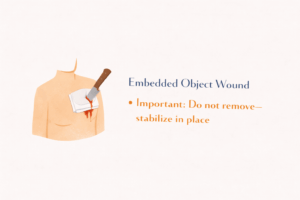
➡️ If an object is embedded in the body, do NOT remove it.
While it may seem instinctive to pull it out, an embedded object can:
- Act as a barrier limiting blood loss
- Prevent further internal damage from movement
- Help maintain pressure inside the wound
Removing it may cause sudden severe bleeding.
Canadian first aid training emphasizes:
- Stabilizing the object in place
- Applying pressure around (not directly on) the object
- Keeping the person still until help arrives
Types of Injuries in Stabbing Incidents
Stabbing injuries can vary widely depending on location and depth:
External Bleeding Injuries
- Visible wounds with active bleeding
- Risk of rapid blood loss
Deep Puncture Wounds
- Small surface wound with deeper internal damage
- May affect muscles, organs, or blood vessels
Embedded Object Injuries
- Object remains lodged in the body
- Requires careful stabilization
Internal Injuries
- Not immediately visible
- May involve chest or abdominal organs
Each type requires careful observation and appropriate first aid response.
Symptoms / Warning Signs
After a stabbing injury, watch for:
- Heavy or continuous bleeding
- Weakness, dizziness, or confusion
- Pale, cool, or clammy skin
- Difficulty breathing (especially with chest injuries)
- Signs of shock
These may indicate a serious or life-threatening condition.
Causes / Risk Factors
Factors contributing to these incidents include:
- Unpredictable acts of violence
- Public or crowded environments
- Lack of immediate security presence
- Close proximity to others in confined spaces
Preparedness and awareness are important in public settings.
First Aid Response for Stabbing Injuries
Based on standard first aid training practices in Canada, general response includes:
- Ensuring the scene is safe before approaching
- Calling emergency services immediately
- Applying firm pressure to control bleeding
- If an object is embedded, leaving it in place and stabilizing it
- Keeping the person as still and calm as possible
- Monitoring breathing and responsiveness
- If unresponsive and not breathing normally, CPR may be required
These life-saving skills are commonly taught in certified first aid and emergency response training across Canada.
Prevention & Workplace Considerations
To improve safety in Manitoba:
- Promote awareness in public and workplace environments
- Ensure access to first aid kits and trained responders
- Encourage reporting of suspicious activity
- Provide staff with emergency response training
- Plan for rapid communication during emergencies
Preparedness supports faster and safer response.
FAQ
What should you do if someone is bleeding heavily after being stabbed?
Call emergency services immediately and apply firm pressure to control bleeding while ensuring your own safety.
Should you remove an object stuck in a wound?
No, embedded objects should generally be left in place and stabilized, as removing them may increase bleeding.
Why is bleeding control so important?
Severe bleeding can quickly become life-threatening. Controlling bleeding helps maintain circulation until help arrives.
Who should take first aid training in Winnipeg?
Anyone can benefit, especially workers, commuters, and those in public-facing roles across Manitoba.
What is the first priority in a violent emergency?
Ensuring scene safety and calling emergency services are always the first steps.
Educational Note
This content is for general awareness and reflects commonly taught practices in first aid and CPR training across Canada. Hands-on training helps individuals respond more effectively in real-life emergencies.
About The Author

Mark Kascha
Certified First Aid Instructor Trainer with 30+ years of real-world experience, including lifeguarding, workplace emergency response, and first aid program development across Canada. Has worked with WorkSafeBC, WSIB, and Manitoba Health.
👉 [View full credentials]🔗 View LinkedIn Profile
Last reviewed: March 2026