Knowing what to do if someone is stabbed or how to respond when there is severe bleeding from a cut or wound is critical. These injuries can vary widely—from surface cuts to deep penetrating wounds—and quick recognition and first aid response can help stabilize the situation.
In Winnipeg and across Manitoba, public spaces like buses and transit routes are part of daily life. This makes CPR training Winnipeg and first aid certification Manitoba valuable for commuters, workers, and the general public.
First Aid & Workplace Relevance in Canada
 Across Canada, understanding wound care and bleeding control is important for:
- Public transit workers and passengers
- Security and customer service staff
- Workplace first aid attendants
- Anyone in public or crowded environments
In Winnipeg transit systems and busy areas like Downtown, knowing how to respond to cuts, lacerations, and severe bleeding can make a difference before emergency responders arrive.
Scenario Story: Stabbing Incident on Transit Bus
A tragic incident in Richmond highlights the seriousness of violent injuries in confined public spaces.
A 42-year-old man was involved in an altercation on a Coast Mountain bus near No. 3 Road and Cambie Road. What reportedly began as a random argument escalated into a physical fight.
During the incident, the man was stabbed. Witnesses quickly recognized the emergency and called 911. Paramedics arrived and began CPR in the doorway of the bus before transporting him to a healthcare facility.
Despite their efforts, the man later died from his injuries. Authorities continue to investigate the circumstances surrounding the incident.
This situation emphasizes how rapid response, bleeding awareness, and emergency action are critical in severe injury cases.
A Unique First Aid Insight: “Not All Cuts Bleed the Same Way”
A surprising and important concept in first aid is:
➡️ Different types of cuts can behave very differently—and require different responses.
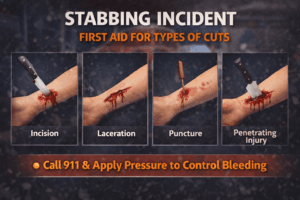
Understanding the type of wound helps guide safe action:
1. Incision (Clean Cut)
- Caused by sharp objects
- May bleed steadily but cleanly
- Edges are typically smooth
2. Laceration (Torn or Jagged Cut)
- Irregular edges
- More tissue damage
- Higher risk of complications
3. Puncture Wound
- Small surface opening
- Can be deep with internal damage
- Often less visible bleeding externally
4. Penetrating / Embedded Object Injury
- Object remains in the body
- May limit bleeding temporarily
- Requires careful stabilization
This is why first aid training in Canada emphasizes not judging severity based only on what you see externally.
Symptoms / Warning Signs of Serious Wounds
Watch for:
- Heavy or uncontrolled bleeding
- Blood soaking through clothing or dressings
- Weakness or dizziness
- Pale, cool, or clammy skin
- Confusion or reduced responsiveness
These may indicate a life-threatening condition.
Causes / Risk Factors
Factors that may contribute include:
- Sharp objects or weapons
- Escalating physical conflicts
- Crowded or confined environments
- Lack of immediate intervention
Preparedness and awareness are key.
First Aid Response for Cuts and Stab Wounds
Based on standard first aid training practices in Canada, general response includes:
- Ensuring the scene is safe before approaching
- Calling emergency services immediately
- Applying firm pressure to control bleeding
- Avoiding removal of embedded objects
- Keeping the person still and calm
- Monitoring breathing and responsiveness
- If unresponsive and not breathing normally, CPR may be required
These skills are commonly taught in certified first aid and emergency response training across Canada.
Prevention & Workplace Considerations
To improve safety in Manitoba:
- Promote awareness in public and workplace settings
- Provide access to first aid kits and training
- Encourage conflict de-escalation strategies
- Ensure staff are trained in emergency response
- Maintain clear reporting and safety procedures
Preparedness helps reduce risk and improve outcomes.
FAQ
What should you do if someone is bleeding heavily from a cut?
Apply firm pressure and call emergency services immediately while ensuring your safety.
Are all cuts equally dangerous?
No, some wounds may appear small but involve deeper internal injury.
Should you remove something stuck in a wound?
No, embedded objects should generally be left in place and stabilized.
Why is it important to understand different wound types?
Different wounds behave differently and may require different first aid approaches.
Who should take first aid training in Winnipeg?
Anyone can benefit, especially workers, commuters, and community members.
Educational Note
This content is for general awareness and reflects commonly taught practices in first aid and CPR training across Canada. Hands-on training helps individuals respond more effectively in real-life emergencies.
About The Author

Mark Kascha
Certified First Aid Instructor Trainer with 30+ years of real-world experience, including lifeguarding, workplace emergency response, and first aid program development across Canada. Has worked with WorkSafeBC, WSIB, and Manitoba Health.
👉 [View full credentials]🔗 View LinkedIn Profile
Last reviewed: March 2026