Knowing what to do if a child is found in the water or how to respond when someone is not breathing after a near drowning can save a life. What makes this even more powerful is that life-saving skills like CPR can be learned and used—even by children.
In Winnipeg and across Manitoba, lakes, rivers, and outdoor water areas are common. This makes CPR training Winnipeg and first aid certification Manitoba important not just for adults—but for youth as well.
First Aid & Workplace Relevance in Canada
Across Canada, water safety and CPR knowledge are essential for:
- Families and children
- Teachers and school staff
- Camp leaders and outdoor workers
- Community members in rural and northern areas
In regions like northern Manitoba, where communities are close to water, understanding drowning response and rescue breathing is especially important.
Scenario Story: Young Girls Save a Child in Northern Manitoba
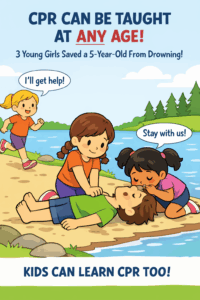 In a remarkable incident near Grand Rapids, Manitoba, three young girls—only around 8 years old—demonstrated how powerful basic first aid knowledge can be.
While skipping rocks near the water, they noticed a 5-year-old child, Lakeisha, floating face down.
Without hesitation:
- One girl entered the water and pulled the child to shore
- Another ran to get help
- Two of the girls began CPR, using what they had learned—even from a movie
They worked together to provide rescue breaths and assistance until help arrived.
A neighbour transported the child to a nearby nursing station, where she fully recovered.
Family members later shared that without the girls’ quick actions, the outcome could have been very different.
This story highlights something truly remarkable:
even very young individuals can step up and make life-saving decisions in critical moments.
A Unique First Aid Insight: “Children Can Learn CPR Faster Than You Think”
One surprising and inspiring fact is:
➡️ Children as young as elementary school age can learn and remember basic CPR steps.
In fact:
- Kids often learn quickly through visual memory (like movies or demonstrations)
- They may act faster because they hesitate less in emergencies
- Even partial skills—like calling for help or starting rescue breathing—can make a difference
Another interesting insight:
➡️ Many CPR programs in Canada now introduce basic first aid awareness in schools to build early confidence.
While proper training is always best:
➡️ Any exposure to CPR—even informal—can help someone take action when it matters.
Symptoms / Warning Signs of Drowning
Watch for:
- Unresponsiveness
- No normal breathing
- Face-down position in water
- Weak or no movement
- Pale or bluish skin
These signs indicate a life-threatening emergency.
Causes / Risk Factors
Common factors include:
- Lack of supervision near water
- Slips or falls into rivers or lakes
- Inability to swim
- Sudden accidents during play
Water environments require constant awareness.
First Aid Response for Drowning
Based on standard first aid training practices in Canada, general response includes:
- Ensuring the scene is safe before entering the water
- Calling for help immediately
- Removing the person from the water if safe to do so
- Checking breathing and responsiveness
- Beginning CPR if the person is unresponsive and not breathing normally
- Continuing care until emergency responders arrive
These skills are commonly taught in certified CPR and first aid courses across Canada.
Prevention & Workplace Considerations
To improve safety in Manitoba:
- Ensure adult supervision near water
- Encourage water safety education for children
- Promote CPR training in schools
- Use life jackets where appropriate
- Teach children how to call for help in emergencies
Preparedness starts early.
FAQ
Can children really perform CPR effectively?
Yes, children can learn and apply basic CPR skills, especially with training or guidance.
What should you do if a child is found in water?
Remove them safely, call for help, and check breathing immediately.
Is it safe for children to learn first aid?
Yes, age-appropriate training helps build confidence and awareness.
Why is early CPR important in drowning cases?
It helps restore breathing and circulation until help arrives.
Who should learn CPR in Winnipeg?
Everyone—including children, parents, and teachers—can benefit.
Educational Note
This content is for general awareness and reflects commonly taught practices in CPR and first aid training across Canada. Early education and awareness can help individuals of all ages respond in emergencies.
About The Author

Mark Kascha
Certified First Aid Instructor Trainer with 30+ years of real-world experience, including lifeguarding, workplace emergency response, and first aid program development across Canada. Has worked with WorkSafeBC, WSIB, and Manitoba Health.
👉 [View full credentials]🔗 View LinkedIn Profile
Last reviewed: March 2026