Understanding How to Respond When Someone Doesn’t Surface in Water
Knowing what to do if a swimmer does not resurface and becomes unresponsive is critical in water emergencies. Near-drowning incidents can happen quickly and often without warning. CPR (cardiopulmonary resuscitation) is a key response that helps maintain oxygen flow to the brain and vital organs until paramedics arrive.
In Canada, CPR and water safety awareness are commonly taught together in certified first aid courses and are essential for anyone spending time near lakes, pools, or rivers.
First Aid & Workplace Relevance in Winnipeg, Manitoba
Although this incident occurred in Halifax, similar situations can happen in Winnipeg, Manitoba, especially around local swimming areas, rivers, and recreational lakes.
Lifeguards, recreation staff, teachers, camp leaders, and the general public benefit from CPR training in Winnipeg and first aid certification in Manitoba. These skills are especially important in environments where supervision may change or where water access is common.
Workplace and community safety programs across Canada emphasize preparedness for water-related emergencies.
Scenario: Lifeguards Respond to Near-Drowning at Chocolate Lake
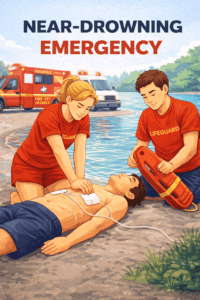 A man was taken to hospital in serious condition following a near-drowning incident at Chocolate Lake in Halifax.
Emergency services were called to the lake around 5 PM to assist with a reported cardiac arrest. The man had been swimming and diving in the water near Herring Cove Road but did not resurface.
Although lifeguards had just gone off duty minutes earlier, they remained nearby and quickly responded when the situation became apparent. They entered the water, located the individual, and brought him to shore.
Once out of the water, lifeguards immediately began CPR and continued providing care until paramedics arrived and took over.
Officials later noted that swimming while lifeguards are actively on duty and staying within personal limits are important safety measures that may help reduce risks in similar situations.
This incident highlights how timely CPR and quick recognition of danger are critical in water emergencies.
Symptoms / Warning Signs of Near-Drowning
A person experiencing a water emergency may show:
- Disappearing below the water surface unexpectedly
- Lack of movement or response after being pulled from water
- Irregular or absent breathing
- Unresponsiveness
- Signs of distress before submerging
Early recognition is key to initiating a fast response.
Causes / Risk Factors
Near-drowning incidents can be associated with:
- Swimming beyond personal ability
- Lack of active supervision
- Fatigue or sudden exhaustion
- Diving or underwater activity
- Environmental conditions such as water temperature
Awareness of these risks supports safer behaviour in and around water.
First Aid & CPR Response (General Guidance)
Based on standard first aid training practices in Canada, responders are taught to:
- Ensure it is safe to approach and assist
- Remove the person from the water if possible
- Check for responsiveness and normal breathing
- Call 911 immediately
- Begin CPR if the person is not breathing normally
- Continue care until paramedics arrive
These steps are commonly taught in emergency response training across Canada and are critical in water-related emergencies.
Prevention & Water Safety Considerations
To reduce the risk of near-drowning incidents:
- Swim only in designated areas with lifeguards on duty
- Stay within personal swimming ability
- Avoid swimming alone
- Be aware of surroundings and water conditions
- Promote water safety education and training
In Winnipeg and across Manitoba, these precautions are especially important during summer months when water activity increases.
Frequently Asked Questions
What should you do if someone doesn’t resurface while swimming?
If someone does not resurface, it is important to act quickly by alerting others, calling 911, and ensuring a safe rescue attempt. Once the person is out of the water, trained individuals are taught to begin CPR if needed.
Why is CPR important in near-drowning situations?
CPR helps restore circulation and supports oxygen delivery to the brain. Early CPR can improve the chances of survival while waiting for emergency medical services.
Should you swim when lifeguards are not on duty?
Swimming without lifeguards increases risk, as immediate assistance may not be available. Many safety guidelines in Canada recommend swimming only when supervision is present.
Who should learn CPR for water safety?
CPR training is recommended for lifeguards, workers, parents, and anyone who spends time near water. It is commonly included in first aid certification programs across Manitoba.
What increases the risk of near-drowning?
Factors such as fatigue, lack of supervision, environmental conditions, and overestimating swimming ability can increase risk. Awareness and preparation are key to prevention.
Educational Note
This content is for general awareness and reflects commonly taught first aid and CPR practices in Canada. Certified training helps individuals respond more confidently in water-related emergencies.
About The Author

Mark Kascha
Certified First Aid Instructor Trainer with 30+ years of real-world experience, including lifeguarding, workplace emergency response, and first aid program development across Canada. Has worked with WorkSafeBC, WSIB, and Manitoba Health.
👉 [View full credentials]🔗 View LinkedIn Profile
Last reviewed: March 2026