Understanding How to Respond When an Infant Is Unresponsive
Knowing what to do if a baby stops breathing or becomes unresponsive is one of the most critical first aid skills a caregiver can have. Infant emergencies can develop quickly and may involve breathing or cardiac issues. Infant CPR is a specialized technique designed to help restore circulation and oxygen flow until emergency medical services arrive.
In Canada, infant CPR is commonly taught in certified first aid courses and is especially important for parents, caregivers, and those working with young children.
First Aid & Workplace Relevance in Winnipeg, Manitoba
Emergencies involving infants can happen anywhere — including parking lots, homes, daycare centres, and public spaces across Winnipeg, Manitoba, from Downtown Winnipeg to family neighbourhoods like St. Vital and Transcona.
Parents, childcare workers, teachers, and retail staff can all benefit from CPR training in Winnipeg and first aid certification in Manitoba. Many workplaces that serve families or children include emergency response training as part of their safety planning.
Being prepared to respond quickly in those first few moments can make a meaningful difference.
Scenario: Officer Performs CPR on Newborn in Grocery Store Parking Lot
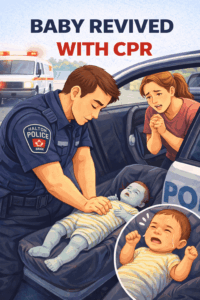 A Halton Regional Police officer was recognized by a grateful family after helping save the life of a 6-week-old baby during a sudden emergency.
The infant’s mother had been grocery shopping at a Real Canadian Superstore with her two children. While in the parking lot, she noticed something was wrong with her baby, Evan. He began to foam at the mouth and his skin turned blue, clear signs that he was in serious distress.
At the same time, Constable Rick Buys was nearby conducting a traffic stop when he heard the emergency call over his radio. He immediately responded and arrived at the scene where he was met by the distressed mother holding her unresponsive baby.
Recognizing the urgency, the officer placed the infant carefully in his police vehicle and assessed his condition. The baby was not breathing and showed no signs of responsiveness. Constable Buys began CPR right away.
Within moments of continued care and as paramedics arrived, the baby began to regain colour, cough, and cry—strong signs of recovery. He was transported to a healthcare facility and later to a specialized children’s hospital in Toronto for further evaluation. The child is reported to be healthy today.
This real-life example highlights how quick thinking and immediate CPR can change the outcome of a life-threatening situation, even in unexpected environments like a parking lot.
Symptoms / Warning Signs in Infant Emergencies
An infant in distress may show:
- Bluish or pale skin tone
- Difficulty breathing or no breathing
- Unresponsiveness
- Weak or absent movement
- Unusual sounds such as choking or gasping
These signs require immediate attention.
Causes / Risk Factors
Infant emergencies can occur due to:
- Airway obstruction or breathing difficulty
- Sudden medical conditions
- Feeding-related complications
- Environmental factors
- Unknown or unexpected causes
Because infants are more vulnerable, rapid recognition is especially important.
First Aid & Infant CPR Response (General Guidance)
Based on standard first aid training practices in Canada, responders are taught to:
- Check for responsiveness and breathing
- Call 911 immediately
- Begin infant CPR if the baby is not breathing normally
- Use gentle, appropriate techniques specific to infants
- Continue care until paramedics arrive
Infant CPR differs from adult CPR and is specifically taught in certified courses across Canada.
🔹 Additional Insight: Why Infant CPR Is Different
Infant CPR uses two fingers instead of full hands for chest compressions due to the smaller size and delicate structure of a baby’s chest. Rescue breaths are also adjusted to be gentler.
This difference is why hands-on training is strongly emphasized in Canadian first aid courses — it helps build confidence and proper technique for real-life situations.
Prevention & Safety Considerations
To help reduce the risk of infant emergencies:
- Monitor infants closely during feeding and activity
- Learn basic first aid and CPR skills
- Ensure safe sleeping and positioning practices
- Be aware of changes in breathing or behaviour
- Maintain a safe environment at home and in public spaces
In Winnipeg and across Manitoba, these precautions are part of everyday child safety awareness.
Frequently Asked Questions
What should you do if a baby stops breathing?
If a baby is unresponsive and not breathing normally, trained individuals are taught to call 911 immediately and begin infant CPR. Acting quickly can help maintain oxygen flow until emergency responders arrive.
How is infant CPR different from adult CPR?
Infant CPR uses gentler compressions and smaller hand placement techniques. These adjustments are designed for a baby’s body and are taught in certified CPR courses across Canada.
Who should learn infant CPR in Manitoba?
Parents, caregivers, daycare workers, and anyone responsible for infants should consider CPR training. Many programs in Manitoba include infant-specific training as part of certification.
Why is quick response important in infant emergencies?
Infants are more vulnerable to oxygen deprivation, so early action can significantly improve outcomes. Immediate CPR can help stabilize the situation until medical help arrives.
Can CPR really save a baby’s life?
Yes, CPR can help maintain circulation and breathing in emergencies. Many real-life cases show that early intervention can lead to positive outcomes when combined with professional medical care.
Educational Note
This content is for general awareness and reflects commonly taught infant first aid and CPR practices in Canada. Certified training helps caregivers respond more confidently in emergency situations involving children.
About The Author

Mark Kascha
Certified First Aid Instructor Trainer with 30+ years of real-world experience, including lifeguarding, workplace emergency response, and first aid program development across Canada. Has worked with WorkSafeBC, WSIB, and Manitoba Health.
👉 [View full credentials]🔗 View LinkedIn Profile
Last reviewed: March 2026