Understanding How to Respond to Sudden Cardiac Arrest During Physical Activity
Knowing what to do if someone collapses during exercise and stops breathing normally is critical in public and recreational settings. Sudden cardiac arrest can occur even in active, otherwise healthy individuals. CPR (cardiopulmonary resuscitation) and the use of an AED (automated external defibrillator) are essential actions that help restore circulation and heart rhythm until paramedics arrive.
In Canada, CPR and AED training are widely taught and are considered vital skills in gyms, workplaces, and community facilities.
First Aid & Workplace Relevance in Winnipeg, Manitoba
Situations like this can happen in fitness centres, schools, and recreational facilities across Winnipeg, Manitoba, including gyms in Downtown Winnipeg, community centres in St. Vital, and sports facilities in Transcona.
Fitness staff, coaches, employees, and members of the public benefit from CPR training in Winnipeg and first aid certification in Manitoba. Many workplaces and public venues across Canada are equipped with AEDs and rely on trained individuals to respond quickly in emergencies.
Scenario: Quick CPR and AED Use Saves Life at Racquet Club
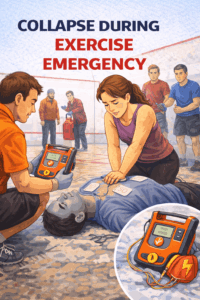 A 48-year-old man from Yellowknife survived a cardiac arrest after collapsing while playing squash at the Yellowknife Racquet Club.
During a game with a friend, he suddenly collapsed when his heart went into an abnormal rhythm. Recognizing the seriousness of the situation, his friend immediately began CPR and called for help.
Staff members quickly responded. An AED was retrieved from another room and brought to the scene. While CPR continued, the AED was applied, and a shock was delivered to help restore a normal heart rhythm.
A nurse practitioner who was nearby also stepped in to assist, continuing CPR and coordinating care until paramedics arrived.
The man was transported to hospital, where he received further treatment and monitoring. After additional care and testing, he recovered. He later received an implanted device to help regulate his heart rhythm in the future.
This incident highlights how rapid CPR, teamwork, and access to an AED can significantly improve outcomes in cardiac emergencies.
Symptoms / Warning Signs of Cardiac Arrest During Exercise
A person experiencing cardiac arrest may show:
- Sudden collapse
- No normal breathing or only gasping
- Unresponsiveness
- No detectable pulse
- Possible dizziness or discomfort before collapse
Immediate recognition is essential.
Causes / Risk Factors
Cardiac arrest during physical activity can be linked to:
- Abnormal heart rhythms (arrhythmias)
- Undiagnosed heart conditions
- Physical exertion triggering a cardiac event
- Age-related or genetic factors
- Sudden electrical disturbances in the heart
These events can occur even in individuals who appear healthy.
First Aid & CPR / AED Response (General Guidance)
Based on standard first aid training practices in Canada, responders are taught to:
- Check for responsiveness and normal breathing
- Call 911 immediately
- Begin CPR if the person is not breathing normally
- Retrieve and use an AED as soon as possible
- Follow AED prompts while continuing CPR
- Continue care until paramedics arrive
These steps are commonly taught in CPR and AED training programs across Canada.
🔹 Additional Insight: Why AEDs Are Critical in Cardiac Arrest
In many cardiac arrest cases, the heart enters an abnormal rhythm that CPR alone cannot correct. An AED delivers a controlled electrical shock that can help reset the heart to a normal rhythm.
Studies referenced in Canadian training programs show that using an AED within the first few minutes can significantly increase survival rates, especially in public places like gyms and sports facilities.
Prevention & Workplace / Fitness Safety Considerations
To reduce risks and improve emergency readiness:
- Ensure AEDs are accessible in fitness and recreational facilities
- Train staff and members in CPR and AED use
- Encourage regular health check-ups for active individuals
- Have clear emergency response plans in place
- Promote awareness of warning signs during exercise
In Winnipeg and across Manitoba, these measures are part of creating safer public and workplace environments.
Frequently Asked Questions
What should you do if someone collapses at the gym?
If a person is unresponsive and not breathing normally, trained individuals are taught to call 911, begin CPR, and use an AED as soon as possible. Acting quickly can improve survival chances.
Why is an AED important in cardiac arrest?
An AED helps restore a normal heart rhythm by delivering a controlled shock. It is a key tool used alongside CPR in emergency response situations.
Can healthy people experience cardiac arrest during exercise?
Yes, cardiac arrest can occur unexpectedly even in active individuals. This is why emergency preparedness is important in fitness settings.
Who should learn CPR and AED use in Manitoba?
CPR and AED training is recommended for fitness staff, workers, coaches, and the general public. Many workplaces and facilities include this training in their safety programs.
How quickly should CPR be started?
CPR should be started as soon as a person is identified as unresponsive and not breathing normally. Immediate action is critical in the first few minutes.
Educational Note
This content is for general awareness and reflects commonly taught CPR and AED practices in Canada. Certified training helps individuals respond confidently and effectively during cardiac emergencies.
About The Author

Mark Kascha
Certified First Aid Instructor Trainer with 30+ years of real-world experience, including lifeguarding, workplace emergency response, and first aid program development across Canada. Has worked with WorkSafeBC, WSIB, and Manitoba Health.
👉 [View full credentials]🔗 View LinkedIn Profile
Last reviewed: March 2026