Understanding How to Respond When a Boating Emergency Occurs
Knowing what to do if a boat capsizes and someone becomes unresponsive in the water is critical in recreational and outdoor settings. Boating emergencies can escalate quickly, especially if a medical issue is involved. CPR (cardiopulmonary resuscitation) is a key life-saving response that helps maintain oxygen flow until paramedics arrive.
In Canada, CPR and water safety awareness are commonly taught in certified first aid courses and are essential for anyone spending time around lakes, ponds, or coastal areas.
First Aid & Workplace Relevance in Winnipeg, Manitoba
Although this incident occurred in Newfoundland, similar water-related emergencies can happen in Winnipeg, Manitoba, particularly around the Red River, Assiniboine River, and recreational lakes.
Boating enthusiasts, outdoor workers, lifeguards, and community members benefit from CPR training in Winnipeg and first aid certification in Manitoba. These skills are especially important in environments where emergency services may take time to arrive.
Preparedness is a key part of workplace and recreational safety across Canada.
Scenario: Emergency Response After Boat Capsizes in Bauline
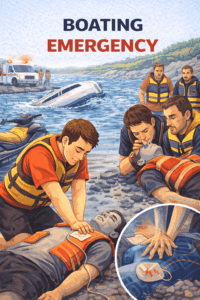 A man lost his life following a boating incident near Bauline after a vessel capsized in Duck Pond.
According to reports, emergency responders were called after a medical emergency may have caused the boat to overturn. Several individuals were in the water when the incident occurred.
A nearby responder, who was at the pond with family, quickly acted after noticing distress in one of the individuals. Using a personal watercraft, he reached the scene and helped bring the man back to shore.
Once on land, CPR was started immediately while others called 911. Multiple emergency response teams arrived within minutes, including volunteer fire departments, paramedics, and law enforcement.
Despite coordinated efforts and continuous CPR, the individual was transported to a healthcare facility where he was later declared deceased.
This incident highlights how rapid response, teamwork, and CPR efforts are critical, even though outcomes can vary depending on the situation.
Symptoms / Warning Signs in Boating Emergencies
A person in distress following a water incident may show:
- Difficulty staying afloat
- Unresponsiveness
- Irregular or absent breathing
- Weak or no pulse
- Signs of distress before or after entering the water
Recognizing these signs early is essential for a fast response.
Causes / Risk Factors
Boating emergencies can involve:
- Sudden medical events while on the water
- Loss of balance or boat instability
- Environmental conditions such as wind or waves
- Lack of safety equipment
- Limited immediate access to help
Understanding these risks helps improve preparedness.
First Aid & CPR Response (General Guidance)
Based on standard first aid training practices in Canada, responders are taught to:
- Ensure personal safety before attempting rescue
- Assist individuals out of the water if safe to do so
- Check for responsiveness and normal breathing
- Call 911 immediately
- Begin CPR if the person is not breathing normally
- Continue care until emergency services arrive
These steps are commonly taught in emergency response training across Canada.
🔹 Additional Insight: Why Medical Emergencies Can Trigger Boating Accidents
In some cases, a medical emergency—such as a sudden cardiac event—can occur before or during boating, leading to loss of control and capsizing. This means responders may be dealing with both a water rescue and a cardiac emergency at the same time, which increases urgency.
This is why CPR training is strongly emphasized for those involved in boating and outdoor recreation in Canada.
Prevention & Water Safety Considerations
To reduce the risk of boating emergencies:
- Always wear properly fitted life jackets
- Avoid boating alone in remote areas
- Monitor weather and water conditions
- Ensure boats are stable and properly loaded
- Promote CPR and first aid training among boaters
In Winnipeg and across Manitoba, these precautions are especially important during peak boating seasons.
Frequently Asked Questions
What should you do if a boat capsizes and someone is unresponsive?
If it is safe, bring the person to shore, call 911, and begin CPR if they are not breathing normally. Quick action can help maintain circulation until emergency responders arrive.
Why is CPR important in boating accidents?
CPR helps maintain oxygen flow to the brain and vital organs. In water-related emergencies, early CPR can improve survival chances while waiting for paramedics.
Can a medical emergency cause a boat to capsize?
Yes, a sudden medical issue such as a cardiac event can lead to loss of control and increase the risk of capsizing, especially in smaller vessels.
Who should take CPR training in Manitoba?
CPR training is recommended for boaters, outdoor workers, and the general public. Many programs in Manitoba include water safety as part of training.
How can boating accidents be prevented?
Using proper safety equipment, staying aware of conditions, and avoiding risky behaviours can help reduce the likelihood of accidents.
Educational Note
This content is for general awareness and reflects commonly taught first aid and CPR practices in Canada. Certified training helps individuals respond more confidently in water-related emergencies.
About The Author

Mark Kascha
Certified First Aid Instructor Trainer with 30+ years of real-world experience, including lifeguarding, workplace emergency response, and first aid program development across Canada. Has worked with WorkSafeBC, WSIB, and Manitoba Health.
👉 [View full credentials]🔗 View LinkedIn Profile
Last reviewed: March 2026