Understanding How to Respond to Diving Injuries in Water
Knowing what to do if someone is injured after diving and becomes unresponsive is critical, especially in lakes and cottage settings. Diving accidents can lead to serious spinal injuries and breathing difficulties. In some cases, CPR (cardiopulmonary resuscitation) may be needed to help restore breathing and circulation until paramedics arrive.
In Canada, CPR and water safety are commonly taught together in certified first aid courses, especially for those who spend time at cottages, lakes, and recreational areas.
First Aid & Workplace Relevance in Winnipeg, Manitoba
Diving and water-related injuries can happen in Winnipeg, Manitoba, particularly at beaches, lakes, and cottage areas outside the city.
Workers, camp staff, families, and outdoor enthusiasts benefit from CPR training in Winnipeg and first aid certification in Manitoba. These skills are especially important in remote areas where emergency response times may be longer.
Across Canada, water safety and spinal injury awareness are key components of emergency response training.
Scenario: CPR and Quick Action After Diving Accident in Sudbury
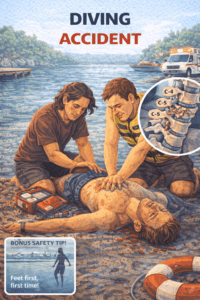 A 28-year-old man from Toronto was seriously injured after a diving accident while visiting a cottage in Sudbury.
According to reports, he dove into the lake and struck his head on the sandy bottom. The impact caused severe damage to his neck, including multiple fractures in his cervical spine. Although his spinal cord was not severed, it was compressed, leading to a critical situation.
Two friends nearby noticed him floating in the water and quickly pulled him to safety. Recognizing that he was not breathing properly, one of them—who had recently completed CPR training—began CPR.
Their quick response helped restore his breathing and clear water from his airway. He was then transported to a local hospital, where he received emergency care before being transferred to Toronto for further treatment.
This situation highlights how early CPR and fast recognition of injury can play a crucial role, even in complex emergencies involving both trauma and breathing issues.
Symptoms / Warning Signs of Diving and Spinal Injuries
A person injured during a dive may show:
- Inability to move arms or legs
- Neck or back pain
- Unresponsiveness or altered consciousness
- Difficulty or absence of breathing
- Floating face-down or motionless in water
These signs require immediate and careful response.
Causes / Risk Factors
Diving injuries are often linked to:
- Diving into shallow or unfamiliar water
- Poor visibility of the water depth
- Misjudging distance to the bottom
- Lack of safety checks before diving
- Alcohol or fatigue
Awareness of these risks is essential for prevention.
First Aid & CPR Response (General Guidance)
Based on standard first aid training practices in Canada, responders are taught to:
- Ensure the scene is safe before assisting
- Support the person’s head and neck to limit movement
- Carefully remove the person from water if safe to do so
- Check for responsiveness and normal breathing
- Call 911 immediately
- Begin CPR if the person is not breathing normally
- Continue care until emergency services arrive
These steps are commonly taught in first aid and CPR training programs across Canada.
🔹 Additional Insight: Why Spinal Motion Control Matters
In suspected spinal injuries, unnecessary movement can worsen damage. Canadian first aid training emphasizes keeping the head and neck aligned and minimizing movement whenever possible.
In water rescues, this can mean supporting the head in a neutral position while bringing the person to safety—something often practiced in advanced first aid courses.
🔹 Bonus Safety Insight: “Feet First, First Time”
A common safety rule taught in water safety programs across Canada is:
👉 “Feet first, first time.”
This means entering unknown water feet-first before diving, helping reduce the risk of head and spinal injuries. This simple habit is widely promoted in drowning and injury prevention campaigns.
Prevention & Water Safety Considerations
To reduce the risk of diving injuries:
- Always check water depth before diving
- Enter unknown water feet-first
- Avoid diving in unfamiliar or shallow areas
- Supervise recreational water activities
- Promote CPR and first aid training
In Winnipeg and across Manitoba, these practices are especially important during summer and cottage seasons.
Frequently Asked Questions
What should you do if someone is injured after diving?
Keep the person as still as possible, especially their head and neck, call 911, and monitor breathing. Begin CPR if they are not breathing normally.
Why is CPR important in diving accidents?
CPR helps restore breathing and circulation if the person is not breathing. Early action can improve survival while waiting for emergency responders.
How can spinal injuries happen during a dive?
Spinal injuries often occur when a person hits the bottom or an object head-first, causing sudden force to the neck and spine.
Who should take CPR training in Manitoba?
CPR training is recommended for anyone who spends time near water, including families, workers, and outdoor enthusiasts.
How can diving accidents be prevented?
Checking water depth, avoiding risky dives, and following safety guidelines can significantly reduce the risk of injury.
Educational Note
This content is for general awareness and reflects commonly taught first aid and CPR practices in Canada. Certified training helps individuals respond more effectively in water and trauma-related emergencies.
About The Author

Mark Kascha
Certified First Aid Instructor Trainer with 30+ years of real-world experience, including lifeguarding, workplace emergency response, and first aid program development across Canada. Has worked with WorkSafeBC, WSIB, and Manitoba Health.
👉 [View full credentials]🔗 View LinkedIn Profile
Last reviewed: March 2026